The trading education space is crowded, and for beginners, it can be difficult to distinguish between structured programs and marketing-heavy offerings. Many platforms promise results, but trading outcomes are rarely consistent or predictable.
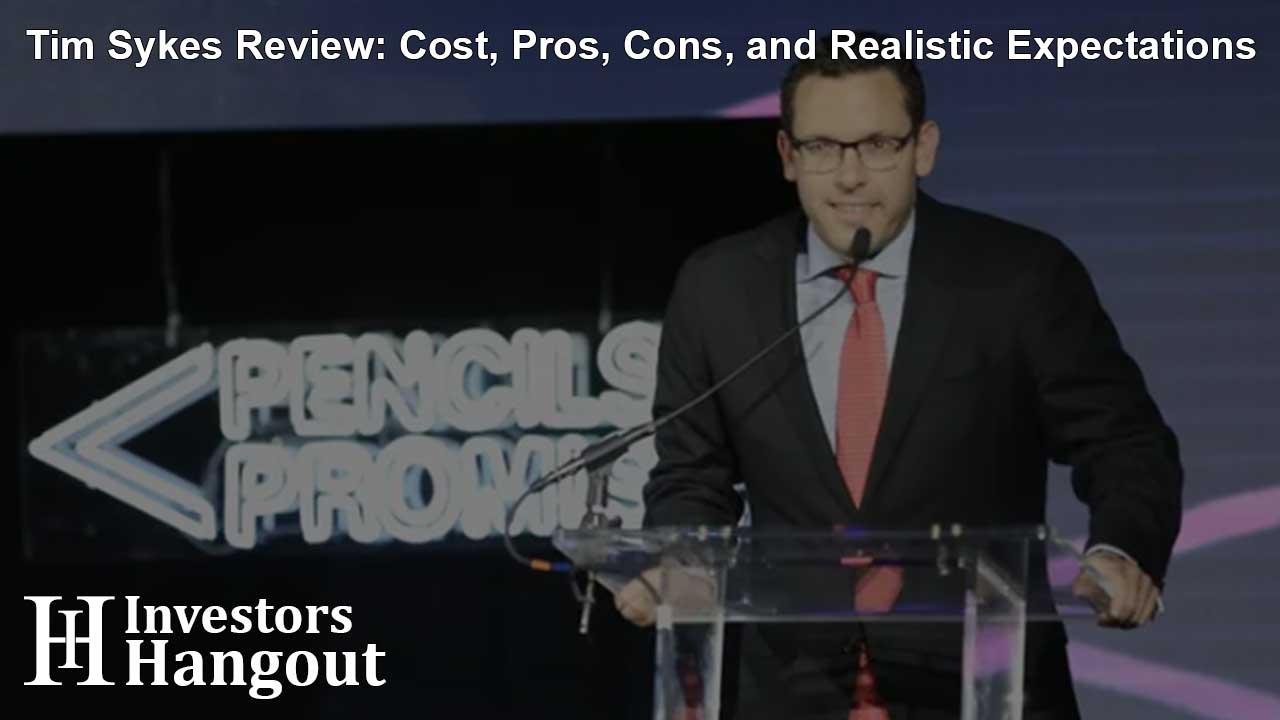
Tim Sykes has been active in this space for nearly two decades, building a large educational ecosystem focused on penny stock trading. His longevity and scale raise an important question: do Tim Sykes’ educational programs provide meaningful value, and what should users realistically expect?
This review breaks down the platform's structure, pricing, strengths, and limitations to help answer that question.
Overview of Tim Sykes' Trading Education
Tim Sykes is best known for his focus on penny stocks, a segment of the market characterized by low-priced, highly volatile securities. His strategy often centers on identifying overextended stocks and anticipating price corrections.
Rather than positioning the platform as a signal service, the emphasis is on education. Sykes publishes his trades publicly through Profit.ly, allowing users to see both gains and losses. This level of transparency is relatively uncommon and provides additional context beyond marketing claims.
The platform also includes a large and continuously expanding content library. Lessons cover technical setups, trading psychology, and risk management, giving users exposure to a wide range of scenarios rather than a single rigid system.
Pricing and Cost Breakdown
The pricing model is structured to accommodate different levels of engagement.
Entry-level products are priced at $49. The 10-Day Power Profits Bootcamp includes structured beginner content, while The Timothy Sykes Letter focuses on trade ideas and market insights. These serve as introductory options for users who want to evaluate the material before committing further.
Monthly subscriptions form the core of the platform. Tim’s Alerts, priced at $74.95 per month, provides watchlists, trade notifications, and chatroom access. PennyStocking Silver, at $149.95 per month, includes access to the full video lesson library, which contains thousands of archived lessons.
At the higher end, the Weekend Trader program is priced at $1,997 as a one-time purchase. It includes live sessions and more structured engagement, aimed at traders who are already committed to developing their approach.
As with most subscription-based platforms, value depends on usage. Consistent engagement is required to justify ongoing costs.
Pros of the Model
Transparency is one of the most notable aspects of the platform. Through Profit.ly, users can review verified trade histories, including both positive and negative outcomes. This creates a more realistic understanding of performance.
The depth of the content library is another advantage. With years of accumulated material, the platform covers a wide range of trading conditions and setups. This allows users to study patterns over time rather than relying on isolated examples.
Community features also contribute to the learning experience. Chatrooms and discussions create an environment where users can share ideas, observe different approaches, and maintain accountability.
Limitations and Considerations
The primary limitation is the nature of the market itself. Penny stocks are volatile and carry significant risk. As outlined in the SEC’s guidance on microcap stocks, these securities often involve limited public information, thin trading volume, and a higher risk of manipulation.
Subscription costs can also accumulate over time. If users are not actively studying and applying the material, ongoing fees may outweigh the value received.
Personalization is limited, particularly at lower tiers. The platform is designed to scale, which means individual feedback is not a central component unless users move into more advanced programs.
Finally, results vary widely. While some traders achieve strong outcomes, these are not representative of the average user. Trading remains a skill that requires time, discipline, and the ability to manage risk under uncertainty.
Who This Is for and Who It's Not
The platform is best suited for self-directed learners who are willing to invest time in studying trading concepts and developing their own strategies.
It may also appeal to traders working with smaller accounts, as the focus on penny stocks aligns with lower capital requirements compared to other markets.
However, it is not designed for users seeking a passive experience. Those expecting to follow alerts without independent analysis are unlikely to achieve consistent results.
It may also be unsuitable for individuals who are uncomfortable with high levels of risk. Penny stocks can move quickly in both directions, requiring a tolerance for volatility.
Is It Worth It?
Whether the platform is worth it depends largely on how it is used.
For users who approach it as a structured educational resource and commit time to studying the material, it can provide a comprehensive foundation for understanding a complex segment of the market.
For those expecting immediate results or guaranteed outcomes, the experience may not align with expectations.
At the lower price point, the barrier to entry is relatively low, allowing users to evaluate the platform before committing to higher tiers. From there, the decision becomes a question of whether the depth of content and ongoing access justify the cost.