Running a business across countries changes the job of a bank account. An entrepreneur may earn revenue in one currency, pay suppliers in another, keep personal assets elsewhere, and owe taxes in multiple jurisdictions. A banking structure that worked for a domestic business can become expensive or restrictive once money regularly crosses borders.
Separate Business, Personal, and Reserve Funds
International entrepreneurs have more reason than most to keep financial roles clearly separated. Mixing personal spending with operating funds can complicate bookkeeping and create problems when documenting business activity for banks, accountants, or tax authorities.
Operating accounts should handle routine revenue and expenses. Separate reserves can hold money intended for taxes, payroll, or unexpected business needs. Entrepreneurs with entities in multiple countries may require additional accounts, depending on local banking and legal requirements.
Residency also affects the picture. Someone considering a Portugal residency program, for example, should examine how a change in residence could interact with banking access, tax residency, and financial reporting rather than treating immigration and financial planning as unrelated decisions.
Pay Attention to Currency Exposure
A business can be profitable on paper and still lose money through exchange-rate movements. Suppose a U.S.-based company invoices European customers in euros but pays most expenses in dollars. A change in the euro-dollar exchange rate between invoicing and payment can alter the actual value of that revenue.
Businesses should identify which currencies they receive, which they spend, and how long they typically hold each one. Multi-currency accounts can reduce unnecessary conversions in some situations by allowing companies to receive and retain funds in several currencies.
Foreign exchange spreads matter alongside visible transaction fees. A provider advertising inexpensive international transfers may still earn money through the exchange rate applied to the transaction.
Build More Than One Payment Route
Depending entirely on one bank or payment processor creates concentration risk. An account review, technical outage, transfer delay, or fraud alert can temporarily block access to money even when the business has done nothing wrong.
A secondary banking relationship can provide another route for critical payments. Entrepreneurs should also know their daily transfer limits, international wire procedures, authentication requirements, and typical settlement times before an urgent transaction occurs.
Keep Liquidity in the Right Places
Cash reserves are less useful if they cannot reach the business that needs them. A company might have substantial funds in one country while facing payroll or supplier obligations in another.
Entrepreneurs should consider how quickly money can move between entities and accounts, what approvals are required, and whether banking holidays or transfer cutoffs could cause delays. Maintaining appropriate local liquidity can reduce the need for last-minute international transfers.
Treat Compliance as Part of Banking
Banks collect information about customers, beneficial owners, business activities, and sources of funds. International transactions may receive additional scrutiny, particularly when activity changes significantly from established patterns.
Accurate corporate records can make these reviews easier to handle. Ownership documents, contracts, invoices, tax records, and explanations of major transactions should be accessible when requested.
Global entrepreneurs also need professional advice about tax and financial reporting requirements in each relevant jurisdiction. Moving money through an account in another country does not remove reporting obligations elsewhere.
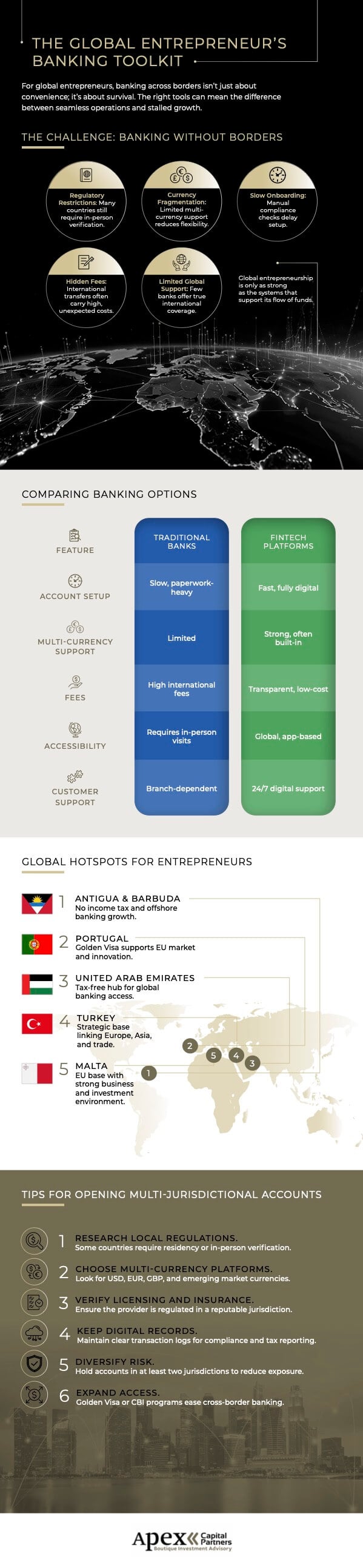
International banking works best as infrastructure rather than an assortment of accounts opened whenever a problem appears. Clear separation of funds, deliberate currency management, backup payment routes, well-positioned liquidity, and organized compliance records create a stronger financial structure. Look over the infographic below to learn more.