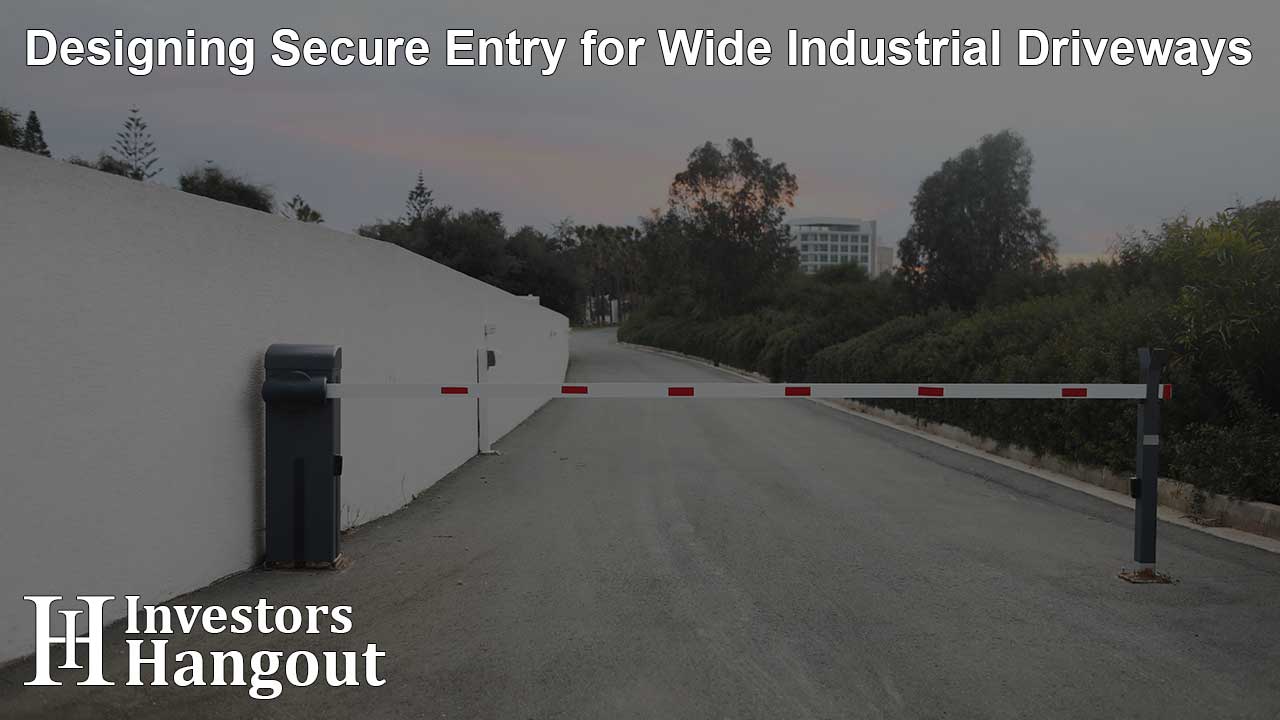
Wide industrial driveways create access challenges that standard residential or commercial entrances rarely face. For a business operating from a large industrial site, you may need to accommodate heavy vehicles, delivery trucks and frequent staff traffic while preventing unauthorised entry and maintaining safe movement across the property. Effective security therefore depends on designing the entrance as a complete access-control system rather than simply installing a barrier at the driveway.
Choose the Right Barrier for the Driveway
Your first decision is selecting a barrier that can reliably control the full vehicle entry point. Wide driveways often require longer barrier arms, stronger drive mechanisms and equipment designed for frequent operation. When comparing boom gate system solutions for secure vehicle access, you should consider the entrance width, vehicle sizes, expected traffic volume and the level of security the site requires.
The duty cycle is particularly important on busy industrial sites because it indicates how frequently equipment can operate without overheating or excessive wear. You should also assess wind exposure and available mounting space, especially when using longer barrier arms across open industrial entrances.
Position Access Control at the Correct Point
Barrier placement directly affects both security and traffic flow. You should position the controlled entry far enough inside the property boundary to prevent waiting vehicles from obstructing public roads, footpaths or neighbouring entrances.
Where trucks or articulated vehicles regularly enter the site, allow enough stacking space for drivers to stop, present credentials and wait for the barrier to open. You may also need separate entry and exit lanes so vehicles do not cross paths unnecessarily. Proper lane separation reduces congestion while making authorised movement easier to supervise.
Select Reliable Vehicle Detection
Automated entrances need accurate information about where vehicles are positioned. Inductive loop detectors installed beneath the driveway can detect vehicles approaching or waiting beneath a barrier. They may be combined with radar sensors or other detection technologies where cutting into the pavement is unsuitable.
Detection is also essential for safety. Your system should prevent the barrier arm from lowering while a vehicle remains within the controlled zone. Correct sensor positioning is particularly important on wide driveways where long vehicles may take additional time to clear the entrance completely.
Integrate Credentials With Site Security
A secure industrial entrance should identify who is requesting access before allowing the vehicle through. Depending on your operation, you might use RFID credentials, swipe cards, keypads, remote controls or licence-plate recognition.
You should choose a method that suits the people using the entrance. Staff may use permanent credentials, while contractors and delivery drivers might require temporary or remotely approved access. Connecting the entrance to a central access control system also gives you greater visibility over entry activity and allows permissions to be updated without replacing physical locks or keys.
Protect Drivers and Pedestrians
Security should never compromise safety. Wide industrial driveways often carry mixed traffic, particularly where employees, visitors and vehicles share the same entrance area. Pedestrian paths should therefore be clearly separated from vehicle lanes wherever possible.
Safety devices such as photocells, warning lights, signage and audible alerts can help reduce the risk of a barrier closing unexpectedly. You should also ensure controls remain accessible without requiring drivers to leave their vehicles or stop in hazardous positions.
Design for Reliability and Maintenance
Industrial access equipment is exposed to dust, rain, vibration and continuous mechanical use. You should select equipment with an appropriate IP rating and construction suitable for the site's operating conditions.
Maintenance access should also be considered during the design stage. Technicians need sufficient space to inspect motors, sensors and control cabinets without interrupting traffic unnecessarily. Regular testing of safety devices and detection systems helps keep the entrance dependable as traffic patterns and operating conditions change.
Building a Secure and Efficient Entrance
A wide industrial driveway is most secure when barriers, vehicle detection, access credentials and safety systems work together. By considering traffic volume, vehicle dimensions, site layout and operating conditions from the outset, you can create an entry point that controls unauthorised access without slowing legitimate traffic. A well-planned system also remains easier to operate, maintain and adapt as your site's security requirements evolve.