Performance marketing teams rarely struggle to find another ad to launch. The harder problem is finding enough genuinely different creative to keep learning after the first few winners begin to fatigue.
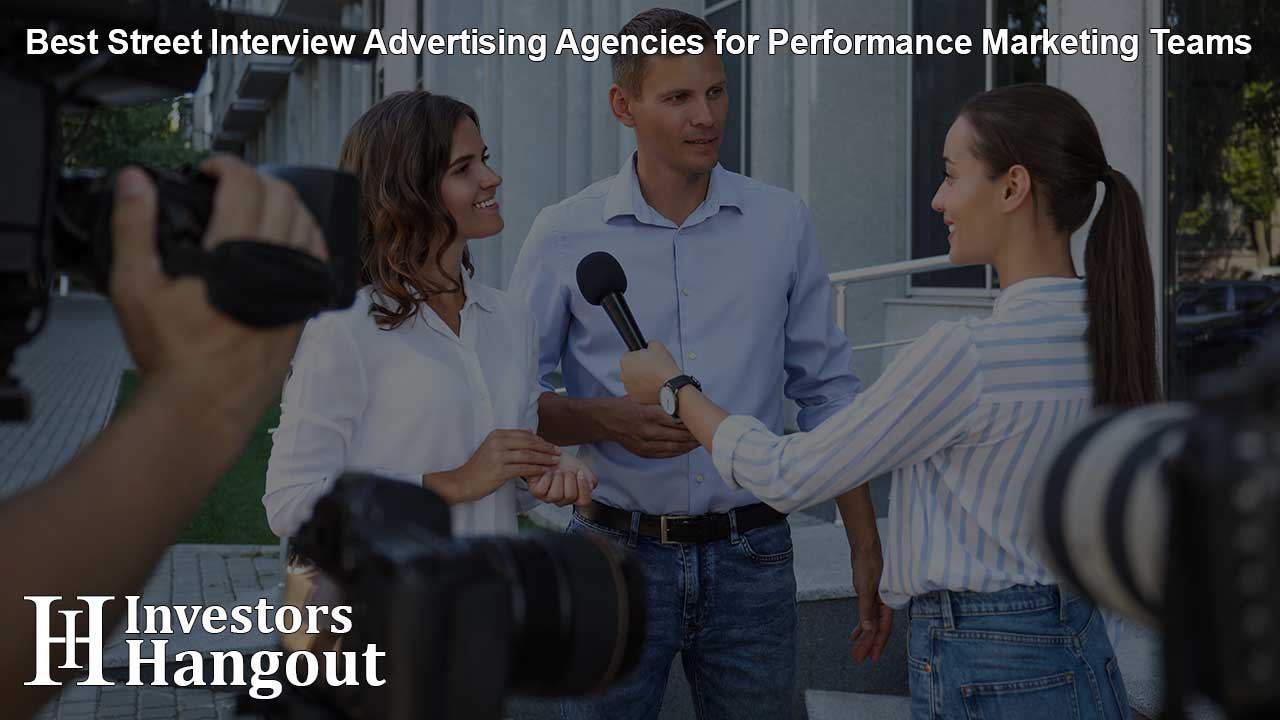
Street interview advertising can help because one production day does not have to produce one finished idea. A useful conversation may contain several openings, objections, reactions, comparisons, product moments, and unexpected answers that can be edited into separate pieces of creative. Different participants can answer the same question in completely different ways, giving the media team more material to test without filming an entirely new concept every time.
That potential also makes the category easy to misunderstand.
A company may be excellent at producing engaging vox pop content for organic social and still be poorly equipped for performance advertising. A polished street interview Reel is not automatically ready for Meta or TikTok acquisition. Paid teams need commercial usage rights, releases, platform appropriate edits, enough hooks to test, usable raw material, and a production process that can support future refreshes rather than delivering a single finished video and disappearing.
The agencies below were selected with that distinction in mind. Each works with street interviews or vox pop production, but they differ considerably in how closely their services are built around paid social, creative testing, international production, or wider content needs.
What Performance Teams Actually Need From Street Interview Creative
Before comparing agencies, it helps to define what makes street interview production useful inside an ad account.
Enough Material to Test Different Ideas
A performance team needs variation, but variation should not mean exporting the same video with six different captions.
The shoot should create enough raw material to test different openings, questions, participant reactions, objections, proof points, calls to action, and edit structures. One answer might work as a direct hook. Another participant may explain the customer problem better. A skeptical response can become a useful contrast before the product or brand appears.
The production plan should anticipate those possibilities before filming begins.
Paid Usage Rights That Are Actually Clear
A video that can be posted organically is not necessarily cleared for paid advertising.
Performance teams should understand what rights are included, how long they last, which platforms they cover, whether raw footage can be reedited internally, and whether additional fees apply if the campaign expands.
This becomes especially important when a winning asset runs longer than expected.
Participant Consent and Releases
Real people are one of the main reasons the format feels different from conventional advertising. Their appearance in commercial creative still requires appropriate permission.
Agencies should have a clear process for releases and consent rather than treating paperwork as something to solve after a strong interview has already been filmed.
Editing Designed for Paid Social
A good conversation can still become a weak advertisement if the edit begins slowly.
Performance creative usually needs a clear opening, readable captions, vertical framing, controlled pacing, and enough context for somebody who has never heard of the brand. TikTok, Instagram Reels, YouTube Shorts, and Meta placements share some visual conventions, but the production should still account for where the creative is expected to run.
Capacity for Creative Refreshes
One successful street interview campaign does not solve creative fatigue permanently.
Performance teams should consider whether the production partner can return with new questions, audiences, locations, products, or angles once the first campaign has generated useful results. A repeatable system becomes considerably more valuable than a single viral video.
1. Street Poller Media
Street Poller Media is built around street interviews as performance advertising rather than treating the format as an occasional social content service.
Its current operation combines street polling, creative strategy, paid media, and ongoing testing. The company says its teams capture real reactions in public locations and turn the strongest moments into paid and organic creative across Meta, TikTok, YouTube Shorts, and other channels. It also currently offers Meta and TikTok media buying alongside the production work.
The production model is particularly relevant to performance teams because the footage is developed around variation. Street Poller's current materials describe creative testing, hook development, and continued optimization after the original interviews are captured rather than positioning each video as one final edit.
That matters for brands using street interviews inside an active acquisition program. The value is not simply that strangers appear on camera. A single underlying concept can produce different reactions, questions, proof points, openings, and edits that give the media team several ways to test the same customer problem.
Street Poller also has a broad current campaign portfolio spanning consumer apps, finance, food and beverage, ecommerce, health, sports, and other categories. Its own 2026 reporting describes street interview creative being distributed across Meta, TikTok, Snapchat, YouTube, and additional paid social environments, although the company's broader performance benchmarks and category claims should be understood as Street Poller published data rather than independent industry benchmarks.
The addition of paid media makes Street Poller different from production only specialists. A brand can use the company strictly for creative, but its current service model also allows production feedback and media results to sit closer together.
For performance teams, that can shorten the distance between a strong reaction being identified and the next set of variations being developed.
2. StreetTalk
StreetTalk is another agency built specifically around street interview advertising, but its operating model is different in an important way: it does not buy media.
The company's current process covers strategy, production, editing, packaging, deployment preparation, and creative iteration. StreetTalk explicitly states that assets are prepared for partnership ads, whitelisting, and paid placements, while the actual media buying remains with the brand or its media partner.
That separation can suit performance teams that already have internal buyers or an established media agency and need a specialist creative engine rather than another company taking control of the ad account.
StreetTalk says its campaigns begin with a creative brief defining the audience, customer concerns, and claims that can be made. Hosts then work from a framework rather than scripted participant answers. Multiple hooks and edits are developed from the footage, with stronger material intended for continued iteration.
Its current site also provides unusually direct examples of performance use. For PrizePicks, StreetTalk says it built an ongoing testing program with more than 70 creative concepts and reports a 40 percent reduction in CPA. For Oats Overnight, it reports reaching nearly two million people and generating more than $272,000 in observed new customer revenue. Those results come from StreetTalk's own case material.
Commercial clearance is also part of the offer. StreetTalk states that its delivered assets are cleared through digital waivers and formatted for paid social use across Meta, TikTok, and YouTube. Its TeamTALK service additionally provides raw footage with unlimited usage rights.
StreetTalk makes the most sense for a performance organization that already knows how it wants to buy media and wants the street interview partner focused on creative strategy, capture, packaging, and refreshes.
3. Sidewlk Studios
Sidewlk Studios operates with a more concentrated production model centered on Los Angeles and direct to consumer brands.
Its current service is structured around a shoot day producing both longer hero edits and shorter cuts designed for paid social. Sidewlk currently lists 9:16 hero videos, 15 to 30 second short cuts, and larger packages that add hook and caption variants for testing.
The participant model deserves attention because Sidewlk explains it more specifically than many producers. The company says it uses real strangers rather than actors, while also describing them as paid intercept participants who sign releases. That is different from casting conventional talent and also different from implying that every participant is completely uncompensated.
Its production offer includes full usage rights for paid and organic use with no time limit, according to its current FAQ. Sidewlk also says short cuts are built for Meta, TikTok, Reels, and Shorts, with captions and opening hooks designed for paid social. Raw selects are available separately rather than being included automatically in every package.
The agency publishes a current Net Hydrate case in which one shoot produced 12 hooks over three weeks. Sidewlk reports a four times average ROAS and says acquisition cost was cut in half during the first week of running the creative on Meta. Those figures are agency reported results from that campaign.
Sidewlk's narrower geographic footprint can be an advantage when the brief suits Los Angeles demographics and environments. Performance teams seeking frequent national or international filming may need a wider production network, but companies that want tightly managed Los Angeles street shoots with defined asset packages have a clearer reason to consider it.
4. Interview Media
Interview Media approaches street interviews as an end to end short form content service rather than a narrowly defined media buying operation.
The company currently handles question development, filming, editing, and optional distribution. Its content is prepared for TikTok, Instagram Reels, YouTube Shorts, X, owned channels, organic distribution, and paid media.
The question development process is central to its offer. Interview Media says campaigns begin by turning the brand objective into one question that people actually want to answer. The interviews are then filmed in public locations, with stronger reactions developed into hooks and short form edits.
For performance teams, that simplicity can be useful when the campaign idea is built around one clear consumer tension rather than a complicated product demonstration.
Interview Media also positions its campaigns as repeatable. Once a useful question or angle has been identified, the company says it can continue running the format to maintain a steady flow of content.
Its public material is less detailed than StreetTalk, Sidewlk, or StreetInterviewVideos on issues such as raw footage rights, exact commercial usage periods, and standardized variation counts. That does not make the company unsuitable for paid work, but performance teams should confirm those details in the project scope rather than assuming them.
Interview Media is a sensible option when the priority is an accessible production process that moves from question development through filming, editing, and optional distribution without requiring the brand to design the street concept internally.
5. StreetInterviewVideos
StreetInterviewVideos offers one of the clearest deliverable structures for teams that care about what files arrive after the shoot.
Its current street interview ad packages include vertical 9:16 videos, captioned and clean versions, raw footage, ad account ready exports, and one year of paid and organic usage rights. Its FAQ specifically confirms paid rights for TikTok and Meta, while broader service pages also reference Reels, Shorts, and YouTube.
The company also gives brands a choice between scripted, partly scripted, and fully unscripted production. Real strangers or actors can be used depending on the campaign, so performance teams need to decide which model fits the desired claim of authenticity rather than assuming every project uses the same participant approach.
The current site contains a small inconsistency worth noting. Some service pages describe multiple hook variations as part of the standard deliverable set, while the general services page says hook variations can be purchased as an add on and that packages differ by hook volume. The practical takeaway is simple: the exact number of hooks should be confirmed in the scope rather than inferred from a general service page.
Raw footage is a particularly useful inclusion for performance teams. A winning reaction or participant answer may become valuable again later when the brand wants to test a new opening, call to action, or product message without organizing another shoot.
StreetInterviewVideos is therefore a practical option for teams that want a clearly packaged production handoff and enough control over the files to continue editing internally.
6. Vox Pops International
Vox Pops International is the broadest company in this comparison.
Founded in 1988, it operates as a video research and production agency rather than a specialist paid social performance shop. Its services include vox pops, video diaries, social media production, broader video production, research, and international filming.
That broader background can become useful when the campaign requires geographic scale.
Vox Pops International says it regularly works in more than 40 countries through its network and can manage multilingual interviews, local crews, translation, and subtitles. It also produces vertical video for TikTok, Instagram Reels, YouTube Shorts, Facebook Reels, and other mobile platforms.
Its current social production guidance explicitly describes 9:16 filming, strong opening hooks, subtitles, short form pacing, and multiple cuts from one production session. Vox Pops International also states that contributors provide consent before footage is used commercially or publicly.
Performance marketers should understand what they are buying, however. Vox Pops International has substantial experience capturing real people and producing social content, but its core business also includes qualitative research, corporate communication, and broader video work. It is not positioned primarily as a paid media optimization agency.
That makes it especially relevant to international brands that need consistent street interview production across several markets and languages, particularly when research, consumer insight, and marketing content overlap.
How Street Interview Footage Becomes Performance Creative
A street shoot becomes far more valuable when the team stops thinking in terms of finished interviews and starts thinking in terms of usable pieces.
Imagine five people answering the same question about a product.
One participant responds immediately with a surprising sentence. That line could open one version of the ad.
Another begins skeptically but changes their opinion after trying the product. That answer has a completely different structure and may work as a proof based concept.
A third explains the underlying customer problem unusually well. The brand may never have written the problem that clearly in its own copy.
Two other participants disagree with each other. Their answers could be placed together as a comparison rather than used separately.
The production has already created several possible advertisements without changing the original question.
Editing expands the options further.
A strong reaction can appear before the question is revealed. The question itself can become on screen text. Several responses can be combined into a rapid sequence. One participant's answer can be used as the opening while another provides the proof later in the ad. Calls to action can be changed without disturbing the core footage.
Performance value comes from this recombination.
Simply interviewing 50 people does not automatically create a useful testing library. The important question is how many meaningfully different customer arguments can be built from what those people said.
That is why raw footage, clear usage rights, organized filenames, and editable exports matter. The first version of a video may not be the version that ultimately scales.
The Question Is Part of the Advertisement
Street interview advertising is sometimes discussed as though the people on camera create all the value.
The question deserves equal attention.
A weak question can produce ten minutes of footage without yielding one useful hook. A well designed question can surface the exact tension the campaign needs.
Problem Questions
These help participants describe a frustration in their own language.
A financial service might ask about the hardest part of managing monthly expenses. A skincare campaign could ask what people find most frustrating about a particular routine.
The answer can make the customer problem feel recognizable before the brand ever appears.
Opinion Questions
Opinion questions work well when people already have a view about the category.
They can create disagreement, humor, surprise, or a strong opening. The best versions are specific enough to produce a clear position rather than encouraging a vague answer.
Comparison Questions
These can be useful for products, prices, habits, preferences, or competing approaches.
A comparison has built in tension because the participant has to choose or explain a difference. The creative team can then decide whether the brand appears before or after the answer.
Knowledge Questions
Trivia and knowledge based prompts can create curiosity.
They work best when the answer connects naturally to the product or customer problem. A random question that attracts views but has little connection to the offer may create an entertaining video without creating a useful advertisement.
Experience Questions
These ask people to describe something that has happened to them personally.
The format is valuable when lived experience is closely connected to the category. Healthcare costs, travel problems, dating behavior, shopping habits, and financial frustration can all produce stronger language when participants are describing something real.
Product Reaction Questions
These become especially useful after someone has tasted, tried, handled, or seen the product.
The question should help the person explain the reaction rather than putting words in their mouth.
“What surprised you?” can produce more interesting footage than “Did you love it?”
Leading questions create another problem. If every prompt strongly suggests the answer the brand wants, the content can begin to feel as controlled as the scripted advertising it was supposed to replace.
The interviewer needs enough direction to keep the conversation commercially useful without making the participant sound coached.
Organic Street Content and Paid Street Creative Are Different Products
A street interview can perform exceptionally well organically because it is funny, strange, emotional, controversial, or culturally timely.
Those qualities can also help paid creative, but paid advertising has additional responsibilities.
A cold audience needs to understand what the video has to do with the offer.
The opening needs to earn attention without becoming disconnected from what follows. The product or service has to enter the conversation clearly enough that the viewer understands why the brand is involved. A call to action needs to make sense after the interview rather than appearing suddenly at the end.
Commercial rights and participant releases also matter much more once a brand begins paying to distribute the footage.
Performance teams need variation as well. An organic post can succeed as one complete piece of entertainment. A paid concept may need several hooks, lengths, participant combinations, calls to action, and revised openings before the strongest version emerges.
Measurement changes the creative process too.
Organic teams may reasonably care about views, shares, comments, and follower growth. Performance teams eventually have to connect the footage with clicks, conversions, acquisition cost, qualified actions, revenue, or another commercial outcome.
This does not mean every street interview ad should feel like a direct response commercial.
It means the production needs to know what job the footage will perform after it leaves the editing timeline.
What to Ask Before Hiring a Street Interview Agency
Performance teams can avoid many production problems by settling the operational details before the shoot.
The most useful questions are practical:
- Are paid advertising rights included, and for how long?
- Which platforms are covered by those rights?
- How are participant releases and commercial consent handled?
- Is raw footage included?
- Can the internal team reedit that footage later?
- Are captioned and clean versions delivered?
- How many genuinely different hooks or concepts are included?
- Is production designed vertically from the beginning?
- Can the same footage be delivered in additional aspect ratios when needed?
- Does the agency buy media, or does it only produce creative?
- Can it return regularly for new questions, participants, or locations?
- Who owns the finished footage and raw material?
- How are locations and participant demographics chosen?
- What happens when a participant gives a strong answer that was not anticipated in the original brief?
The answers reveal a great deal about whether the provider thinks like a content producer or a performance creative partner.
Neither model is inherently better. The important thing is knowing which one the campaign requires.
Build the Shoot for Testing, Not Just Publishing
Street interview advertising is strongest when performance considerations enter before the camera starts recording.
The questions should be designed with possible hooks in mind. The location should reflect the audience the brand is trying to reach. Participant consent should support the intended distribution. The production plan should create enough responses and angles to give editors choices after the shoot.
Raw footage, rights, captions, vertical framing, alternative openings, and future recuts should be discussed before a winning answer makes them urgent.
A good street interview agency can film engaging conversations. A useful performance partner goes further by making those conversations easy to test, edit, deploy, learn from, and refresh once the ad account starts revealing what actually works.