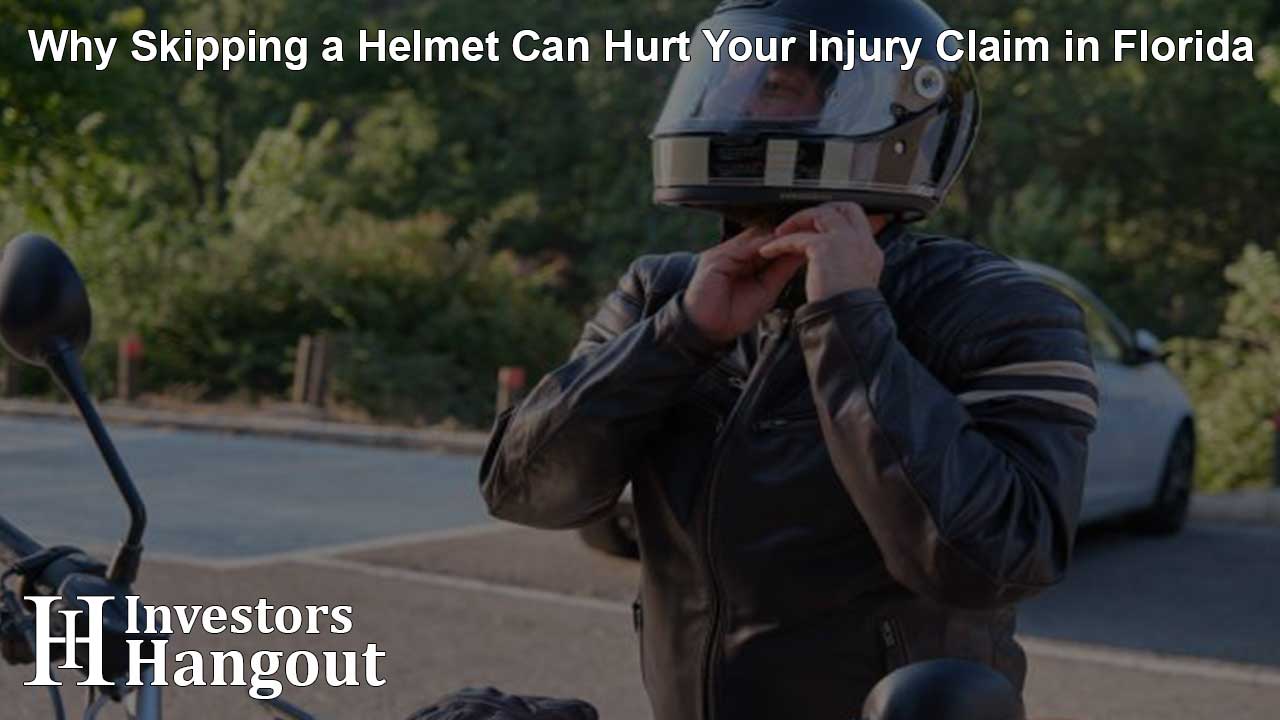
Skipping a helmet in Florida does not just put your safety at risk. It hands the other side a ready-made argument to cut down your injury compensation before your case even gets to negotiation.
Florida follows a comparative negligence standard under Fla. Stat. § 768.81, which means your payout shrinks by whatever percentage of fault is assigned to you. Choosing not to wear a motorcycle helmet without qualifying for the legal exemption becomes one of the first things a defense attorney will point to. That single decision can quietly cost you thousands of dollars in a claim you otherwise had every right to win.
The Legal Exemption Does Not Protect Your Claim
Florida law under Fla. Stat. § 316.211 allows riders over 21 to ride without a helmet if they carry at least $10,000 in medical insurance coverage. Many riders treat this as full legal protection, and nothing more needs to be considered.
That thinking is where the problem starts. Being legally permitted to ride without a helmet and being financially protected when you get hurt are entirely different things. A defense attorney will not challenge whether you broke the law. They will argue that your choice made your injuries worse, and that argument does not require you to have done anything illegal.
How the Defense Uses Your Helmet Choice Against You
This is where skipping a helmet moves from a personal decision to a claim-damaging one.
Under Florida's modified comparative fault rule, updated in 2023, any claimant found more than 50 percent at fault cannot recover compensation at all. Defense teams routinely argue that riding without a helmet contributed to the severity of head, neck, and facial injuries. A jury does not need to believe the helmet would have prevented the crash. They only needed to believe it would have reduced the harm.
-
Head and brain injuries documented without helmet use are particularly vulnerable to this argument.
-
Each percentage of fault assigned reduces your final payout by that same amount.
-
Insurance adjusters begin building this argument from the moment they review the accident report.
What Your Medical Records Say Without You Realizing
Your hospital records after a crash do more than track your treatment. They become evidence.
When a doctor document traumatic brain injury, skull fracture, or facial trauma, that clinical language goes directly into the record. The defense will connect those specific injuries to the absence of a helmet with straightforward logic that is hard to counter in front of a jury. A rider who wore a helmet and still sustained head injuries stands in a much stronger evidentiary position than one who did not.
Not Wearing a Helmet Does Not End Your Claim
Riding without a helmet complicates a claim. It does not erase one. The other driver's liability still carries weight, and strong evidence of their negligence can still lead to meaningful compensation even after a fault reduction.
-
Get medical attention immediately, and have every injury thoroughly documented.
-
Photograph the scene, collect witness information, and preserve all physical evidence
-
Do not give recorded statements to insurance adjusters before consulting an attorney.
-
Work with someone who understands how Florida's comparative fault system plays out, specifically in motorcycle cases
The key is making sure the focus stays on what the other driver did wrong, not on what you chose not to wear.
Every Ride Without a Helmet Is a Legal Decision Too
Most riders see helmet use as a safety call made before they leave the driveway. In Florida's legal environment, it is also a choice that follows them into any courtroom or settlement negotiation after a crash.
The simplest way to keep your claim as strong as possible is to remove the argument before it can be made. Wearing a helmet takes that weapon out of the defense's hands entirely before a case begins.
Key Takeaways
-
Skipping a helmet gives defense attorneys a direct argument to reduce your injury compensation under comparative fault rules.
-
Florida's Fla. Stat. § 768.81 reduces payouts by your assigned fault percentage, and helmet absence raises that percentage.
-
The legal exemption under Fla. Stat. § 316.211 permits helmetless riding but offers no protection in a civil claim.
-
Defense teams only need to prove the helmet would have reduced injury severity, not prevented the crash.
-
Medical records documenting head injuries without helmet use strengthen the opposing side's argument significantly.
-
Riders without helmets can still recover compensation if the other driver's negligence is clearly established.
-
Wearing a helmet removes one of the most commonly used arguments against motorcycle injury claimants in Florida.