Signing up for a crypto exchange without a referral code is a bit like walking into a store and paying full price when there's a discount rack two feet away. If you're about to create an MEXC account, there's a code you can enter during registration that unlocks a permanent trading fee discount and a handful of other perks that regular sign-ups simply don't get.
This guide breaks down exactly how MEXC referral code (15LQV ) work, what you actually get from using one, how it compares to what other major exchanges offer, and what to do if the code doesn't seem to apply properly. No fluff, no vague promises, just the practical stuff you need before you hit "create account."
How Do MEXC Referral Codes Work?
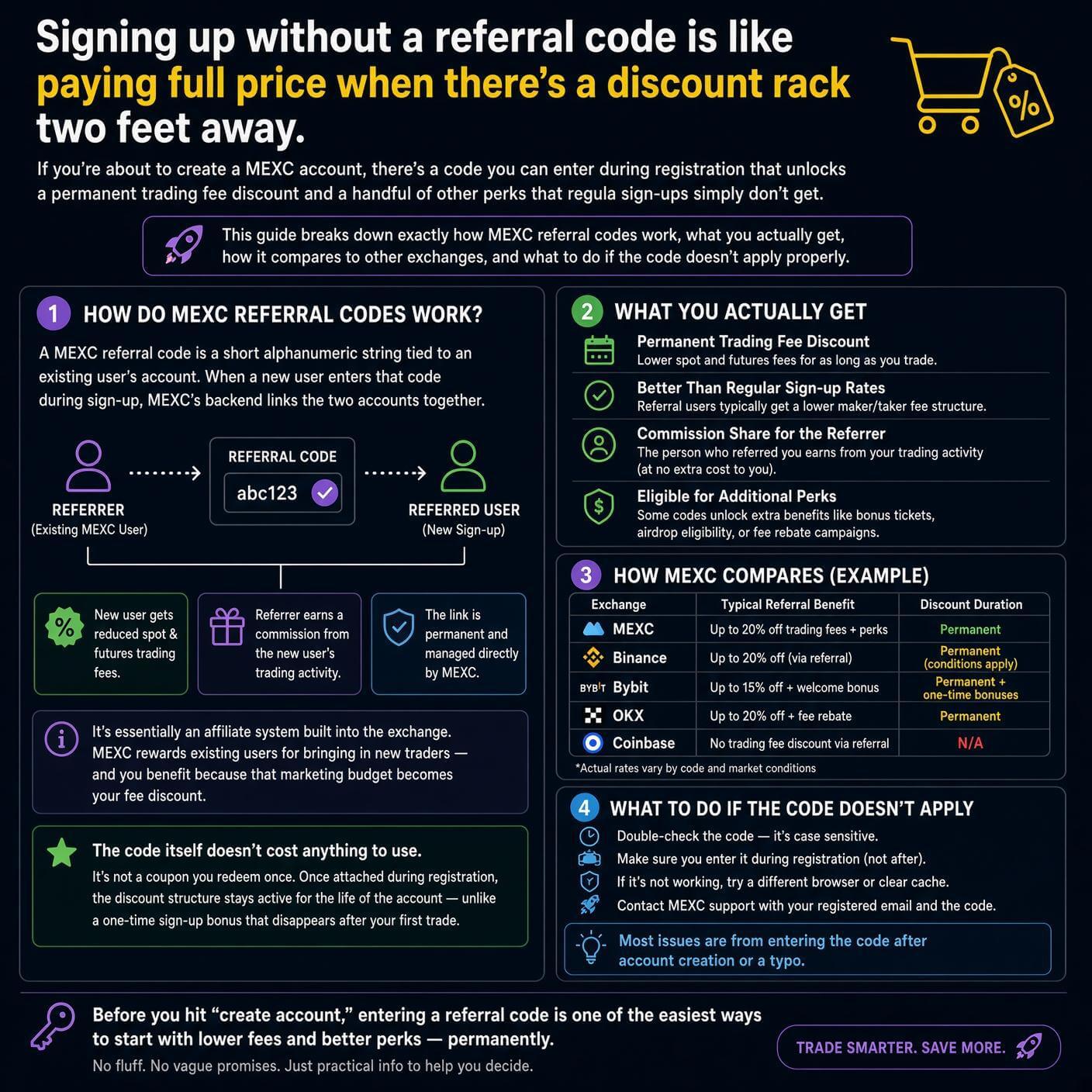
A MEXC referral code is a short alphanumeric string tied to an existing user's account. When a new user enters that code during sign-up, MEXC's backend links the two accounts together. From that point on, the new trader typically gets a reduced spot and futures trading fee rate, and the person who shared the code earns a small commission from that trader's activity going forward.
It's essentially an affiliate system, but built directly into the exchange rather than run through a third party. MEXC uses this model because it's cheaper for them to reward existing users for bringing in new traders than to spend heavily on ads. You benefit because that marketing budget gets redirected into your fee discount instead of into a billboard somewhere.
The code itself doesn't cost anything to use. It's not a coupon you redeem once. Once it's attached to your account during registration, the discount structure tends to stay active for the life of that account, which is different from a one-time sign-up bonus that disappears after your first trade.
What's the Current Best MEXC Referral Code?
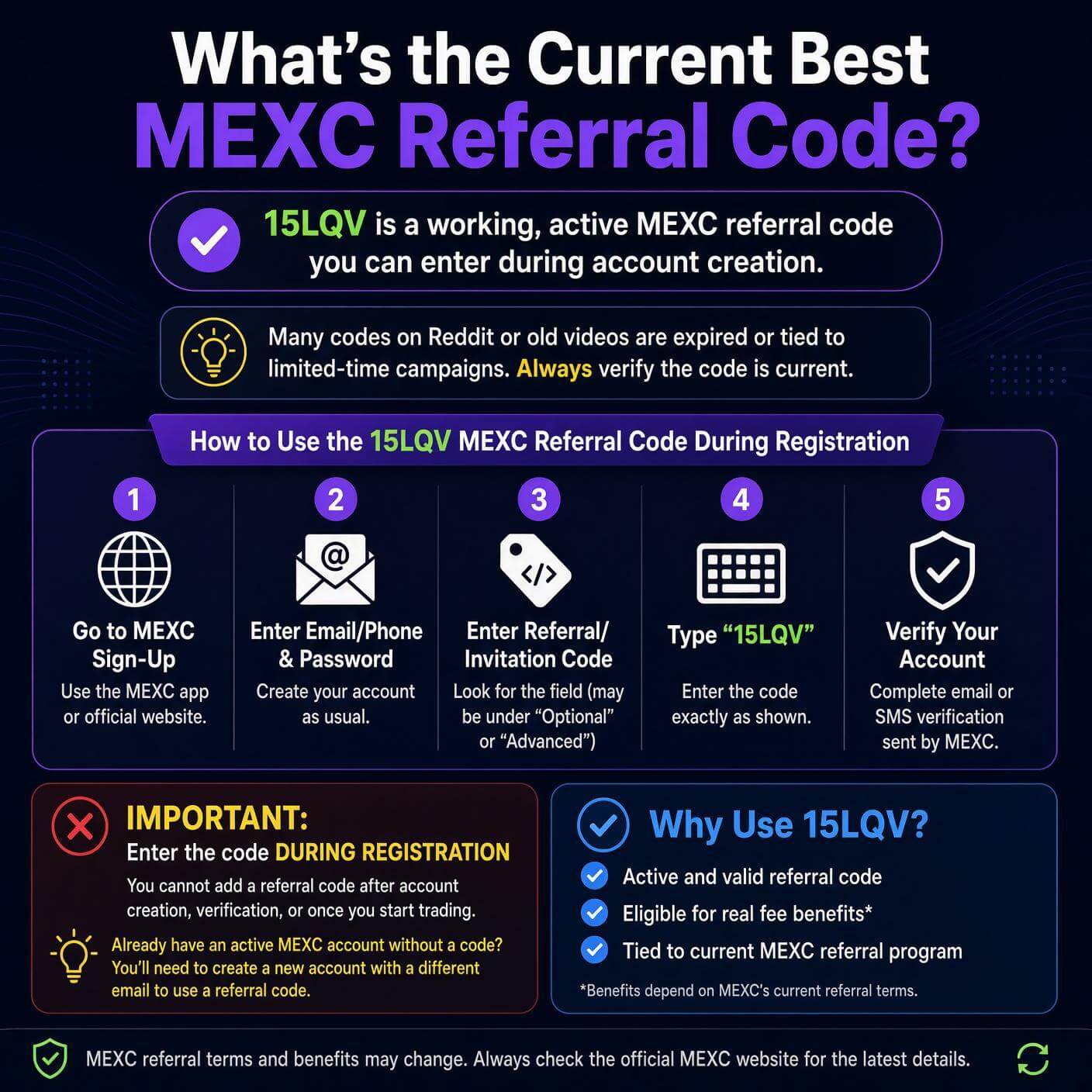
If you're looking for a code that's actually active and tied to real fee benefits rather than an expired promo floating around some outdated forum post, 15LQV is a working MEXC referral code you can enter during account creation.
Many codes shared on random Reddit threads or old YouTube video descriptions have expired or were tied to limited-time campaigns that no longer apply. Before you use any code, it's worth double checking that it's current, since MEXC does periodically update its referral program terms.
How Can I Use the 15LQV MEXC Referral Code During Registration?
This part takes about thirty seconds. Here's the actual process:
-
Head to the MEXC sign-up page, either through the app or the website.
-
Enter your email address or phone number and set a password like you normally would.
-
Look for a field labeled "Referral Code" or "Invitation Code." On some versions of the sign-up form this is tucked under an "Optional" or "Advanced" dropdown, so don't skip past it too fast.
-
Type in the code and finish creating your account.
-
Complete the email or SMS verification step MEXC sends you.
One thing people mess up constantly: they create the account first, verify it, start trading, and then try to go back and add a referral code. On most exchanges, including MEXC, this doesn't work. The code has to be entered at the point of registration, before your account exists in their system. If you already have an active MEXC account without a code attached, you'll generally need to create a new account with a different email to apply one, since MEXC doesn't retroactively attach referral relationships to existing users.
What Rewards Do I Get With a MEXC Referral Code?
The core benefit is a reduction in your trading fees. MEXC's standard spot trading fees are already competitive compared to a lot of exchanges, and entering a referral code at sign-up shaves an additional percentage off both maker and taker fees on top of that base rate.
Beyond the fee discount, MEXC periodically runs bonus campaigns for new users who sign up through a referral link or code, things like futures trial funds, deposit bonuses, or trading fee vouchers. These promotions change fairly often and are tied to specific time windows, so rather than quoting a number here that might be outdated by the time you read this, it's genuinely worth checking the live rewards section in your MEXC dashboard after signing up. That page always reflects whatever the current active promotion actually is, and MEXC has been known to adjust these figures without much notice.
The fee discount tends to be the more durable benefit since it's not tied to a limited-time campaign the same way deposit bonuses are.
Is the MEXC Referral Code Different From Invite Links?
Functionally, they do the same job, but they're not identical in practice. A referral code is a short string of characters you type manually into a designated field. An invite link is a full URL that, when clicked, automatically pre-fills that referral relationship without you having to type anything.
The invite link is arguably more convenient since there's zero chance of a typo, but the code gives you flexibility. You can share a code verbally, print it, mention it in a video, or drop it into a text message without needing someone to click through a link. Both methods route to the same underlying discount and commission structure on MEXC's end, so it really comes down to whichever format is easier for the person signing up.
How Do MEXC Referral Codes Compare to Other Crypto Exchange Codes?
Referral programs across the crypto exchange industry follow a pretty similar blueprint: a discount for the referred user, a commission for the referrer, sometimes a tiered structure depending on trading volume.
But the specifics vary quite a bit between platforms.
Binance's referral program offers a spot trading fee discount for new users along with a commission share for the referrer, and its structure has changed multiple times over the past few years as the exchange adjusts its fee tiers. Bybit and OKX run comparable systems, generally offering a percentage-based discount plus deposit bonus campaigns for new sign-ups.
KuCoin and Gate.io lean on similar frameworks as well, often layering in extra perks like futures bonuses for accounts that complete a minimum trading volume within a set period.
What tends to separate MEXC from some of these competitors is the size of its token listing catalog and the fact that its referral discount applies broadly across both spot and futures markets rather than being siloed into one or the other.
Where an exchange lands in these comparisons genuinely depends on what you trade, how often, and which market types matter most to you, so it's worth checking the current terms directly on each platform rather than relying on a comparison written months ago, since fee structures across the industry shift often.
Comparing MEXC Fee Discounts to Other Major Exchanges
Base trading fees across major exchanges tend to sit in a fairly tight band, with most platforms charging a small percentage on both maker and taker orders before any discount is applied. Where the differences show up is in how much a referral or VIP discount actually reduces that baseline, and how those discounts stack with other fee-reduction tools like holding the exchange's native token or hitting certain 30-day volume thresholds.
MEXC's approach is generally considered accessible for smaller retail traders since its referral discount doesn't require holding a large balance of its native token to activate, unlike some exchanges where meaningful fee reductions are gated behind holding a minimum amount of a platform coin. That said, high-volume traders on exchanges like Binance or OKX can sometimes negotiate custom VIP fee tiers that beat what a standard referral discount offers, so the "best" fee structure really depends on your trading volume and strategy.
If fee minimization is your main priority, it's worth running the numbers based on your actual monthly trading volume across two or three exchanges rather than assuming one platform is universally cheaper. A discount that looks great on paper for a high-frequency trader might barely move the needle for someone making a handful of trades a month.
How Do I Verify If the 15LQV Code Was Successfully Applied to My Account?
After registering, log into your MEXC account and navigate to your account settings or the referral/rewards section of the dashboard. There should be a field showing your "Invited By" status or a referral relationship indicator confirming which account referred you. If that field is populated, the code went through correctly.
You can also check your fee schedule under the trading fee settings. If the referral discount is active, you'll typically see a rate that's lower than MEXC's standard published fee for your account tier. Comparing that number against the exchange's publicly listed default rate is a quick way to confirm the discount is actually live rather than just assuming it worked.
What Steps Should I Take If I Encounter Issues Applying the 15LQV Code?
If the code didn't seem to apply, first check whether you actually entered it before completing registration rather than after. This is the single most common reason codes fail to attach.
If you're confident it was entered correctly, contact MEXC's customer support directly through their in-app live chat or support ticket system. Have your account email and the exact code you used ready, since support will usually need both to look into the relationship on their backend. In some cases, if a code has expired or the referral campaign it was tied to has ended, MEXC support can clarify what the actual current active code or promotion is instead.
Avoid creating multiple accounts to try to force the code to work. Most exchanges, MEXC included, have terms of service that restrict multi-accounting, and doing so can flag your account for review or verification delays.
Can I Create My Own MEXC Referral Code?
Yes. Once you have a verified MEXC account, you can generate your own referral code through the platform's affiliate or referral dashboard. This lets you start earning commission from anyone who signs up using your code or link going forward. There's typically no minimum trading volume required just to generate a code, though your actual commission earnings depend on the trading activity of the people you refer.
This is worth setting up even if you're a casual trader, since it costs nothing and simply sits there generating passive commission if friends or followers happen to sign up through it.
Are There Any Restrictions on Using MEXC Referral Codes?
A few practical restrictions apply. The code generally has to be entered during initial account registration, not added afterward. It typically can't be applied to accounts that already exist or have already completed KYC verification without a code attached. MEXC also restricts self-referral, meaning you can't use your own code to get a discount on a second account you create yourself, and doing so can violate their terms of service.
Geographic restrictions matter too. MEXC's availability and referral program terms can vary depending on your country of residence due to regulatory requirements in different jurisdictions, so it's worth confirming that both the exchange and its referral program are fully available where you live before signing up.
Where Can I Find the Best MEXC Referral Codes?
The safest approach is sticking with a code you've verified is current, either through the exchange's own promotional pages or a source you trust. Random codes pasted across comment sections or outdated blog posts are hit or miss since referral campaigns and code structures do get updated by MEXC periodically. If a code doesn't apply during sign-up, that's usually a sign it's outdated rather than a technical glitch on your end.
Final Thoughts
Using a referral code costs you nothing and takes seconds to add during sign-up, so there's not much reason to skip it. Entering 15LQV when you register gets your account linked to a discount structure from day one instead of leaving that fee reduction on the table.
Before committing real funds to any exchange, spend a few minutes in MEXC's live dashboard checking the current fee schedule and active promotions for your account, since these details are the most accurate reflection of what you'll actually receive. That way you're deciding based on real, current numbers rather than something a random article promised months ago.