Temporary projects have a way of exposing weak spots in an operation. A warehouse expansion, a retail peak season, a short-term construction contract, or a one-off inventory relocation can all push material handling needs far beyond normal capacity. In those moments, the question is rarely whether a business needs forklifts. It’s whether buying them makes any practical sense.
More often than not, it doesn’t.
Rental forklifts fill an important gap for businesses that need speed, flexibility, and control without the long-term commitment of ownership. For temporary projects especially, they are less of a backup plan and more of a smart operating decision.
Temporary Projects Create Temporary Demand
Most businesses build their equipment fleets around steady, predictable workloads. That works well until demand spikes. Then suddenly, the existing fleet is overbooked, teams are waiting on available trucks, and timelines start slipping.
Temporary projects are different by nature. They often come with clear start and end dates, unusual site conditions, and workloads that don’t justify a permanent capital purchase. Buying a forklift for an eight-week contract or a three-month warehouse reshuffle can leave a business with an expensive asset that sits idle once the work is done.
That mismatch matters. Forklifts are not just purchase costs. They bring maintenance obligations, storage needs, compliance requirements, insurance considerations, and depreciation from the moment they arrive. Renting allows businesses to match equipment use to actual project duration, which is exactly what temporary work demands.
Cash Flow Matters More Than Many Teams Admit
One of the biggest advantages of rental is financial flexibility. Temporary projects often tie up cash in labour, stock, transport, fit-outs, or site preparation. Committing capital to equipment ownership at the same time can strain budgets unnecessarily.
With rental, the cost becomes easier to forecast and easier to justify because it is directly tied to the project itself. Instead of making a large upfront investment, businesses can treat forklift access as an operational expense. That distinction is especially useful when margins are tight or when project demand is uncertain.
It also reduces the risk of overcommitting. If a project scales down, ends early, or changes scope, a rented truck can often be off-hired. An owned truck, on the other hand, remains on the balance sheet whether it’s needed or not.
The Right Truck for the Right Job
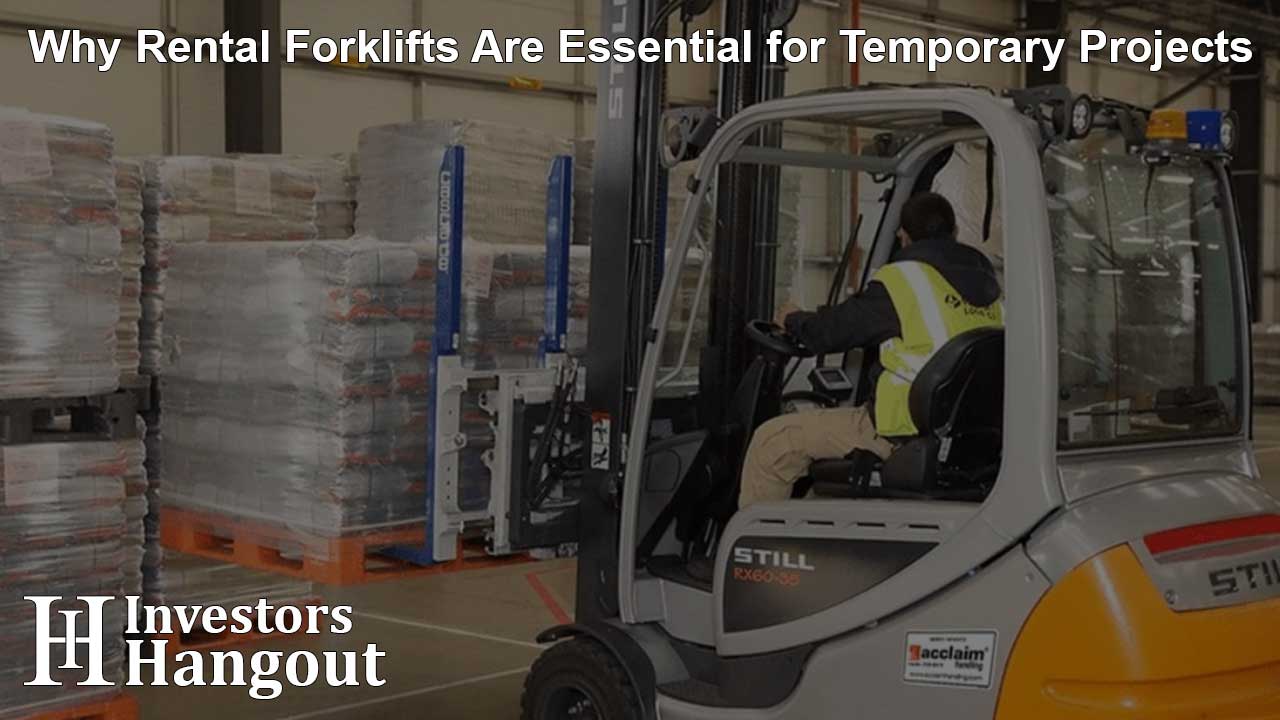
Not every temporary project needs the same type of forklift, and that’s where rental becomes even more valuable. A distribution centre handling palletised goods may need reach trucks for narrow aisles. A construction site may require rough terrain capability. A manufacturing plant clearing internal space may need electric counterbalance trucks for indoor use.
Rental gives operations managers access to equipment suited to the task rather than forcing the task to fit the available fleet. That improves both efficiency and safety.
In practice, this means a business can respond to short-term demand with precision. Companies looking into warehouse equipment rental in Liverpool often do so not simply because they need “another forklift,” but because they need a specific machine, for a specific window, under specific working conditions. That level of fit is hard to achieve through ownership alone, especially for businesses whose temporary projects vary throughout the year.
Speed Can Make or Break a Short-Term Operation
Temporary work usually comes with compressed timelines. There is little room for long procurement cycles, delayed deliveries, or equipment lead times. Rental providers can often supply forklifts far faster than a business could source, purchase, and prepare them internally.
That speed matters in several common situations:
- seasonal stock surges
- site moves or warehouse reconfigurations
- short-term contracts with fixed completion dates
- emergency replacement after equipment failure
When a project is measured in weeks, losing several days to sourcing problems can be costly. Rental offers a practical way to keep operations moving without a lengthy buying process.
Reduced Maintenance Burden
Less Downtime, Fewer Administrative Headaches
Owning a forklift means owning the maintenance schedule too. For long-term, high-utilisation fleets, that may be worthwhile. For temporary projects, it usually isn’t.
Rental agreements commonly include servicing and support, which reduces the internal burden on engineering teams and site managers. If a truck develops a fault during a short-term contract, the priority is getting back up and running quickly, not navigating repair logistics for an asset that may not even be needed after the project ends.
This has a knock-on effect on project management. Fewer maintenance responsibilities mean fewer distractions for teams already juggling deadlines, staffing, and delivery targets.
Compliance Is Easier to Manage
Forklifts operate within a regulated environment. Businesses need equipment that is properly maintained, safe to use, and suitable for the setting. For temporary operations, staying on top of inspections and service history can become a complication if extra equipment is brought in at short notice.
Rental can simplify that process because reputable suppliers provide trucks that are prepared for use and supported throughout the hire period. That reduces the administrative friction that often comes with scaling a fleet quickly.
Rental Supports Smarter Operational Planning
There is also a strategic reason rental forklifts matter. They allow businesses to stay adaptable.
Temporary projects rarely unfold exactly as planned. A warehouse fit-out may run longer than expected. A retail peak may outperform forecasts. A customer contract may be extended at the last minute. Rental gives managers room to adjust without locking the business into long-term equipment decisions based on short-term assumptions.
That flexibility is increasingly important in sectors where demand patterns are less predictable than they used to be. E-commerce fulfilment, third-party logistics, manufacturing, and construction all face sudden volume shifts. In that environment, a rigid equipment strategy can slow a business down.
A rental-based approach helps companies scale capacity up or down in line with real operating conditions. That is not just convenient; it is often the difference between protecting margins and eroding them.
The Bottom Line
Temporary projects demand practical thinking. They call for equipment that can be deployed quickly, matched to the task, and removed when the work is finished. Rental forklifts do exactly that.
They reduce capital exposure, ease maintenance pressure, improve project agility, and help businesses avoid owning equipment that has no meaningful role once a short-term job is complete. For operations leaders trying to keep projects on time and costs under control, that combination is hard to ignore.
In a temporary environment, permanence is rarely the goal. Responsiveness is. And that is precisely why rental forklifts remain an essential part of modern project planning.