Moving offices is rarely just a logistical exercise. For many businesses, a well-planned office relocation represents a genuine opportunity to reset how the organisation operates, spends, and grows. When approached strategically, the benefits extend well beyond a change of address.
The connection between relocation and business growth becomes clearest when a move reduces everyday friction. Cost savings from a right-sized space, improvements in operational efficiency, and better strategic positioning in the market can all strengthen a company's foundations over time. Add to that the potential for improved talent attraction and retention, greater scalability, and workplaces designed around hybrid working and flexible workspace principles, and the case for a thoughtful relocation becomes considerably stronger.
This article breaks down the specific ways a planned move can support long-term growth, from financial and spatial gains through to workforce and location advantages.
How Relocation Drives Growth Over Time
Relocation is most valuable when it is treated as a strategic decision rather than a facilities task. The move itself does not create growth, but the right conditions it creates can.
Lower Costs and Better Use of Space
One of the most immediate and measurable benefits of a planned relocation is the opportunity to right-size the workspace. Businesses that have outgrown their current layout, or are paying for space they no longer use, can reduce occupancy costs and redirect those savings toward growth priorities. Operational efficiency often improves alongside this, as teams work in environments that are better matched to how they actually function day to day.
A Workplace Built for Scale and Flexibility
A new office can be designed with future headcount and working patterns in mind from the outset, rather than adapted around them later. Flexible workspace layouts accommodate hybrid working arrangements and make it easier to absorb growth without requiring another disruptive move. Scalability, in this sense, becomes a design feature rather than an afterthought.
Stronger Access to Talent and Clients
Location shapes who a business can realistically hire and how easily it can serve its clients. A better-positioned office can improve talent attraction and retention by reducing commute friction and placing the company within reach of a stronger candidate pool. Proximity to key clients or industry clusters can also support business development in ways that a less strategic address simply cannot.
What the New Office Can Change Day to Day
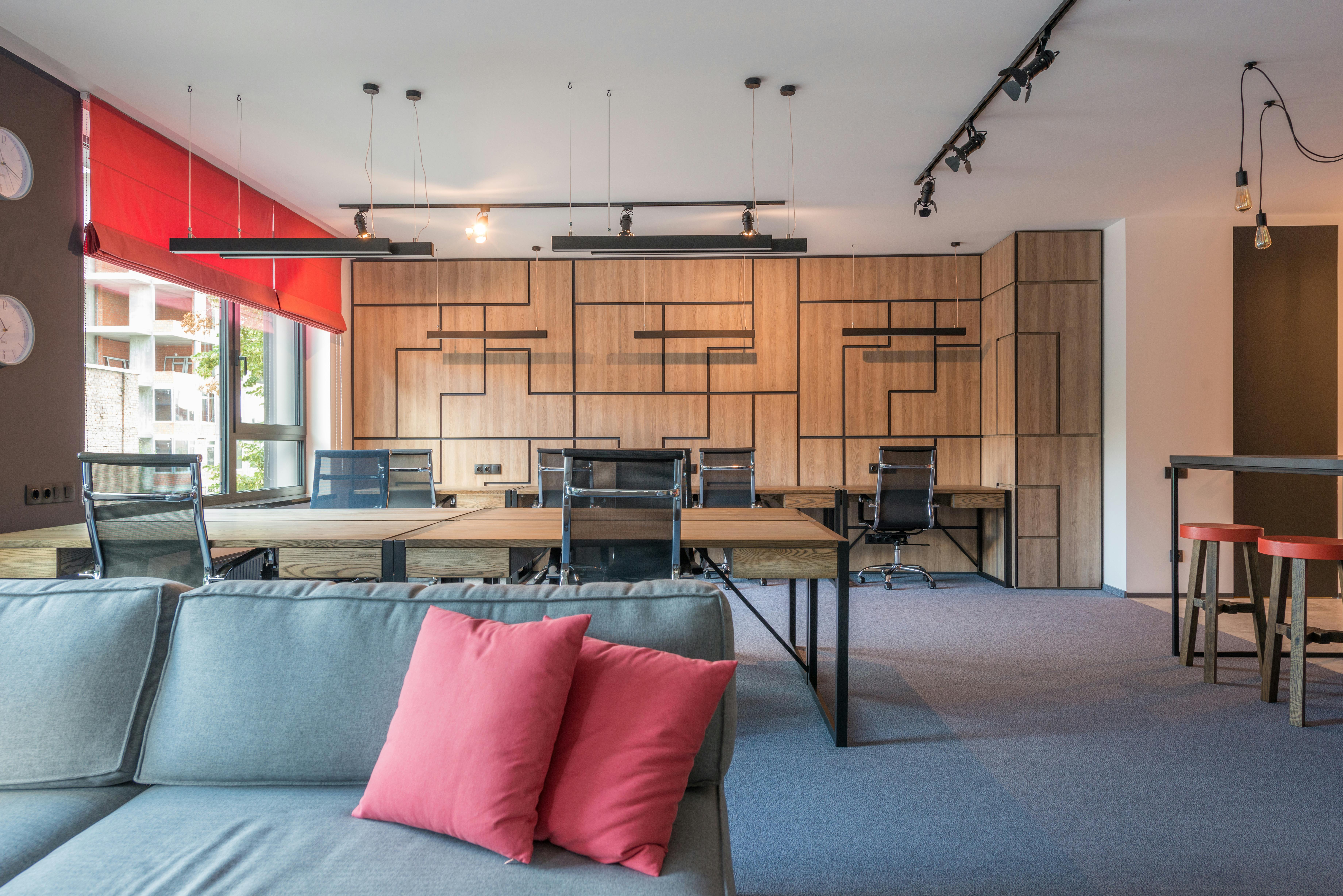
The growth case for relocation is compelling on paper, but it only holds up if the new office actually improves how people work. Workplace decisions have a direct effect on daily business performance, and that connection is worth examining closely.
Designing for Collaboration and Focus
Workplace design does more than determine where people sit. Thoughtful layouts shape employee experience, reinforce company culture, and signal how an organisation expects its people to work together.
A relocation creates a rare opportunity to build collaboration spaces and quiet focus zones into the layout from the start, rather than retrofitting them into an existing floor plan. Gallup research consistently shows that hybrid working arrangements affect engagement, making it worth designing spaces that genuinely support different work modes rather than assuming one layout suits everyone.
The environment itself influences morale and retention in ways that are easy to underestimate until a business experiences the difference firsthand.
Modern Infrastructure Supports Better Work
Beyond the physical layout, updated IT infrastructure can transform how reliably a business operates day to day. Older premises often carry legacy wiring, connectivity limitations, and security vulnerabilities that quietly erode operational efficiency without anyone pinpointing the source.
Moving to a new space gives teams a clean starting point for network architecture, communication systems, and hardware integration. Businesses exploring the impact of return-to-office mandates on workplace strategy will find that infrastructure readiness is central to the conversation. When supported by professional planning from a Born To Move commercial moving service, technology transitions and physical logistics can proceed in coordination rather than conflict, reducing disruption during what is already a period of business transformation.
Why Planning Determines Whether Growth Follows
Growth does not follow automatically from a change of address. It follows from deliberate decisions made well before moving day, and from the way those decisions are communicated and managed throughout the organisation.
Align the Move with Business Strategy
A relocation creates real opportunity, but that opportunity only materialises when planning begins with business goals rather than floor plans. Before settling on square footage, leadership should be clear on what the organisation needs to look like in three to five years, and whether a new location actually supports that picture.
Stakeholder engagement matters here more than most teams expect. When department heads, operations leads, and HR contribute early, the decision-making process surfaces requirements that might otherwise emerge as expensive afterthoughts post-move.
Manage Change So People Adopt the Move
Even a well-chosen office falls short if the people moving into it feel disconnected from the decision. Change management shapes whether employees experience relocating to a new global headquarters as progress or disruption, and that distinction directly affects morale, continuity, and company culture.
Clear communication before, during, and after the move protects productivity during business transformation. When teams understand the reasoning and feel considered throughout the process, adoption improves and the relocation delivers what the strategy intended.
Growth Now Also Means Future Fit
Thinking about growth over the long term means looking beyond immediate operational gains. The decisions made during a relocation can also position a business for the expectations it will face in the years ahead.
Sustainability and ESG Shape Relocation Choices
Sustainability is no longer a separate conversation from business strategy. For many organisations, a relocation now presents a direct opportunity to align the physical workspace with broader ESG commitments, making it part of the business case rather than an afterthought.
Building selection, commute patterns, and space efficiency all carry ESG implications that leadership teams are increasingly expected to account for. A move toward flexible workspace, for example, can reduce overall square footage requirements and lower energy consumption in ways that support environmental reporting.
Brand image benefits from this alignment too. When the office visibly reflects how a company intends to operate going forward, it reinforces strategic positioning with clients, employees, and prospective talent alike. The workspace becomes evidence of values, not just a place to work.
How to Tell If the Move Is Paying Off
The real test of a relocation is not how smoothly moving day went. It is whether the decision delivers against the goals that justified it in the first place.
Measuring outcomes across both financial and people dimensions gives the clearest picture. Cost savings from right-sized space, changes in operational efficiency, and employee experience indicators such as satisfaction scores and talent attraction and retention rates all reflect different layers of a move's impact.
Tracking these against the original strategic goals provides a meaningful baseline for comparison. A business that relocated to support growth should be asking whether headcount capacity, team performance, and client proximity have actually moved in the right direction over the following months.
What a Well-Planned Relocation Really Does
A move that reflects genuine business needs can strengthen growth, sharpen operational efficiency, and reinforce company culture in ways that outlast the disruption of moving day itself.
The businesses that benefit most from relocation are those that connect workspace decisions to long-term operating goals from the outset, rather than treating the process as purely logistical. As the earlier sections of this article show, the gains are real, but they depend entirely on strategy, people, and execution staying aligned throughout.
When those elements come together, the new office becomes more than a different address. It becomes evidence that the organisation is building toward something, and that the decision was made with business growth firmly in view.