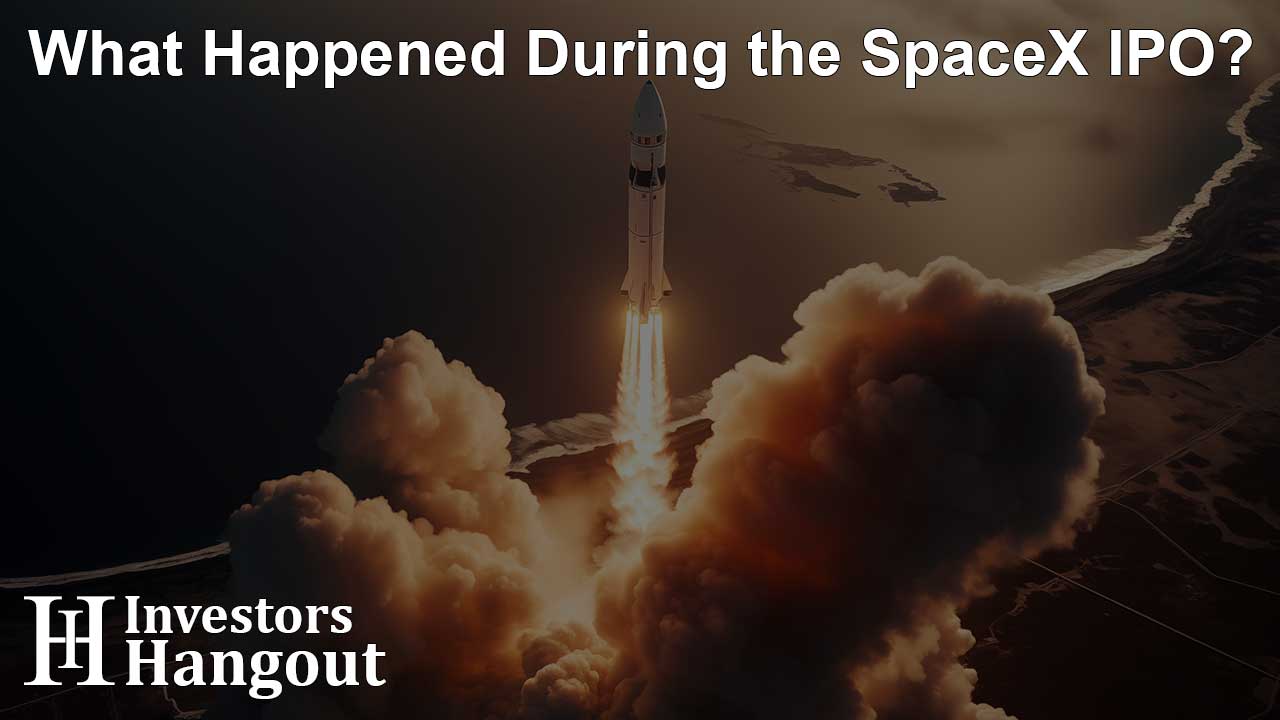
For years, a SpaceX initial public offering (IPO) was considered one of the biggest "what if" stories in the financial world. After more than two decades as a privately held company, that speculation finally became reality in June 2026 when SpaceX officially debuted as a public company.
The IPO shattered records, attracted overwhelming investor demand, and instantly became one of the largest public offerings ever completed. While excitement around the public market launch was immense, the weeks that followed demonstrated that even the world's most innovative companies are not immune to market volatility.
Here's a closer look at what happened during the SpaceX IPO and why it remains one of the defining financial events of 2026.
Why Were Investors So Excited About the SpaceX IPO?
The anticipation surrounding the IPO had been building for years. SpaceX had transformed the aerospace industry through reusable Falcon rockets, rapid launch capabilities, the rapidly expanding Starlink satellite internet network, and the development of its next-generation Starship spacecraft.
Investors looking for growth opportunities also explore alternative markets through crypto exchange platforms like LeveX, NFT investments, and more, but many had long viewed a SpaceX IPO as one of the most anticipated traditional investment opportunities in recent history.
When the company finally announced its plans to go public, demand far exceeded expectations, with institutional and retail investors alike eager to secure shares before trading began.
How Did the SpaceX IPO Work?
SpaceX officially priced its IPO at $135 per share after completing its roadshow in early June 2026. The company listed on the Nasdaq under the ticker SPCX, raising approximately $75 billion in its initial offering and achieving an initial valuation approaching $1.8 trillion.
The sheer size of the offering made it the largest IPO in history, surpassing previous record holders by a considerable margin. The proceeds are expected to support continued investment in Starship, Starlink, launch infrastructure, artificial intelligence initiatives, and future space exploration projects.
The First Day of Trading
Trading began on June 12, 2026, and investor enthusiasm immediately pushed shares well above their IPO price. The stock opened around $150 before climbing further throughout the day. By the market's close, SpaceX shares had surged nearly 19%, giving the company a valuation exceeding $2 trillion and making it one of the world's most valuable publicly traded businesses almost overnight.
The successful debut reflected enormous confidence in SpaceX's long-term growth potential. Investors cited the company's leadership in commercial launches, government contracts, Starlink's recurring revenue model, and ambitious vision for future space exploration as key reasons behind the strong demand.
Why Did the Stock Became Volatile After the IPO?
Although the IPO was an overwhelming success, the weeks that followed highlighted the realities of investing in newly public companies. After reaching early highs, SpaceX shares experienced significant swings as investors weighed the company's lofty valuation against execution risks.
Concerns surrounding Starship development, broader weakness in the technology sector, rising interest rates, and profit-taking by investors all contributed to increased volatility. By mid-July, shares had fallen below their IPO price, wiping out more than $1 trillion in market value from their post-IPO peak.
While the decline drew considerable attention, analysts noted that sharp price movements are common following high-profile IPOs, particularly for companies carrying exceptionally high growth expectations.
Was the IPO Still Considered a Success?
Despite the stock's pullback, most analysts continue to view the IPO itself as a major success. The company successfully raised tens of billions of dollars by accessing public capital markets to fund future expansion.
SpaceX now has additional financial flexibility to accelerate development across multiple business segments, including reusable launch vehicles, Starlink satellite internet, national security programs, AI computing infrastructure, and long-term Mars exploration initiatives. For investors focused on long-term innovation rather than short-term price movements, the IPO represented the beginning of a new chapter rather than a final destination.
What Does the SpaceX IPO Mean for Investors?
Investors no longer need access to private funding rounds or secondary markets to gain exposure to SpaceX. Shares now trade publicly on the Nasdaq under the ticker SPCX, making ownership accessible through most brokerage accounts.
However, the company's first several weeks as a publicly traded company also serve as a reminder that even industry leaders can experience significant market fluctuations. Investors considering SpaceX should evaluate both its extraordinary long-term opportunities and the risks associated with large-scale technological development, competition, regulatory changes, and market sentiment.
The Future of SpaceX as a Public Company
The SpaceX IPO marked a historic turning point for both the company and the financial markets. After years of speculation, SpaceX successfully transitioned from one of the world's most valuable private companies to one of its most closely watched public corporations.
Although the stock has experienced considerable volatility since its debut, investor interest remains exceptionally strong as the company continues to expand Starlink, advance Starship testing, secure commercial and government launch contracts, and invest in next-generation technologies.
Whether shares rise or fall in the near term, the IPO has already secured its place as one of the most significant financial milestones in modern market history.