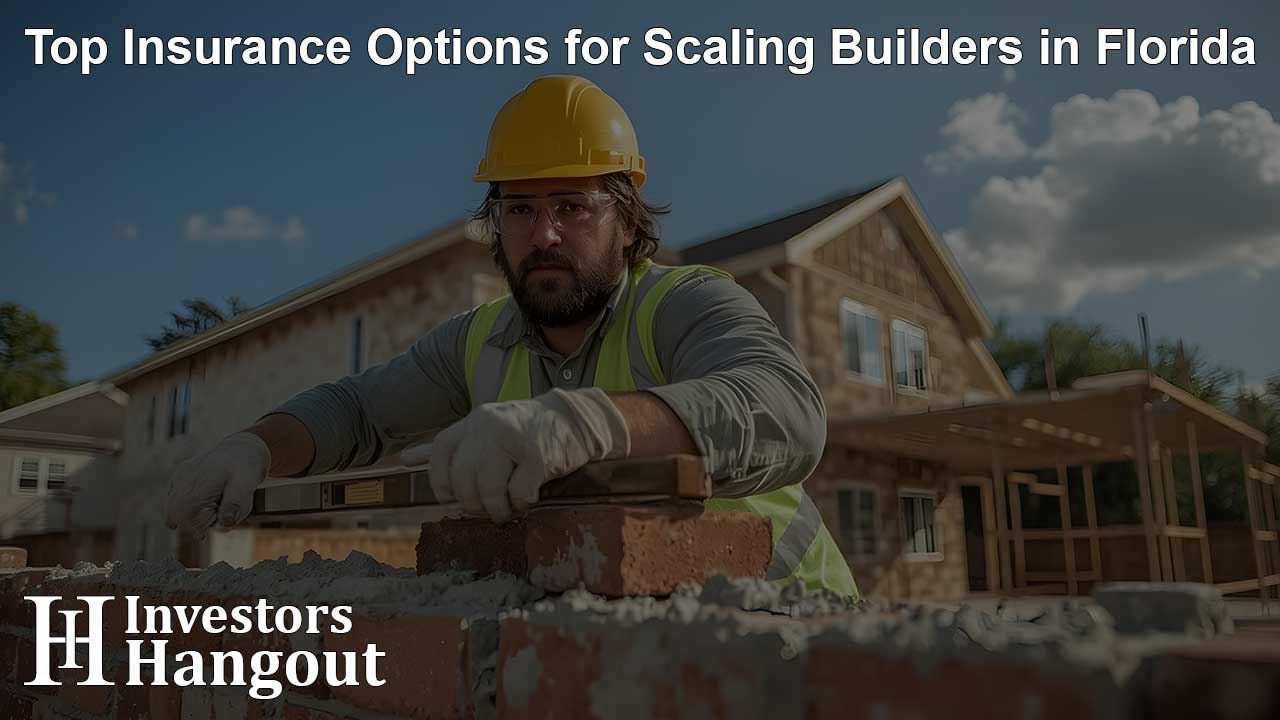
Most Florida builders don't realize their insurance program is already behind their growth curve until a general contractor kicks a certificate of insurance request back or a new hire triggers a workers' comp audit. Insurance options for scaling builders look completely different at $2M in revenue versus $8M, and that gap catches a lot of people off guard. Managing rising premium costs as project values climb, keeping coverage current across multiple job sites, and adjusting for fluctuating subcontractor counts are real, recurring headaches. After reviewing these providers closely, this guide breaks down which options actually hold up as your operation grows.
Behind the ranking
Each option on this list was evaluated by pulling publicly available information, including detailed coverage pages, financial strength ratings, and documented track records in construction-specific contexts. Only companies that showed clear, proven experience serving contractors and builders made the final cut.
→ See the full research breakdown
-
Affordable Contractors Insurance - Best for contractor and construction business insurance
-
AmTrust Insurance - Best for small business and commercial workers' compensation insurance
-
Hiscox - Best for small business liability and professional indemnity insurance for construction, architecture, and engineering firms
-
Zurich - Best for commercial property-casualty insurance for mid-sized and enterprise construction businesses
-
Liberty Mutual - Best for commercial construction insurance and workers' compensation coverage
The Real Impact of Insurance Options For Scaling Builders
Picking the wrong insurance setup doesn't just cost money. It can stall a project, get you disqualified from a bid, or leave your crew exposed when something goes sideways on a job site.
Scaling builders face a specific set of pressures that standard business insurance doesn't always account for. Finding insurance policies that scale with fluctuating crew sizes and subcontractor counts is harder than it sounds, especially when your roster changes project to project.
And as project values grow, premium costs tend to follow in ways that aren't always predictable or proportional. The right provider understands that relationship and structures coverage to fit your needs.
Specialized coverage matters because it's built around how construction businesses actually operate. That means better total insured project value versus premium cost ratios, fewer coverage gap incidents per project cycle, and certificates of insurance that come back fast enough to keep your bids moving.
5 Top Picks at a Glance
Note: All data in this table is sourced from review platforms and the official websites of the listed companies.
|
Company Name |
Years Operating |
Best For |
|
Affordable Contractors Insurance |
Est. 2011 |
Contractor and construction business insurance |
|
AmTrust Insurance |
Est. 1998 |
Small business and commercial workers' compensation |
|
Hiscox |
Est. 1901 |
Small business liability and professional indemnity |
|
Zurich |
Est. 1872 |
Mid-sized and enterprise construction businesses |
|
Liberty Mutual |
Est. 1912 |
Commercial construction and workers' compensation |
1. Affordable Contractors Insurance - Best for Contractor and Construction Business Insurance
How Does Affordable Contractors Insurance Help Its Customers?
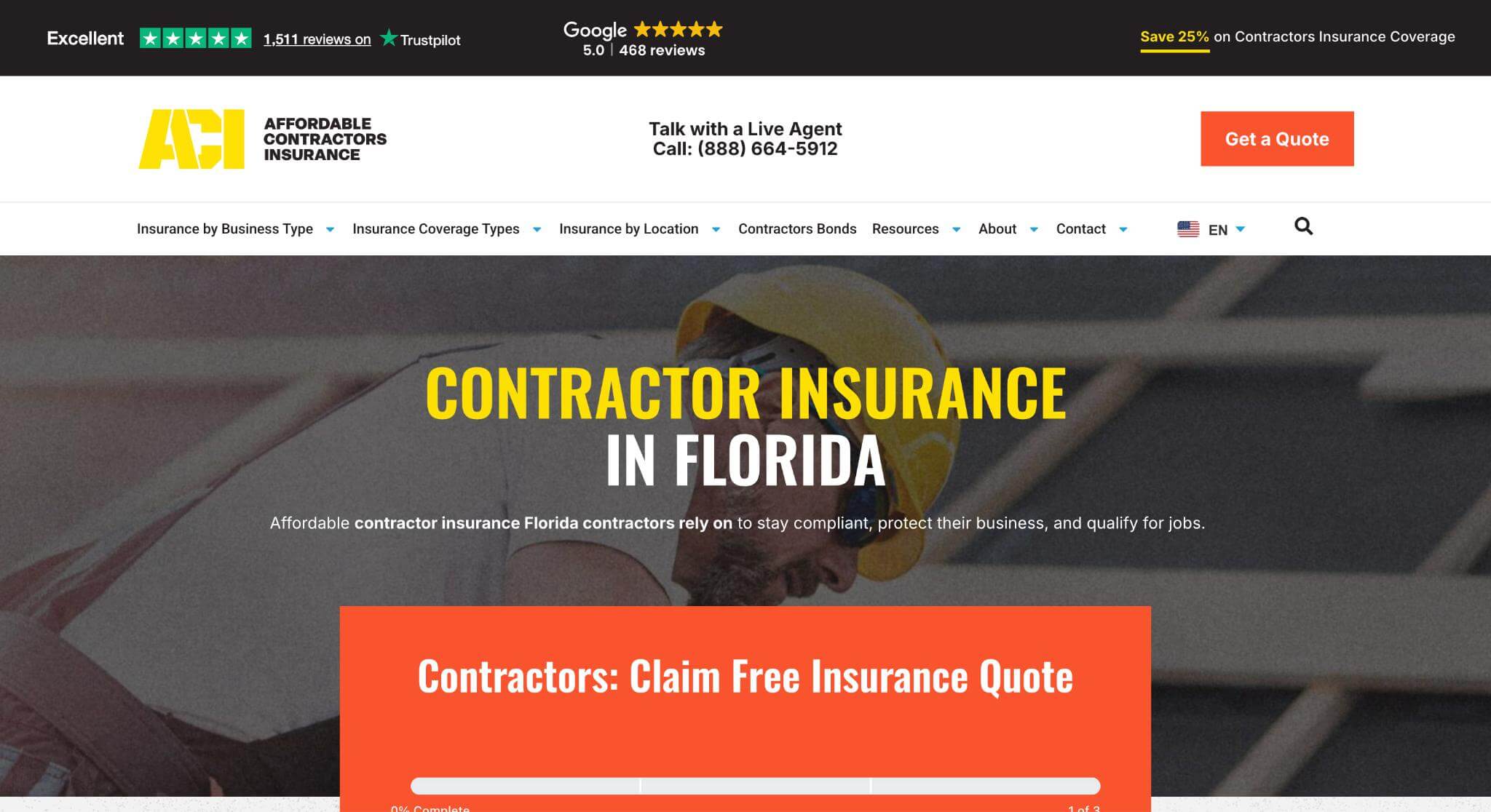
Affordable Contractors Insurance operates as a brokerage built for contractors and trade professionals, which already sets it apart from a generalist agency. They cover general liability, workers' compensation, commercial auto, builder's risk, tools and equipment coverage, and umbrella liability. For a scaling builder in Florida, that kind of full-stack coverage under one roof matters a lot. Their same-day policy binding and fast certificate-of-insurance turnaround directly address one of the most common friction points in construction: getting compliant quickly so projects can move forward.
What Sets Affordable Contractors Insurance Apart from Insurance Options For Scaling Builders?
Builders who are actively growing often hit coverage gaps because their insurance wasn't designed to flex with them. Affordable Contractors Insurance addresses that directly by specializing in contractor-specific programs from day one. That focus on trade professionals, rather than serving every industry equally, tends to produce faster service and coverage that fits construction timelines without requiring constant back-and-forth.
Real User Sentiment:
From what's publicly visible, contractors consistently point to speed and accessibility as the standout qualities here. The combination of same-day binding and contractor-focused service gets mentioned repeatedly, which is exactly what you'd expect from a shop that does this and nothing else. That kind of specialization is rare in an insurance market where most brokerages try to serve everyone.
2. AmTrust Insurance - Best for Small Business and Commercial Workers' Compensation Insurance
How Does AmTrust Insurance Help Its Customers?
AmTrust Financial Services has been at this since 1998, and its scale tells a real story. As the third-largest workers' compensation provider in the country, they carry over 500,000 small commercial policies. For construction businesses where workers' comp is both a legal requirement and a major cost, that depth of experience matters. They also cover general liability and business owners policies, and their AmTrust Genius platform brings a tech layer to the underwriting process that smaller carriers simply can't match. Their focus on low-hazard and niche risks means builders aren't competing for attention with massive industrial accounts.
What Sets AmTrust Insurance Apart from Insurance Options For Scaling Builders?
Workers' compensation costs can spiral quickly for growing construction firms, especially as the experience modification rate starts shifting with each claim cycle. AmTrust's specialization in small commercial workers' comp gives them real pricing and underwriting depth in that space. From what the data shows, their combination of carrier scale and niche focus keeps coverage accessible without pushing smaller contractors into the residual market.
Real User Sentiment:
AmTrust holds an A- (Excellent) rating from AM Best and picked up a 5-Star Claims Excellence Award in 2025. Those markers tend to align with what users report: responsive claims handling and a process that doesn't feel like a black box. The Northcoast 99 Best Places to Work recognition from 2017 and 2018 suggests a team culture that carries into client-facing work. From what the reviews show, small contractors tend to feel like actual clients rather than policy numbers.
3. Hiscox - Best for Small Business Liability and Professional Indemnity Insurance
How Does Hiscox Help Its Customers?
Hiscox has been operating since 1901 (that's over 120 years of underwriting experience), and their focus on niche property and casualty coverage gives it a specific edge for construction-adjacent professionals. They serve architecture and engineering firms, artisan subcontractors, and small business owners who need both general liability and professional indemnity coverage. With over 600,000 small business customers and a team spanning 14 countries and 34 offices, Hiscox brings genuine scale to specialized coverage. Their A (Excellent) rating from A.M. Best backs up the financial stability side of the equation.
What Sets Hiscox Apart from Insurance Options For Scaling Builders?
Design-build firms, structural engineers, and specialty subcontractors often struggle to find a single carrier that handles both professional liability and general liability without awkward coverage gaps. Hiscox is one of the few carriers that bridge that split cleanly. That dual-coverage capability is particularly relevant for Florida builders working with architects or engineering consultants on larger residential or commercial projects.
Real User Sentiment:
Winning "Insurer of the Year" six times in eight years at the Insurance Times Awards is the kind of track record that's hard to dismiss. Hiscox also earned recognition as Top Small Business Insurance Service Provider for 2025 from Insurance Business Review Magazine, which reflects what smaller operators tend to report: accessible coverage and a claims process that doesn't feel designed to frustrate. For a firm this large, consistent award recognition over time signals something more than marketing.
4. Zurich - Best for Commercial Property-Casualty Insurance for Mid-Sized and Enterprise Construction Businesses
How Does Zurich Help Its Customers?
Zurich North America has been operating on this continent since 1912, and its construction credentials are unusually concrete (no pun intended). They've backed projects including the Hoover Dam, Madison Square Garden, and the Confederation Bridge, which is the kind of track record that mid-sized and larger builders notice when evaluating a carrier. They cover commercial property and casualty risks across multiple industries, with programs designed for complex construction exposures. Serving 90% of the Fortune 500 means their risk management infrastructure is built for scale, though they also serve middle market businesses with similar rigor.
What Sets Zurich Apart from Insurance Options For Scaling Builders?
As Florida builders take on larger commercial projects or multi-site residential developments, coverage requirements grow fast. Zurich's experience managing large-scale construction risk gives it a structural advantage in that tier. Their Transactional Net Promoter Score of 82 in Q4 2021, against an industry average of 36, points to a claims and service experience that actually holds up under pressure.
Real User Sentiment:
Zurich doesn't chase volume recognition from small-business award programs. Their reputation is built on credibility and landmark project involvement. From what the data shows, clients who work with Zurich at the commercial construction level consistently reference the quality of their risk management support as something that goes beyond a standard policy relationship. That kind of depth is hard to match at lower tiers of coverage.
5. Liberty Mutual - Best for Commercial Construction Insurance and Workers' Compensation Coverage
How Does Liberty Mutual Help Its Customers?
Liberty Mutual has been in business since 1912, and at over 45,000 employees with 40 international offices, they operate at a scale that gives them real pricing power across commercial construction lines. They offer commercial multiple peril, general liability, and workers' compensation products designed for construction and building operations. Their two business units, US Retail Markets and Global Risk Solutions, mean they can serve a Florida residential builder and a complex commercial contractor through the same carrier relationship. The digital tools are genuinely strong, with their mobile apps rating 4.8 stars on the App Store and 4.6 on Google Play.
What Sets Liberty Mutual Apart from Insurance Options For Scaling Builders?
For builders who are growing their revenue base and need a carrier that won't create friction as policy scope increases, Liberty Mutual's combination of construction-specific product lines and global carrier infrastructure gives them an unusual ability to scale alongside a client. Their 112-year track record in commercial coverage means they've seen market cycles that newer carriers haven't, and that experience shows in how they structure coverage for contractors with variable project pipelines.
Real User Sentiment:
Liberty Mutual earns recognition as a Best Place to Work consistently, and while that's an internal metric, it tends to reflect in how their teams engage with clients. Customer feedback on their digital experience is notably positive (not cheap praise in the insurance world, where apps are often an afterthought). From what the reviews show, contractors who work through Liberty Mutual for commercial coverage find the overall experience more polished than many regional alternatives.
How These Were Chosen and Verified
The Data Collection Phase Explained
The research process started by building a broad longlist of insurance providers actively serving the construction and building sector in Florida and across the U.S. Sources included industry directories, insurance review platforms, contractor forums, and the official websites of carriers and brokerages with documented construction coverage programs. Each candidate was flagged based on visible market presence, including published coverage types, carrier partnerships, and any publicly available case studies or client success documentation relevant to contractors and builders. The goal at this stage was breadth, not filtering.
The Shortlisting Pass
From the initial longlist, options without verifiable track records in construction-specific insurance were removed. This pass focused on reviewing patterns in reviews rather than isolated ratings. Carriers and brokerages with inconsistent review histories, thin public footprints, or no documented contractor-specific coverage programs were deprioritized. The shortlisting pass also flagged any providers where publicly available information didn't match their stated service areas or coverage specializations. What remained was a tighter group of options with clear, demonstrable relevance to scaling builders.
Verification Pass
Each shortlisted company went through a verification pass that cross-referenced website claims against what appeared in independent reviews and third-party coverage analyses. Where a carrier claimed fast certificate of insurance turnaround, that claim was checked against user-reported experiences. Where a brokerage listed construction-specific coverage types, those product lines were confirmed against publicly available policy documentation or carrier relationships. The goal was to catch any gaps between how a company presents itself and how it actually performs for construction clients dealing with real project timelines and compliance requirements.
Industry Recognition and Authority
Financial strength ratings from A.M. Best and similar agencies were reviewed for each carrier included here. Industry award history was also factored in, not as a top-level signal, but as a supporting marker of sustained performance. Companies that appeared in relevant insurance trade publications, earned carrier-level recognition, or held recognized financial ratings received higher weight in the final evaluation. Recognition from within the insurance industry carries a different meaning than general business awards, and both were treated accordingly.
Evidence Specific to Insurance Options For Scaling Builders
The final evaluation layer focused on how each company addressed the needs of growing construction businesses. This included checking for dedicated service pages for contractor coverage, verified reviews from construction professionals, documented coverage for variable crew sizes or multi-site projects, and any available data on certificate of insurance processing speed. Companies that showed explicit, documented alignment with the scaling builder use case, rather than generic small business positioning, were ranked higher in the final list.
What to Look For When Choosing Insurance Options For Scaling Builders
The right insurance fit for a growing construction business comes down to more than price. Coverage that holds up across different project types, crew sizes, and compliance requirements is what actually protects your business as it grows.
-
Industry/Domain Experience: Look for providers with documented, specific experience serving contractors and builders, not just general small business clients. Construction risk is different, and carriers who know that write better policies.
-
Features and Service: Your coverage program should include general liability, workers' comp, commercial auto, builder's risk, and umbrella liability as a baseline. A provider that bundles these cleanly saves time and reduces the risk of gaps between policies.
-
Pricing Structure: Premiums should scale with your actual revenue and payroll, not jump arbitrarily as you grow. Ask how pricing adjusts when you add subcontractors or take on a larger project.
-
Results Measurement: Certificate of insurance turnaround time and claims response speed are the two practical benchmarks that matter most during active project work. Both should be clearly defined before you bind.
-
Industry Knowledge and Compliance: Florida has specific contractor licensing and state insurance requirements that your provider needs to understand. A carrier or broker without that local knowledge will cost you time and potentially coverage.
Final Take
Growing a construction business in Florida without the right insurance foundation is a real risk, not just a compliance formality. The five options covered here span a wide range of scale, specialization, and coverage depth. Affordable Contractors Insurance fits most small to mid-sized contractors who need fast, flexible coverage built for the trade. AmTrust and Liberty Mutual bring carrier strength to workers' comp and commercial lines. Hiscox suits design-build professionals, and Zurich steps in as project needs grow.