In today's fast-paced healthcare and insurance environment, organizations are under increasing pressure to manage claims efficiently while maintaining compliance and accuracy. Manual claims processing is often time-consuming, prone to errors, and can lead to delayed reimbursements, denials, and revenue loss. Automated claims processing solutions have emerged as a key strategy for organizations looking to streamline workflows, reduce administrative burden, and accelerate revenue cycles.
Automated claims processing integrates technology, digital workflows, and sometimes AI-driven tools to handle the full lifecycle of a claim. This can include everything from verifying eligibility and reporting a first notice of loss to submitting claims, monitoring approvals, and posting payments.
As adoption grows, organizations are evaluating software solutions that can scale with their operations, integrate with existing systems, and provide reliable reporting and analytics. Below, we present the top 10 automated claims processing software platforms for 2026, followed by insights into their benefits, key features, and what to consider when selecting the right solution for your organization.
Top 10 automated claims processing software for 2026
-
VCA Software
-
Aptarro
-
Waystar
-
Availity
-
Optum
-
TriZetto Provider Solutions
-
Experian Health
-
FinThrive
-
R1 RCM
-
eClinicalWorks
What Is Automated Claims Processing?
Automated claims processing is the practice of using technology to handle claims with minimal human intervention. It focuses on improving the speed, accuracy, and efficiency of submitting, tracking, and reconciling claims while reducing errors and administrative overhead. Unlike traditional manual processes, which involve paper forms and repetitive data entry, automated claims processing leverages digital workflows, rule-based systems, and sometimes AI to ensure claims are clean and compliant before submission.
This approach benefits organizations by shortening reimbursement and resolution cycles, lowering the risk of claim denials or delays, and freeing staff from repetitive tasks. By automating repetitive and error-prone steps, organizations can focus on patient care or policyholder experience while improving financial performance.
The following table outlines the main stages of automated claims processing:
|
Stage |
What it Involves |
|
Eligibility verification / first notice of loss |
Confirming coverage or intake of a new claim before work begins. |
|
Coding and claim preparation |
Assigning accurate codes and preparing claims based on documentation. |
|
Claim submission and transmission |
Sending claims electronically to payers, carriers, or clearinghouses. |
|
Adjudication and payer response |
Receiving approvals or denials and interpreting payer feedback. |
|
Payment posting and reconciliation |
Recording payments, remittances, and adjustments. |
By automating these stages, organizations reduce errors, improve first-pass claim acceptance, and create a more predictable cycle. In the process, it lays the groundwork for smoother interactions between providers, payers, adjusters, and policyholders.
What Is Automated Claims Processing Software?
Automated claims processing software is the tool or platform that enables the digital and automated workflows described above. While "automated claims processing" refers to the overall approach or strategy, the software is the practical means through which organizations implement this approach. It replaces manual claim handling with digital solutions that streamline, monitor, and optimize the entire claims lifecycle.
This software centralizes key processes, such as eligibility or intake, submission, denial or status tracking, and reporting, into a single system. Beyond automation, it provides visibility into claim statuses, performance metrics, and potential bottlenecks, helping administrators make informed decisions to enhance financial outcomes.
Below is a table showing how automated claims processing software differs from traditional manual workflows:
|
Traditional manual process |
Automated software approach |
|
Paper-based claim forms and manual data entry |
Electronic submission with standardized digital forms |
|
Manual eligibility or intake checks |
Real-time verification through connected databases |
|
Manual coding and claim review |
Automated claim preparation and code/data verification |
|
Manual follow-up on denials or open items |
Integrated tracking and workflow for resubmissions |
|
Spreadsheet-based payment reconciliation |
Dashboards and automated reporting for payment posting and AR management |
Automated claims processing software provides the infrastructure to implement automated claims processing effectively. It reduces errors, increases efficiency, and helps ensure compliance with payer and regulatory requirements.
Top 10 Automated Claims Processing Software for 2026
1. VCA Software
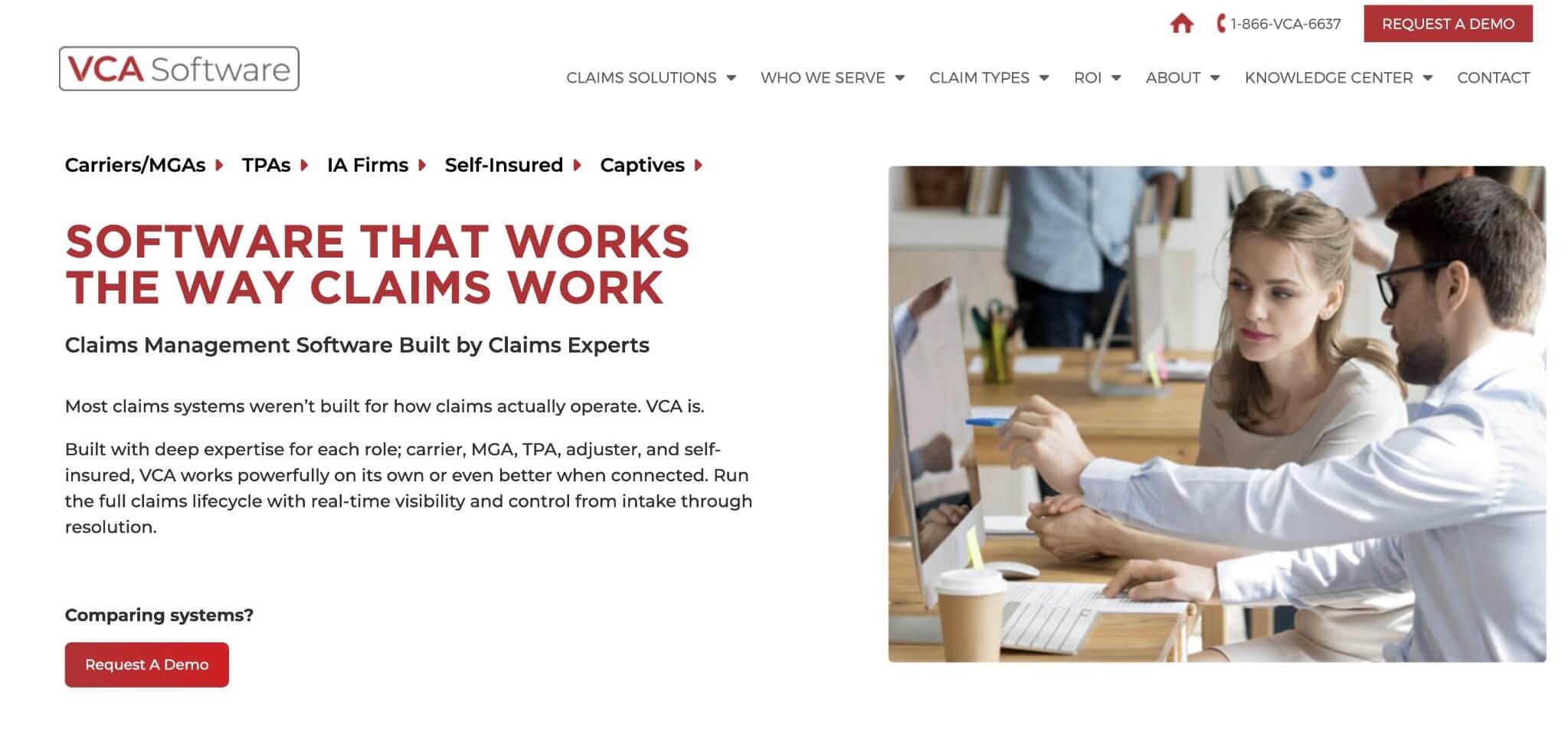
VCA insurance claims management software takes a claims-first approach to automation, built specifically around how property, casualty, auto, liability, and CAT claims actually move through an organization. At the center of the platform is ClaimsCore, a configurable claims engine with built-in Lloyd's reporting, created to work well as a standalone system or connected to complementary modules.
The platform's low-code/no-code environment lets carriers, MGAs, TPAs, and independent adjusting firms customize fields, file layouts, rules, and workflows without heavy IT involvement -a draw for organizations that want flexibility without a lengthy development cycle. VCA also emphasizes fast onboarding, with implementation in as little as two to three weeks for premier clients and file handlers reportedly productive within an hour of training.
Beyond the core engine, VCA provides optional modules including a policyholder-facing mobile app for reporting and tracking claims, real-time digital claim payments, bi-directional integration with policy and underwriting systems, and interactive analytics dashboards. The company also markets ClaimsAI, an in-workflow assistant aimed at helping adjusters summarize claim files, review documents, and surface outstanding items while keeping the adjuster in control of decisions. VCA positions itself at a mid-range price point relative to competitors, with claimed reductions in claims-journey costs of up to 30%. Organizations comparing systems can request a demo directly through VCA to see the platform in action.
2. Aptarro
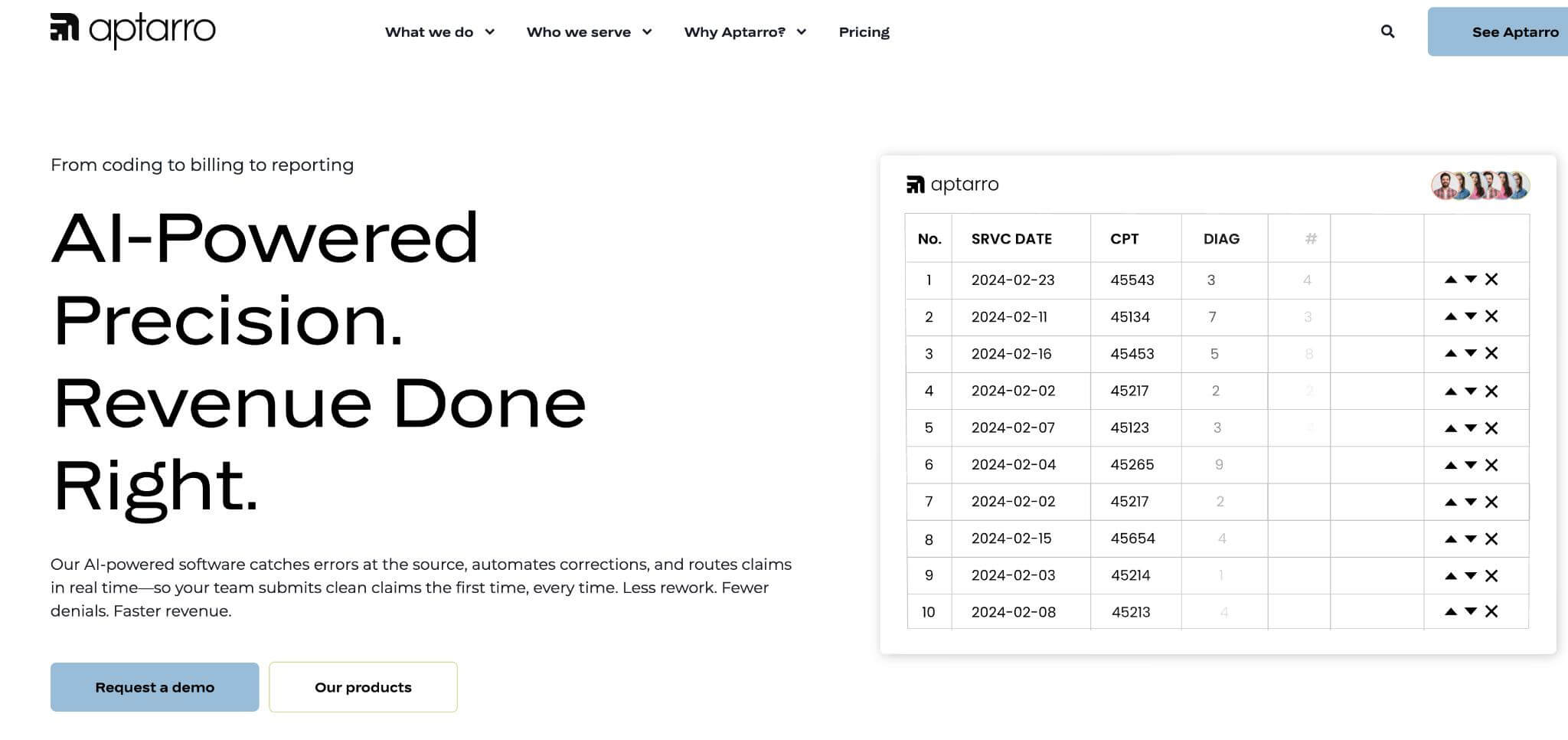
Aptarro stands out as a comprehensive revenue cycle management platform, providing robust support for automated claims processing through its RevCycle Engine. The platform is tailored to optimize the end-to-end claims workflow and improve operational efficiency for healthcare providers. Its technology enables a streamlined approach to claim submission, monitoring, and reconciliation, helping organizations reduce administrative burden and improve revenue predictability.
3. Waystar

Waystar is recognized for its powerful automation and analytics capabilities in claims management. It simplifies claim submissions, improves visibility into claim statuses, and reduces the risk of denials. Healthcare organizations using Waystar benefit from streamlined processes and increased operational efficiency.
4. Availity

Availity is a leading platform for automated claims processing and clearinghouse management. It helps healthcare organizations streamline claim submissions, reduce errors, and improve workflow efficiency. Providers value Availity for its reliability, broad payer connectivity, and ability to support a variety of practice sizes.
5. Optum
Optum is widely adopted by healthcare providers for its robust claims processing and workflow management. The platform helps streamline claim submissions and ensures consistency across large health systems. Its robust approach supports efficient revenue cycle operations.
6. TriZetto Provider Solutions

TriZetto Provider Solutions is distinguished by its clearinghouse capabilities and claim management efficiency. The software helps organizations process claims accurately and quickly, providing clear visibility into the status of submissions. TriZetto is a trusted solution for organizations that want to prioritize both speed and accuracy.
7. Experian Health

Experian Health provides dependable claims management and payer connectivity. It helps providers maintain smooth workflows and reduces administrative overhead. Its platform is noted for its user-friendly interface.
8. FinThrive
FinThrive supports automated claim submissions and clearinghouse interactions. Providers appreciate its efficiency and integration with existing revenue cycle systems. The software helps organizations manage claims with greater consistency and speed.
9. R1 RCM

R1 RCM delivers a hybrid approach combining automation and managed services. The platform helps healthcare organizations streamline patient intake, claim submission, and denial resolution. R1 RCM supports improved operational efficiency and faster reimbursements.
10. eClinicalWorks
eClinicalWorks integrates claims management with EHR and practice management systems. The platform supports small- to mid-sized practices by automating routine claim workflows and improving visibility across revenue cycle operations. It is valued for its unified approach.
Benefits of Automated Claims Processing Software
Automated claims processing software brings significant advantages to organizations by enhancing efficiency, accuracy, and overall financial performance.
Improved claim accuracy and reduced denials. By minimizing manual entry and standardizing workflows, automated software reduces the errors that can lead to claim denials. This leads to higher first-pass acceptance rates and fewer resubmissions.
Faster reimbursement and resolution cycles: Automation shortens the time between service delivery (or loss) and payment posting, supporting healthier cash flow and reducing days in accounts receivable.
Lower administrative burden and operational costs. By handling repetitive tasks, automated software allows staff to focus on higher-value activities, improving efficiency and reducing labor costs.
Better scalability and handling volume surges Automated solutions adapt to fluctuating claim volumes without requiring proportional increases in staffing, supporting organizational growth.
Enhanced analytics and reporting dashboards and reporting tools provide real-time insights into claim statuses, denial trends, and performance, helping organizations make informed decisions.
Key Features of Automated Claims Processing Software
Understanding key features can help your organization choose the right solution for its needs.
Eligibility verification / intake automation: Ensures coverage or first notice of loss is confirmed in real-time, reducing rejected or delayed claims.
Claim scrubbing and coding support: Identifies potential errors before submission, improving the chances of first-pass claim acceptance.
Denial or exception management and automated resubmission: Flags denied or stalled claims and streamlines resubmission or follow-up workflows, reducing revenue loss.
Integration with other systems: Supports seamless interaction with EHR, policy administration, underwriting, or payer networks, creating unified workflows and minimizing manual handoffs.
Real-time reporting and analytics provide visibility into claims performance, supporting data-driven decision-making and operational optimization.
What to Consider When Purchasing Automated Claims Processing Software
Selecting the right solution requires careful evaluation of technical and operational factors to ensure that it integrates well with your organization. Here are some of the main things to consider:
Integration and interoperability: Ensure the software connects smoothly with existing systems to avoid workflow disruptions or data silos.
Compliance, security, and network coverage: Confirm the platform adheres to regulatory standards and connects reliably with all relevant payers or partners.
Scalability and volume capacity: The solution should handle your current and projected claim volumes without performance issues.
Vendor support and updates: Access to strong customer support and regular updates is essential for maintaining compliance and optimizing workflows.
Cost structure and ROI: Evaluate licensing, implementation, and operational costs against potential efficiency gains and financial benefits.
Optimizing Your Claims Operation with Automated Claims Processing
Automated claims processing software is transforming how organizations manage claims and revenue cycles. Platforms like VCA insurance claims management software, Aptarro's RevCycle Engine, and Waystar provide efficiency, accuracy, and visibility, helping carriers, TPAs, adjusting firms, practices, and hospitals reduce administrative burden and accelerate resolution.
Investing in automated claims processing tools enables organizations to focus on patient care or policyholder experience while maintaining financial stability. To see firsthand how VCA's claims management platform can improve your claims workflows, request a demo today and explore the full potential of automation for your claims operation.