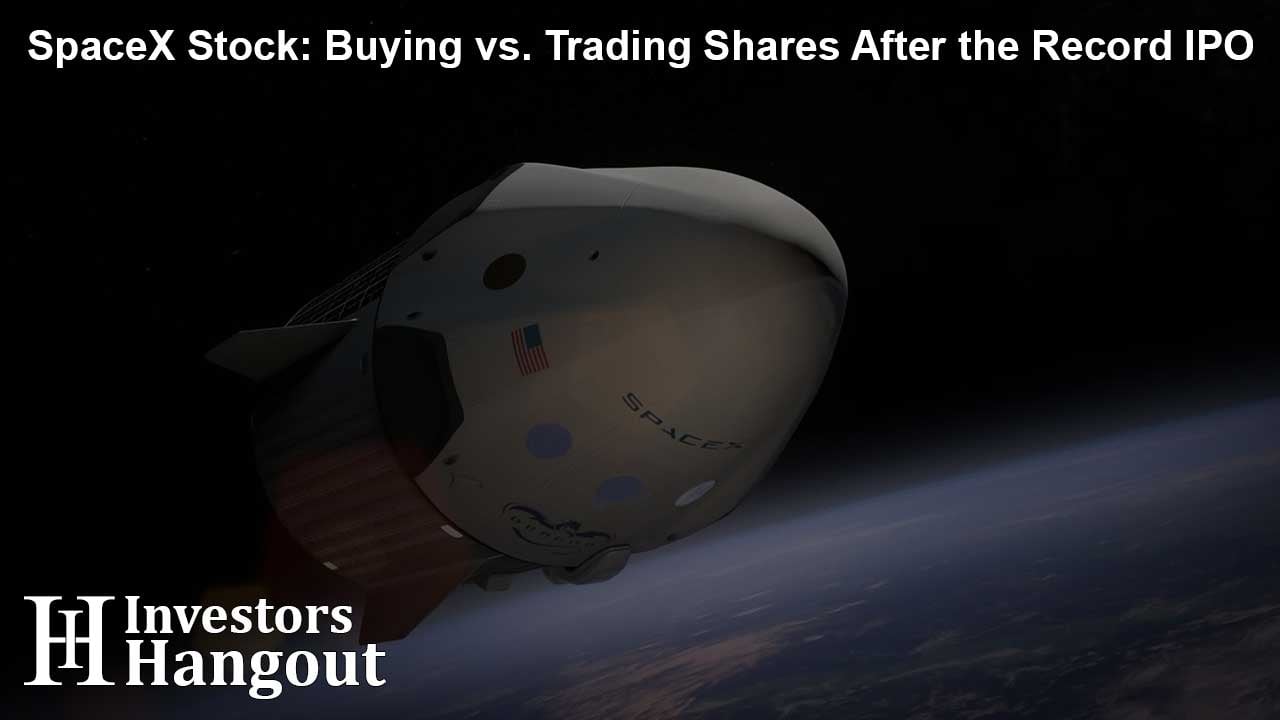
SpaceX's Nasdaq listing in June 2026 became the biggest stock market debut of all time, and the story hasn't quieted down since. Months later, the stock is still one of the most searched and most volatile large-cap names on the market.
For anyone weighing how to get involved, there are two practical routes. The first is buying the shares outright and holding a genuine stake in the company. The second is trading SpaceX stock through a CFD, which lets you take a position on the price without ever owning it. Each route works differently, and each carries its own risk profile.
A Recap of the Largest IPO in History
SpaceX set its offer price at $135 a share on 11 June 2026, the day before shares began changing hands on Nasdaq. The listing covered 555,555,555 Class A shares, aiming to raise $75 billion and putting a price tag of roughly $1.77 trillion on the business, with only around 5% of total shares actually in public hands. Once the 15% greenshoe allowance is factored in, the deal raised close to $86 billion in total.
Scale wasn't the only unusual part. Retail investors were allocated around 30% of the offering against an institutional 70%, roughly triple the retail slice that's normal for a listing this size.
Behind the numbers sat a company that generated $18.67 billion in revenue in 2025: Starlink is the profit engine, while heavy spending on AI infrastructure left the group as a whole reporting a $4.94 billion net loss. None of that dampened first-day appetite. SPCX ended its opening session at $161, a gain of 19% on the offer price, valuing the company at around $2.1 trillion, with dollar trading volume on the day outstripping the SPY and QQQ ETFs put together.
Key figures from the listing:
-
Listing date: 12 June 2026, on Nasdaq under ticker SPCX
-
IPO price: $135 per share
-
Shares offered: approximately 555.6 million Class A shares
-
Valuation at pricing: $1.77 trillion
-
First-day close: $161, up 19%
-
Retail allocation: approximately 30% of the offering, roughly three times the usual mega-IPO norm
How the Shares Have Traded Since Debut
The initial surge didn't last. SpaceX's stock lost roughly half its value between the high it hit in the week after listing and late July 2026, a slide sharp enough to briefly cost Elon Musk his position as the only trillionaire on paper. By 18 September 2026, SPCX was changing hands at $152.71, having ranged between $104.83 and $225.64 over the previous 52 weeks, a reminder of how choppy the stock's first few months as a public company have been.
Wall Street sentiment has stayed largely upbeat: of the 36 analysts covering the stock, 29 rate it a buy, five rate it a hold, and two rate it a sell, with price targets averaging $222.42 over a 12-month horizon. Coverage recently has focused on a narrower net loss and a bigger NASA contract, set against ongoing questions about how much capital the AI and data centre push will continue to absorb.
A May 2026 change to Nasdaq's inclusion rules also let SpaceX join the Nasdaq-100 within 15 trading days of listing rather than waiting months, adding index-driven buying to the retail and institutional demand already in the stock.
Two Routes to Exposure: Shares or CFDs
Once a stock has settled into regular trading, most investors choose between two ways of getting exposure: owning the underlying shares, or trading the price through a CFD. Both give an investor a view on where SPCX is headed, but the mechanics, costs and risks differ enough that it's worth weighing up both before picking one.
Buying SpaceX Shares Directly
Owning the shares outright means opening a brokerage account capable of trading US-listed stock, then buying and holding SPCX like any other equity. This route gives an investor a genuine stake in the company, though a limited say in how it's run.
Musk retains 82 to 85% of voting power post-IPO through a dual-class share structure, so retail ownership doesn't translate into meaningful influence over corporate decisions.
The S-1 also disclosed a performance grant of up to one billion additional shares tied to milestones, including a Mars colony target, a detail worth factoring into any long-term view on dilution.
Trading SpaceX CFDs
A CFD lets a trader take a position on SPCX's price movement without ever owning the underlying share. It offers a flexibility that direct ownership doesn't: positions can be taken in either direction, long or short, and margin means a smaller amount of capital can control a larger position size.
CFDs also sidestep some of the practical friction of direct ownership, such as currency conversion or share settlement times, which is part of why they've become a common way to access newly listed, high-profile stocks like SPCX.
That flexibility comes from leverage, and leverage is worth understanding properly before using it, as it magnifies gains and losses alike.
Risks to Weigh Before Taking a Position
Neither route removes risk, and SpaceX's short trading history is a useful illustration of why. A stock that fell roughly 50% from its post-IPO peak within six weeks, then partially recovered, is not a stable holding by any conventional measure.
-
Lock-up expiries - insider shares are locked up for 366 days for Musk, and 180 days, staggered, for other pre-IPO investors. Their eventual release could add meaningful supply to the market.
-
Concentrated control - Musk's super-voting stake means governance decisions sit largely outside shareholder influence, a factor some institutional investors have flagged as a risk.
-
Valuation - at a price-to-sales multiple well above most peers, the stock is pricing in years of future growth that may or may not materialise.
-
Leverage, for CFD positions - losses on a leveraged position can happen quickly, and it's possible to lose more than the amount initially deposited, depending on the provider and account type.
Shares vs. CFDs: The Deciding Factors
SpaceX's IPO reshaped expectations for what a mega-cap listing looks like, from its unusually large retail allocation to the volatility the stock has shown in the months since. Which route suits an investor better comes down to what they're actually looking for: a long-term stake in the company, with the governance trade-offs that come with it, or flexible, leveraged exposure to a stock that has already swung by double-digit percentages more than once in its short life.
Whichever route is chosen, the same principle applies: understand the mechanics and the risks that come with it, and treat SpaceX's volatile trading history so far as a guide to what's possible, not a guarantee of what happens next.
This is general market information, not investment advice. Past performance and analyst price targets are not a reliable guide to what SPCX does next.