Something has been changing quietly in the way people interact with technology. The phone, for all its utility, has started to feel like a limitation rather than a tool in certain situations, and consumers have begun looking for ways to stay connected and capture the world around them without the constant requirement of holding something. Hands-free technology has been a recurring promise in the tech industry for the better part of two decades, but 2026 is the first year where the products delivering on that promise have become genuinely mainstream rather than experimental. The shift is visible across categories, from earbuds that handle calls and translation to wrist-based devices that manage payments and navigation, but perhaps nowhere more clearly than in the growing consumer appetite for wearable camera technology. What is driving this shift is not novelty. There is a growing recognition that the best way to document and experience something at the same time is to remove the device from the equation entirely.
Why Hands-Free Technology Is Having Its Moment
The conditions that have made hands-free technology appealing in 2026 are not hard to trace. Screens have become so central to daily life that the backlash against them was probably inevitable. Studies tracking screen time have shown consistent increases year on year for the better part of a decade, and alongside those numbers has come a cultural conversation about presence, attention, and what is lost when every experience is mediated through a device. Consumers, particularly younger ones, have started making deliberate choices about when and how they use their phones, and that has created an opening for technology that offers the same functionality without the same demands on attention. Hands-free devices do not ask you to look at them. They work in the background, and that quality has become genuinely attractive in a market where the alternative is another screen.
Recording Glasses as a Consumer Product
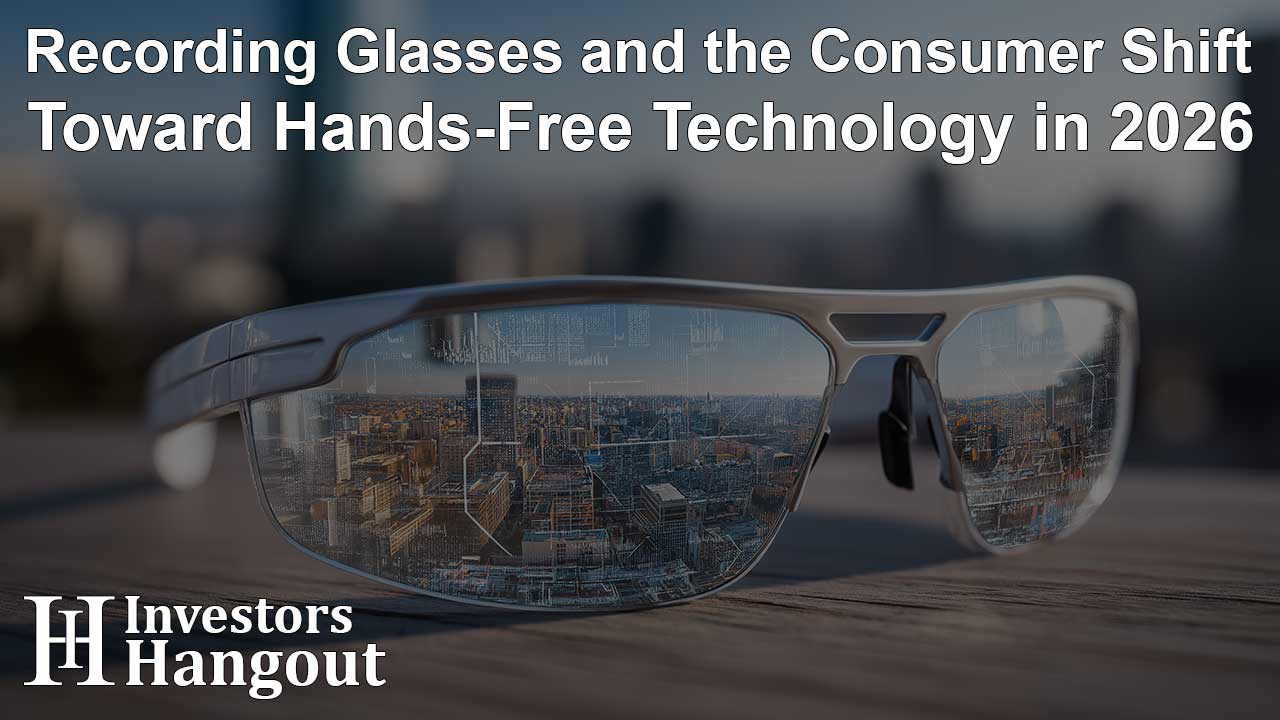
Within the hands-free category, recording glasses have made one of the more interesting journeys from concept to consumer product. Early versions of camera eyewear were met with a mixture of curiosity and suspicion, largely because they looked like technology and raised questions about privacy and social acceptability that the market was not ready to answer. The versions available in 2026 are a different proposition. Frame design has caught up with the technology to the point where smart glasses sit within the normal visual range of everyday eyewear, and the functionality has expanded beyond video capture to include audio, calls, and in some cases augmented reality overlays. The consumer appeal is practical rather than aspirational: people are buying camera eyewear because it solves a specific problem in their daily life, not because it signals membership of an early adopter community. That shift in motivation is significant because it suggests the category has moved past the novelty phase and into something more durable.
The Investment Case for Wearable Camera Technology
For investors watching the consumer technology space, the hands-free category presents an interesting picture. The wearable technology market has been growing steadily, with smart glasses representing one of the faster-moving segments within it. The combination of improved battery life, lighter materials, better camera sensors, and more considered frame design has addressed most of the practical objections that kept early products from finding a broad audience. Consumer adoption tends to follow a predictable curve once a product category crosses the threshold from interesting to useful, and wearable camera eyewear appears to be at or near that threshold in several key markets. The brands investing in this space are doing so with a longer view, building ecosystems around the hardware rather than treating the glasses as a standalone product, which suggests confidence in the category's staying power rather than a short-term bet on a trend.
Privacy, Regulation, and Consumer Trust
No serious discussion of recording glasses as a consumer category can avoid the privacy question. The ability to capture video in public and private spaces without the visual cue of a phone or camera being raised has prompted regulatory attention in several markets, and consumer trust remains a live issue. The industry response has generally moved toward transparency features, indicator lights that signal when recording is active, companion apps that make footage management visible and controllable, and clear terms around data storage. These are not complete solutions but they represent progress, and the markets where adoption has been strongest tend to be the ones where those transparency features have been implemented most clearly. For investors, the regulatory environment is a variable worth tracking closely, since the rules governing wearable cameras in public spaces are still being written in most jurisdictions and the outcome will shape the ceiling for consumer adoption.
How Consumer Behaviour Is Reshaping Product Design
One of the more telling signs that hands-free technology has moved into the mainstream is the way consumer feedback is now driving product development rather than following it. Early wearable tech was designed by engineers and then presented to a market that was expected to adapt. The current generation of smart glasses, such as Ray-Ban AI glasses, and wearable camera devices reflects something different: design decisions shaped by how people actually behave when they are out in the world. Lighter frames, longer battery life, more intuitive capture controls, and frame styles that work across different social contexts have all come directly from consumer behaviour data and feedback. The result is a category that is iterating faster and more responsibly than it did in its earlier phases, and that pace of improvement is itself a signal worth paying attention to from an investment perspective.
The Broader Hands-Free Ecosystem
Recording glasses do not exist in isolation. They are part of a broader hands-free ecosystem that includes smart earbuds, gesture-controlled interfaces, voice-activated assistants, and wrist-based devices, all of which are moving in the same direction: reducing the friction between a person and the technology they use. The consumer who buys camera eyewear is often already using wireless earbuds, a smartwatch, and some form of contactless payment, and the purchasing logic is consistent across all of those decisions. Each device is chosen because it removes a step, eliminates a device from a hand, or keeps attention where it belongs rather than on a screen. For the companies building in this space, the opportunity is not just in the individual product but in how well that product integrates with the rest of the ecosystem a consumer is already living inside.
Conclusion
The consumer shift toward hands-free technology is not a passing phase driven by novelty. It is a response to a genuine and widely felt friction in daily life, the sense that the devices meant to help us are also constantly pulling us away from what we are doing. Recording glasses sit at an interesting point in that story: practical enough to have found a real consumer audience, designed well enough to have shed the self-consciousness of early wearable tech, and positioned within a category that is still early enough in its growth curve to reward careful attention. For consumers, the case is straightforward. For investors watching where the next wave of wearable technology is heading, the hands-free category in general and smart camera eyewear in particular represent one of the more coherent bets available in the current consumer tech landscape.