What ARS / Pink Basic companies do not have to do!!!!
No Form 4 requirement.
No automatic public disclosure of insider sales.
No requirement to report sales in the quarterly reports unless the change in beneficial ownership is large enough that management decides to update the ownership table (and even then, they only show the new total — not the sales themselves).
As long as CEO-David Dalton stays under the radar and does not create a dramatic, obvious drop in the ownership percentage that he is forced to explain, he can:
Move shares into DTC (street name),
Sell them gradually or in blocks through a broker,
And the public has almost no real-time visibility into those sales.
The only public signals that usually appear are:
A noticeable drop in his reported share count in a later quarterly report (like the 100-million-share drop in 2023), or
A large unexplained increase in shares held at DTC.
Until one of those happens, or until regulators get involved, the sales can occur with essentially no public record. This is one of the structural features of the Alternative Reporting Standard that many controlling shareholders of long-running microcap/Pink companies use. It is legal under the current rules.
Management (Dalton) prepares the quarterly and annual ARS reports itself. Without an independent external audit, the figures that appear in those reports -- including the size of accrued liabilities, the characterization of related-party transactions, and certain ownership presentations -- are largely controlled by the same people who benefit from how those numbers are presented.
The absence of independent audits is the deepest vulnerability in the ARS framework. Combined with the lack of real-time Form 4 filings and only periodic ownership snapshots, it allows management to maintain a controlled narrative for years while retail investors have almost no reliable way to verify what is actually happening to the company’s finances or the value of their shares.
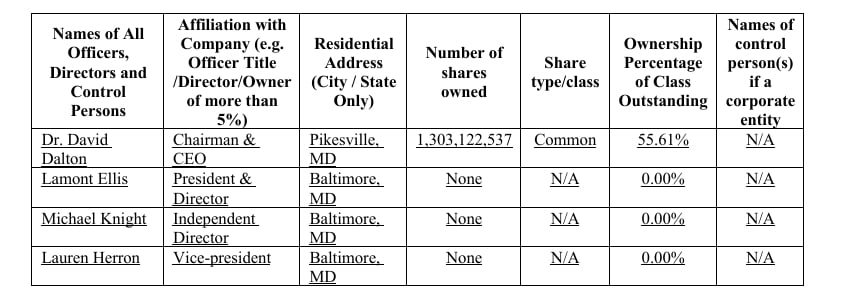
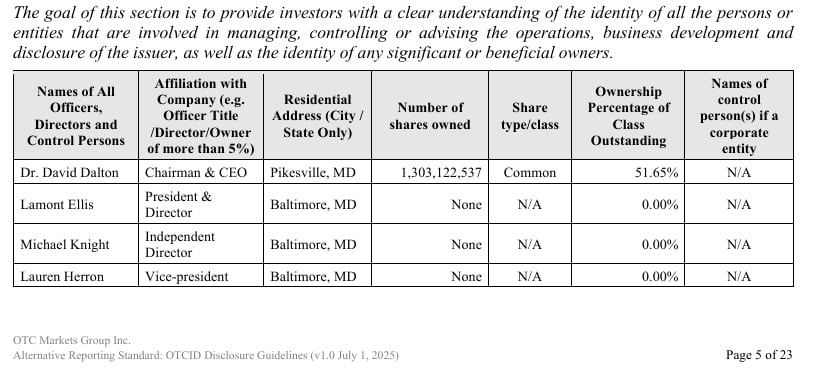
Look at the screen shots below, starting with Dalton's LinkedIn post, ownership dropped 3.94% in the period from 6-30-filings and 9-30- filings, his share count remained the same (1,303,122,537) OTCM never checks these numbers, as long as Dalton files on time quarterly / annual reports, he can keep UNVC trading for years without any consequences.
The financial statements show the opposite pattern: value has primarily accrued to the controlling shareholder through share issuances and unpaid compensation, while the public float has been heavily diluted.

June 30--2026 quarter filing!!!
Sept 30--2026 quarter filing!!!
In short, a securities attorney would tell you that the structural loophole I’ve mapped out is very real: the ARS system relies entirely on self-reported, unaudited disclosures with zero real-time transactional tracking. Because neither OTC Markets nor federal regulators proactively audit every pink-sheet filing in real time, structural dilution, stagnant insider blocks, or questionable accounting presentations can sit unchallenged on public repositories for years--unless a formal regulatory inquiry, whistleblower complaint, or private lawsuit triggers an investigation. For any shareholder looking to understand how these reporting gaps affect their specific position or potential remedies, I strongly recommend contacting a qualified securities attorney.
PL
No Form 4 requirement.
No automatic public disclosure of insider sales.
No requirement to report sales in the quarterly reports unless the change in beneficial ownership is large enough that management decides to update the ownership table (and even then, they only show the new total — not the sales themselves).
As long as CEO-David Dalton stays under the radar and does not create a dramatic, obvious drop in the ownership percentage that he is forced to explain, he can:
Move shares into DTC (street name),
Sell them gradually or in blocks through a broker,
And the public has almost no real-time visibility into those sales.
The only public signals that usually appear are:
A noticeable drop in his reported share count in a later quarterly report (like the 100-million-share drop in 2023), or
A large unexplained increase in shares held at DTC.
Until one of those happens, or until regulators get involved, the sales can occur with essentially no public record. This is one of the structural features of the Alternative Reporting Standard that many controlling shareholders of long-running microcap/Pink companies use. It is legal under the current rules.
Management (Dalton) prepares the quarterly and annual ARS reports itself. Without an independent external audit, the figures that appear in those reports -- including the size of accrued liabilities, the characterization of related-party transactions, and certain ownership presentations -- are largely controlled by the same people who benefit from how those numbers are presented.
The absence of independent audits is the deepest vulnerability in the ARS framework. Combined with the lack of real-time Form 4 filings and only periodic ownership snapshots, it allows management to maintain a controlled narrative for years while retail investors have almost no reliable way to verify what is actually happening to the company’s finances or the value of their shares.
Look at the screen shots below, starting with Dalton's LinkedIn post, ownership dropped 3.94% in the period from 6-30-filings and 9-30- filings, his share count remained the same (1,303,122,537) OTCM never checks these numbers, as long as Dalton files on time quarterly / annual reports, he can keep UNVC trading for years without any consequences.
The financial statements show the opposite pattern: value has primarily accrued to the controlling shareholder through share issuances and unpaid compensation, while the public float has been heavily diluted.
June 30--2026 quarter filing!!!
Sept 30--2026 quarter filing!!!
In short, a securities attorney would tell you that the structural loophole I’ve mapped out is very real: the ARS system relies entirely on self-reported, unaudited disclosures with zero real-time transactional tracking. Because neither OTC Markets nor federal regulators proactively audit every pink-sheet filing in real time, structural dilution, stagnant insider blocks, or questionable accounting presentations can sit unchallenged on public repositories for years--unless a formal regulatory inquiry, whistleblower complaint, or private lawsuit triggers an investigation. For any shareholder looking to understand how these reporting gaps affect their specific position or potential remedies, I strongly recommend contacting a qualified securities attorney.
PL
1