
In each crisis emerge opportunities
https://www.fxstreet.com/currencies/us-dollar-index
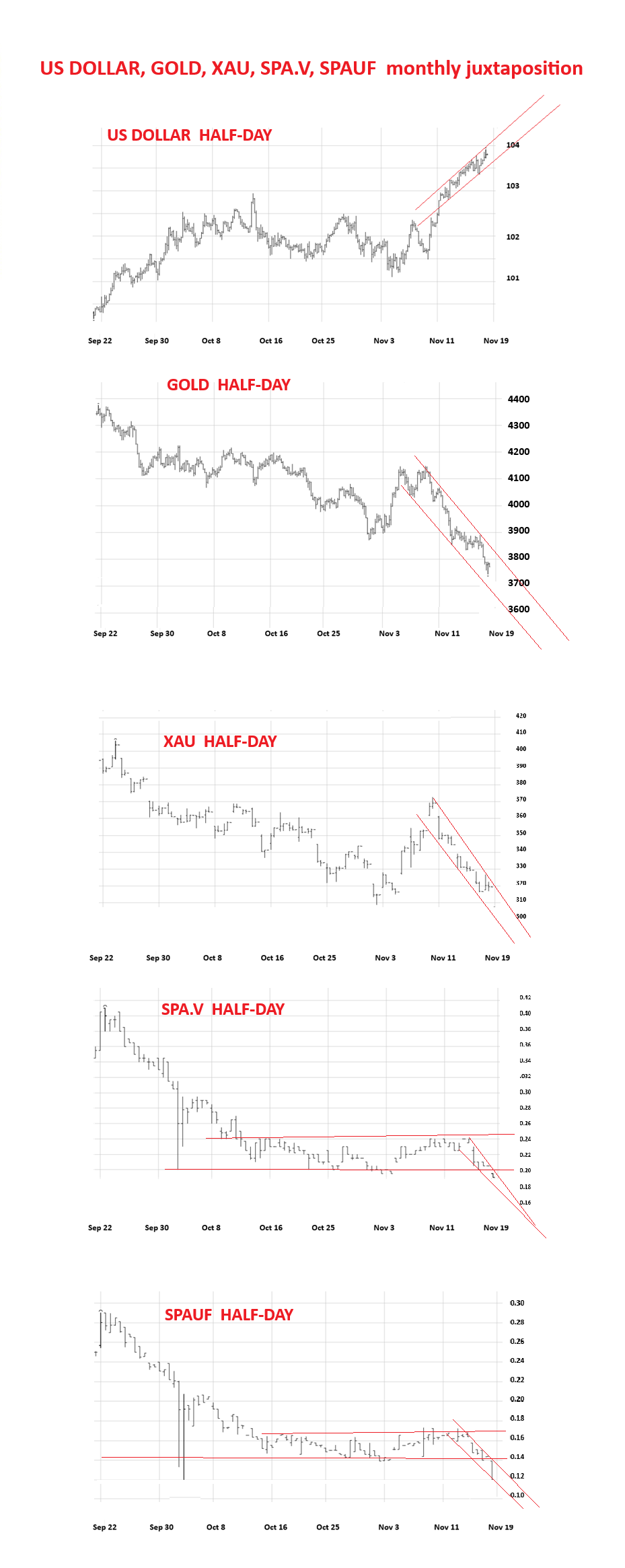
The Fed's strategy is raising interest rate to make room for rate cut next year should the economy tanks, triggered by the AI bubble. But higher rate will acelerate national debts and debt payment.
.
==================
US Financial Statistics
==================
US national debts
https://tradingeconomics.com/united-states/government-debt
US interest payment on debts as percentage of revenue
https://tradingeconomics.com/united-states/in...-data.html
US federal budget
https://tradingeconomics.com/united-states/government-budget
US annual GDP
https://tradingeconomics.com/united-states/gdp-growth-annual
US national debt now exceeds $40 trillion and annual interest payment on debts has exceeded $1.25 trillion, making debt servicing one of the single largest expenses in the federal budget. US 2025 tax revenue is $5.23 trillion while interest payment on national debt is 24% of revenue, far cry from the 18% in 2023.
As an analogy, if one's mortgage payment exceeds 40% of income, banks will place the borrower at high risk category. With perpetual budget deficit, debt level will continue to rise to make ends meet, so with debt at 24% of revenue, US government can still incur more debts, but if the US economy sinks into a deep recession or economic depression culminated continuous rate hike amid already weak economic growth, tax revenue will dwindle and it may risk insolvency. The United States holds 8,133.46 metric tons (approximately 261.5 million troy ounces) of gold reserves, if US government is to pay off its 40 trillion national debts by selling all of its gold reserve, gold price has to be over US$150,000 per ounce (261.5 million ounces x US$150,000 per ounce = US$40 trillion).
.
.
.
https://www.fxstreet.com/currencies/us-dollar-index
The Fed's strategy is raising interest rate to make room for rate cut next year should the economy tanks, triggered by the AI bubble. But higher rate will acelerate national debts and debt payment.
.
==================
US Financial Statistics
==================
US national debts
https://tradingeconomics.com/united-states/government-debt
US interest payment on debts as percentage of revenue
https://tradingeconomics.com/united-states/in...-data.html
US federal budget
https://tradingeconomics.com/united-states/government-budget
US annual GDP
https://tradingeconomics.com/united-states/gdp-growth-annual
US national debt now exceeds $40 trillion and annual interest payment on debts has exceeded $1.25 trillion, making debt servicing one of the single largest expenses in the federal budget. US 2025 tax revenue is $5.23 trillion while interest payment on national debt is 24% of revenue, far cry from the 18% in 2023.
As an analogy, if one's mortgage payment exceeds 40% of income, banks will place the borrower at high risk category. With perpetual budget deficit, debt level will continue to rise to make ends meet, so with debt at 24% of revenue, US government can still incur more debts, but if the US economy sinks into a deep recession or economic depression culminated continuous rate hike amid already weak economic growth, tax revenue will dwindle and it may risk insolvency. The United States holds 8,133.46 metric tons (approximately 261.5 million troy ounces) of gold reserves, if US government is to pay off its 40 trillion national debts by selling all of its gold reserve, gold price has to be over US$150,000 per ounce (261.5 million ounces x US$150,000 per ounce = US$40 trillion).
.
.
.