
Why Buying Greenland Is One of Donald Trump’s Best Ideas
< >
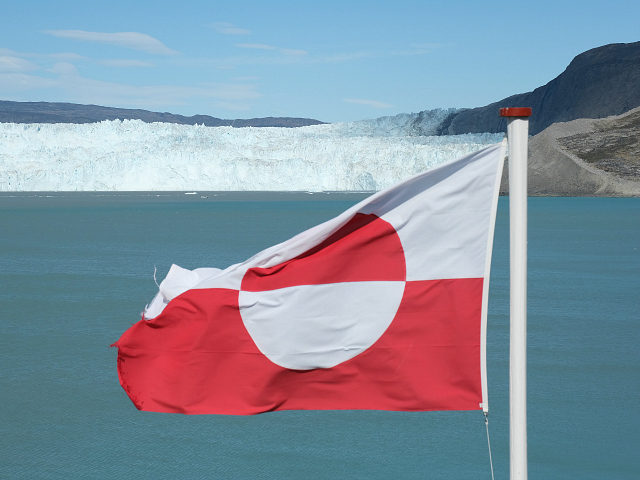
Last week, the Wall Street Journal had a scoop of sorts; the headline read, “President Trump Eyes a New Real-Estate Purchase: Greenland: In conversations with aides, the president has — with varying degrees of seriousness — floated the idea of the U.S. buying the autonomous Danish territory.”
Greenland, of course, is a huge island in the Atlantic, most of it north of the Arctic Circle. As such, even though it boasts 836,000 square miles of territory — more than a quarter the size of the continental U.S. — it counts a population of just 55,000.
In other words, the great landmass is ripe for development, so it’s no wonder Trump, real estate man, wants to take a crack at developing it — on behalf of the nation, if not for himself. Indeed, wits were quick to riff on what a Trumpified Greenland would look like.
Needless to say, the Journal’s report sparked a wide variety of reactions; the Danish government immediately said “no,” while one New York City tabloid laughed, even as other organs of the mainstream media heaped on their own ridicule. Not surprisingly, one MSNBC talking head went beyond attacking Trump to attack Trump supporters, chortling, “Can anybody at the MAGA rally point out Greenland on a map?”
In response, Trump kept the door open, telling reporters on August 18:
Strategically, it’s interesting, and we’d be interested, but we’ll talk to them a little bit. It’s not number one on the burner.
White House economic adviser Larry Kudlow added:
We’re looking at it … Greenland is a strategic place. They’ve got a lot of valuable minerals … the president, who knows a thing or two about buying real estate, wants to take a look.
A few others were supportive; Rep. Mike Gallagher (R-WI) tweeted on August 15:
This a smart geopolitical move. The United States has a compelling strategic interest in Greenland, and this should absolutely be on the table.
Indeed, America’s strategic interest in Greenland has long been recognized. As Foreign Policy magazine noted, the U.S. has tried, twice, to buy Greenland — once after the Civil War and again after World War Two. (During WW 2, Uncle Sam used Greenland for military basing and supply; to this day, there’s a major Air Force base at Thule, less than 1,000 miles from the North Pole.)
In fact, in 1917, America purchased the Danish West Indies from Denmark; we paid $25 million, renaming them the U.S. Virgin Islands.
Indeed, in its history, the U.S. has bought plenty of land, including the Louisiana Territory from the French in 1803 and Alaska from the Russians in 1867. In each case, the pittance Uncle Sam spent was repaid a thousand-fold, not just because of the natural resources involved, nor just because expansive land helped Americans spread out and own their own property, but also because, by taking possession of that territory, we kept a hostile power from possessing it. (We can pause to consider how much more difficult America’s existence would have been, for example, if Napoleon had controlled the Mississippi River, or if the Russians had enjoyed a foothold in North America.)
So now, Greenland is a possible new frontier. The Danes have controlled it for centuries, and frankly, they haven’t done much with it. One reason, of course, is that it’s frigid and, indeed, mostly covered in glacier ice. And yet with the right mindset, inclement weather is only an obstacle, not a roadblock. As plucky Americans have proven in Alaska and elsewhere, we’re perfectly capable of dealing with harsh weather; after all, ice, cold, and isolation are irresistible to hardy vacationers and those who simply wish to really get away from it all.
Moreover, if profit beckons, miners and drillers can always punch their way through. And how much profit is to be had? The truth is, we really don’t know how much natural wealth is to be found in Greenland because nobody has ever seriously looked.
So why haven’t they looked? It’s because the Danes have chosen to treat the territory, for the most part, like a giant nature preserve. And that’s why the native population of Greenland mostly lives in relative poverty as poor dependents of the masters in Copenhagen. Yes, it’s an odd kind of neocolonialism there in the North Atlantic as the politically correct Danes pat themselves on the back for their “enlightened eco-consciousness,” even as Greenlanders stay poor.
Yet even from afar, we know that Greenland offers a fantastic development opportunity. And so, if the Danes are too green and politically correct to extract that wealth, perhaps the U.S. can blaze a rich new trail.
Of course, some will say that all this is a pipe-dream, even if the U.S. were to become sovereign in Greenland. That is, the greens in America would work just as hard as the greens in Denmark to stop any such development, preferring to leave Greenland as it is, undeveloped. Yes, American greens, backed up by numerous billion-dollar foundations, would do precisely that: They’d organize, agitate, and litigate to leave Greenland to the seals and polar bears.
So we can see: Green power is not to be underestimated. As a matter of fact, the greens are so powerful in the U.S. that they have, in much of the country, taken the issue of natural resource development off the table. That’s why, for example, efforts to fully exploit America’s hydrocarbon resources have been stymied. As has been pointed out by Breitbart News, the total value of oil and natural gas, under federal lands and waters, is $128 trillion. That’s a lot of wealth — six times America’s annual GDP, six times our national debt — and yet green power is such that few even talk about tapping into our natural abundance.
So if Greenland were on the agenda, we could at least ask: What’s the value of underground resources in Greenland? And the answer is, simply, nobody knows. And yet we should be confident that the number is, well, yuge.
There’s a good reason — a cosmic reason, one might say — why we should be confident that there are plenty of resources to be found in Greenland. And that’s because valuable elements, and the resulting compounds and minerals, have been scattered all over the earth by the same gargantuan forces that created the universe in the first place. That is, all the naturally occurring elements in the periodic table — from copper to iron, from silver to gold — were created by nucleosynthesis, either as the result of the Big Bang eons ago or by subsequent stellar activity. All that nucleosynthesis has had the effect of hurling gases and matter around the universe until some of it was accreted into celestial bodies, such as our sun and its planets — and including our earth.
So that’s why raw resources are both so abundant and so widely distributed here on this third rock from the sun; as Charlton Heston might have thundered at his Ten Commandments best, we can behold the mighty hands of God that have whipped treasures all around the globe, including in Greenland.
Now here’s where human mind-power comes into the equation. All through human history, smart and hard-working people have unlocked value from seemingly barren patches of land; that is, they have learned to find, refine, and otherwise gain the riches of the earth. That was the story, for example, of Texas and Oklahoma, a century or more ago: tumbleweeds turned into oil rigs.
Indeed, ever since, the smart and the hard-working have found yet more ways to find additional oil and other hydrocarbons. In doing so, they have the defied most “experts.” You see, back in the early 1970s, savants opined that the world was in the midst of an “energy crisis,” and so we had to cut back on everything and live with less.
Yet in the decades since, in defiance of those brainiacs, we have proven that there was no such natural energy crisis. The biggest problem was the unnatural imposition of U.S. price controls, finally lifted by President Ronald Reagan in 1981. After Reagan de-controlled oil, its production surged. Indeed, it surged so much that prices actually fell. In other words, the free market delivered an unabashed win-win: more production and lower prices.
In the meantime, a whole new group of entrepreneurs and innovators came along, finding new ways to squeeze oil out of old fields; one such was George P. Mitchell (1919-2013), the Texas-born pioneer of fracking. As a result, since 1980, proven oil reserves in the U.S. have risen by more than a third, and around the world, reserves have nearly tripled.
So now, looking to the future, there’s every reason to believe that the same sequence would happen in Greenland: new thinking + new production = new wealth.
Of course, the greens would oppose all of this. They would say that they are worried about the penguins, of course, and they would also say they’re worried about climate change. That is, if we extracted and burned more carbon-based fuels, more carbon dioxide would enter into the atmosphere.
Yet seen through the proper prism of informed imagination, Greenland offers great hope for addressing that issue as well. That is, if the concern is that too much carbon dioxide is entering the atmosphere, there’s a simple enough thing to do: capture it. After all, if it was put into the atmosphere, it can be pulled out.
So how, exactly, to pull out the CO2? That can be done in lots of ways, including direct-air capture, as advocated by Sen. John Barrasso (R-WY). And there’s the related, perhaps simpler, idea of planting a lot of trees — call that organic carbon capture.
As this author has argued here at Breitbart News, carbon capture by any means — industrial or biological — would be a powerful engine of rural economic development.
So now we come back to Greenland. As noted, Greenland is more than a quarter the size of the Lower 48. So that gives us plenty of vacant land to work with — to dig, to drill, to otherwise enjoy — and then, at the same time, the land can be used for carbon capture. Yes, it’s mostly ice, and yet useful things can be built on top of ice. And carbon could be the key ingredient.
After all, thanks to its marvelous bonding properties, carbon is the building block of just about everything, and so if we use our brains, we can figure out how to solidify carbon to make new structures — applying, for instance, 3-D printing to the construction of homes, towns, even whole cities. Heck, if we wanted to, we could make a carbon-nanotube space elevator; now that would be the world’s coolest carbon sink.
And if we need energy in Greenland, and we don’t find it in carbon fuels, we would have plenty of other options — if we keep our minds open. For instance, one visionary has suggested creating energy from moving weights around to power generators, and those weights could even be made of ice. (And if the ice melts, carbon capture might help restore the ice.)
By this reckoning, Greenland could be just the beginning of a whole new worldwide economic boom. If we can develop that icy island, then there’s the rest of the Arctic, and also the Antarctic. And come to think of it, closer to home, there’s all the un-utilized land in the U.S.; the federal government owns 28 percent of all our territory. We need never touch the Grand Canyon or other precious parks; instead, we can start with the 61 percent of Alaska that the feds are sitting on.
So let’s give Trump credit for his Greenland idea. Even if nothing comes of it during his presidency, he has expanded the “Overton Window” — that is, the range of acceptable political discourse — reminding us that greatness comes from expansion and innovation, not from contraction and enervation.
One fine day, development will come to Greenland, as well as to other desolate places. Such development can, and should, be done cleanly as well as profitably.
< >
Last week, the Wall Street Journal had a scoop of sorts; the headline read, “President Trump Eyes a New Real-Estate Purchase: Greenland: In conversations with aides, the president has — with varying degrees of seriousness — floated the idea of the U.S. buying the autonomous Danish territory.”
Greenland, of course, is a huge island in the Atlantic, most of it north of the Arctic Circle. As such, even though it boasts 836,000 square miles of territory — more than a quarter the size of the continental U.S. — it counts a population of just 55,000.
In other words, the great landmass is ripe for development, so it’s no wonder Trump, real estate man, wants to take a crack at developing it — on behalf of the nation, if not for himself. Indeed, wits were quick to riff on what a Trumpified Greenland would look like.
Needless to say, the Journal’s report sparked a wide variety of reactions; the Danish government immediately said “no,” while one New York City tabloid laughed, even as other organs of the mainstream media heaped on their own ridicule. Not surprisingly, one MSNBC talking head went beyond attacking Trump to attack Trump supporters, chortling, “Can anybody at the MAGA rally point out Greenland on a map?”
In response, Trump kept the door open, telling reporters on August 18:
Strategically, it’s interesting, and we’d be interested, but we’ll talk to them a little bit. It’s not number one on the burner.
White House economic adviser Larry Kudlow added:
We’re looking at it … Greenland is a strategic place. They’ve got a lot of valuable minerals … the president, who knows a thing or two about buying real estate, wants to take a look.
A few others were supportive; Rep. Mike Gallagher (R-WI) tweeted on August 15:
This a smart geopolitical move. The United States has a compelling strategic interest in Greenland, and this should absolutely be on the table.
Indeed, America’s strategic interest in Greenland has long been recognized. As Foreign Policy magazine noted, the U.S. has tried, twice, to buy Greenland — once after the Civil War and again after World War Two. (During WW 2, Uncle Sam used Greenland for military basing and supply; to this day, there’s a major Air Force base at Thule, less than 1,000 miles from the North Pole.)
In fact, in 1917, America purchased the Danish West Indies from Denmark; we paid $25 million, renaming them the U.S. Virgin Islands.
Indeed, in its history, the U.S. has bought plenty of land, including the Louisiana Territory from the French in 1803 and Alaska from the Russians in 1867. In each case, the pittance Uncle Sam spent was repaid a thousand-fold, not just because of the natural resources involved, nor just because expansive land helped Americans spread out and own their own property, but also because, by taking possession of that territory, we kept a hostile power from possessing it. (We can pause to consider how much more difficult America’s existence would have been, for example, if Napoleon had controlled the Mississippi River, or if the Russians had enjoyed a foothold in North America.)
So now, Greenland is a possible new frontier. The Danes have controlled it for centuries, and frankly, they haven’t done much with it. One reason, of course, is that it’s frigid and, indeed, mostly covered in glacier ice. And yet with the right mindset, inclement weather is only an obstacle, not a roadblock. As plucky Americans have proven in Alaska and elsewhere, we’re perfectly capable of dealing with harsh weather; after all, ice, cold, and isolation are irresistible to hardy vacationers and those who simply wish to really get away from it all.
Moreover, if profit beckons, miners and drillers can always punch their way through. And how much profit is to be had? The truth is, we really don’t know how much natural wealth is to be found in Greenland because nobody has ever seriously looked.
So why haven’t they looked? It’s because the Danes have chosen to treat the territory, for the most part, like a giant nature preserve. And that’s why the native population of Greenland mostly lives in relative poverty as poor dependents of the masters in Copenhagen. Yes, it’s an odd kind of neocolonialism there in the North Atlantic as the politically correct Danes pat themselves on the back for their “enlightened eco-consciousness,” even as Greenlanders stay poor.
Yet even from afar, we know that Greenland offers a fantastic development opportunity. And so, if the Danes are too green and politically correct to extract that wealth, perhaps the U.S. can blaze a rich new trail.
Of course, some will say that all this is a pipe-dream, even if the U.S. were to become sovereign in Greenland. That is, the greens in America would work just as hard as the greens in Denmark to stop any such development, preferring to leave Greenland as it is, undeveloped. Yes, American greens, backed up by numerous billion-dollar foundations, would do precisely that: They’d organize, agitate, and litigate to leave Greenland to the seals and polar bears.
So we can see: Green power is not to be underestimated. As a matter of fact, the greens are so powerful in the U.S. that they have, in much of the country, taken the issue of natural resource development off the table. That’s why, for example, efforts to fully exploit America’s hydrocarbon resources have been stymied. As has been pointed out by Breitbart News, the total value of oil and natural gas, under federal lands and waters, is $128 trillion. That’s a lot of wealth — six times America’s annual GDP, six times our national debt — and yet green power is such that few even talk about tapping into our natural abundance.
So if Greenland were on the agenda, we could at least ask: What’s the value of underground resources in Greenland? And the answer is, simply, nobody knows. And yet we should be confident that the number is, well, yuge.
There’s a good reason — a cosmic reason, one might say — why we should be confident that there are plenty of resources to be found in Greenland. And that’s because valuable elements, and the resulting compounds and minerals, have been scattered all over the earth by the same gargantuan forces that created the universe in the first place. That is, all the naturally occurring elements in the periodic table — from copper to iron, from silver to gold — were created by nucleosynthesis, either as the result of the Big Bang eons ago or by subsequent stellar activity. All that nucleosynthesis has had the effect of hurling gases and matter around the universe until some of it was accreted into celestial bodies, such as our sun and its planets — and including our earth.
So that’s why raw resources are both so abundant and so widely distributed here on this third rock from the sun; as Charlton Heston might have thundered at his Ten Commandments best, we can behold the mighty hands of God that have whipped treasures all around the globe, including in Greenland.
Now here’s where human mind-power comes into the equation. All through human history, smart and hard-working people have unlocked value from seemingly barren patches of land; that is, they have learned to find, refine, and otherwise gain the riches of the earth. That was the story, for example, of Texas and Oklahoma, a century or more ago: tumbleweeds turned into oil rigs.
Indeed, ever since, the smart and the hard-working have found yet more ways to find additional oil and other hydrocarbons. In doing so, they have the defied most “experts.” You see, back in the early 1970s, savants opined that the world was in the midst of an “energy crisis,” and so we had to cut back on everything and live with less.
Yet in the decades since, in defiance of those brainiacs, we have proven that there was no such natural energy crisis. The biggest problem was the unnatural imposition of U.S. price controls, finally lifted by President Ronald Reagan in 1981. After Reagan de-controlled oil, its production surged. Indeed, it surged so much that prices actually fell. In other words, the free market delivered an unabashed win-win: more production and lower prices.
In the meantime, a whole new group of entrepreneurs and innovators came along, finding new ways to squeeze oil out of old fields; one such was George P. Mitchell (1919-2013), the Texas-born pioneer of fracking. As a result, since 1980, proven oil reserves in the U.S. have risen by more than a third, and around the world, reserves have nearly tripled.
So now, looking to the future, there’s every reason to believe that the same sequence would happen in Greenland: new thinking + new production = new wealth.
Of course, the greens would oppose all of this. They would say that they are worried about the penguins, of course, and they would also say they’re worried about climate change. That is, if we extracted and burned more carbon-based fuels, more carbon dioxide would enter into the atmosphere.
Yet seen through the proper prism of informed imagination, Greenland offers great hope for addressing that issue as well. That is, if the concern is that too much carbon dioxide is entering the atmosphere, there’s a simple enough thing to do: capture it. After all, if it was put into the atmosphere, it can be pulled out.
So how, exactly, to pull out the CO2? That can be done in lots of ways, including direct-air capture, as advocated by Sen. John Barrasso (R-WY). And there’s the related, perhaps simpler, idea of planting a lot of trees — call that organic carbon capture.
As this author has argued here at Breitbart News, carbon capture by any means — industrial or biological — would be a powerful engine of rural economic development.
So now we come back to Greenland. As noted, Greenland is more than a quarter the size of the Lower 48. So that gives us plenty of vacant land to work with — to dig, to drill, to otherwise enjoy — and then, at the same time, the land can be used for carbon capture. Yes, it’s mostly ice, and yet useful things can be built on top of ice. And carbon could be the key ingredient.
After all, thanks to its marvelous bonding properties, carbon is the building block of just about everything, and so if we use our brains, we can figure out how to solidify carbon to make new structures — applying, for instance, 3-D printing to the construction of homes, towns, even whole cities. Heck, if we wanted to, we could make a carbon-nanotube space elevator; now that would be the world’s coolest carbon sink.
And if we need energy in Greenland, and we don’t find it in carbon fuels, we would have plenty of other options — if we keep our minds open. For instance, one visionary has suggested creating energy from moving weights around to power generators, and those weights could even be made of ice. (And if the ice melts, carbon capture might help restore the ice.)
By this reckoning, Greenland could be just the beginning of a whole new worldwide economic boom. If we can develop that icy island, then there’s the rest of the Arctic, and also the Antarctic. And come to think of it, closer to home, there’s all the un-utilized land in the U.S.; the federal government owns 28 percent of all our territory. We need never touch the Grand Canyon or other precious parks; instead, we can start with the 61 percent of Alaska that the feds are sitting on.
So let’s give Trump credit for his Greenland idea. Even if nothing comes of it during his presidency, he has expanded the “Overton Window” — that is, the range of acceptable political discourse — reminding us that greatness comes from expansion and innovation, not from contraction and enervation.
One fine day, development will come to Greenland, as well as to other desolate places. Such development can, and should, be done cleanly as well as profitably.