

Quote:Nine Lessons From the Global Financial Crisis
The system is a lot safer, but some important changes have been put off until the next meltdown.
By
Mohamed A. El-Erian
September 13, 2018 4:00 AM
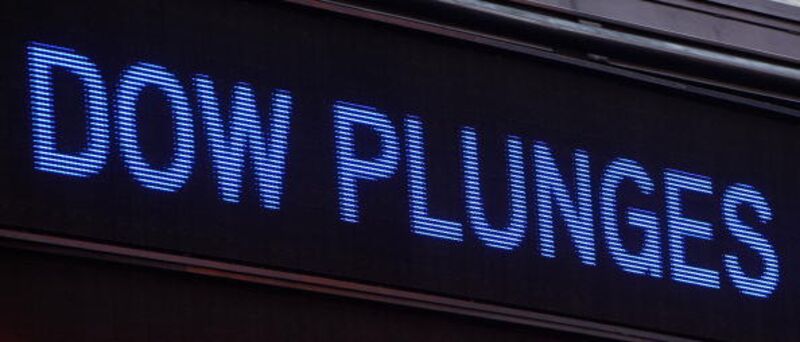
Trigger warning.
Photographer: Mario Tama/Getty Images
Mohamed A. El-Erian is a Bloomberg Opinion columnist. He is the chief economic adviser at Allianz SE, the parent company of Pimco, where he served as CEO and co-CIO. His books include “The Only Game in Town” and “When Markets Collide.”
Bloomberg Opinion marks the 10th anniversary of Lehman’s bankruptcy with a collection of columns from around the world. Read more.
A lesson learned should lead to meaningful changes by individuals and institutions. That has largely been the case in the decade since the financial crisis almost tipped the global economy into a prolonged depression that would have devastated livelihoods for at least a generation. But there are also consequential lessons that haven’t been sufficiently internalized; and some that were not foreseen at the time of the crisis but are now urgent and important.
Here’s a summary scorecard of post-crisis accomplishments, unfinished business and unintended consequences.
Accomplishments:
1.A safer banking system. Thanks to strengthened capital buffers, more responsible approaches to balance sheets and better liquidity management, the banks no longer present a major systemic risk in most advanced countries, and especially the U.S. That doesn’t mean every country and every bank is safe; but the system as whole is no longer the Achilles’ heel of market-based economies.
2.A more robust payments and settlement system. The strengthening of the banking system has been part of a highly successful, broader effort to minimize the risk of “sudden stops” in the payments and settlement mechanisms at the core of the global economy — that is, a loss of trust in counterparts that freezes even the most basic financial transactions, paralyzing economic interactions.
3.Smarter international cooperation . The crisis highlighted the importance of better approaches not just to crisis management, but also to prevention. At the top of the “to-do list” are steps such as improved harmonization of strengthened regulation and supervision, more timely and comprehensive information-sharing, and greater focus on the challenges of monitoring internationally active banks. Individual countries have been able to draw on a wider set of insights in bolstering both their macro- and micro-prudential efforts.
Slippages:
1.Still-elusive inclusive growth. It took far too long for policy makers in advanced countries to realize that the great recession caused by the financial crisis had important structural and secular components. An excessively cyclical mindset initially impeded the design and implementation of the measures needed to generate high and inclusive growth. By the time mindsets evolved, the political window had narrowed. Even today, most advanced countries have yet to adopt measures to durably boost actual growth and stop the downward pressure on potential expansion.
2.Misaligned internal incentives. Judging from headline-grabbing incidents of inappropriate behavior and processes in recent years, the sticks and carrots in place in some financial institutions need work. These institutions still contain pockets of improper risk-taking and other unsuitable conduct, as well as excessive short-termism in compensation payouts and managerial tolerance for actions that are too close to the line that separates permissible from non-permissible activities.
3.A scarcity of “patient” balance sheets. Putting challenged and damaged securities in ring-fenced balance sheets was key to containing the huge financial disturbances. This involved reliance on large public balance sheets, though their use was increasingly met by social and political pushback.
Concerns about distributional effects, including favoring corporate profits at the expense of wages, Wall Street at the expense of Main Street, and the rich at the expense of the poor, have added to what is now a reduced availability of these tools for use in future crises.
Unintended consequences:
1.The big got bigger and the small got more complex. Although more progress has been made on what to do when a bank fails, especially when it is large, the market structure that emerged from the financial crisis involves significantly larger institutions, particularly U.S.-based ones.
The same phenomenon of the big having gotten bigger can be seen in asset management. It has come at the expense of a gradual hollowing out of the middle of the distribution of financial firms. Meanwhile, the other end of the size distribution consisting of small institutions has been increasingly populated by the proliferation of fintech activities that, for the most part, haven’t been tested through a cycle downturn.
2.Risk has morphed and migrated to underregulated areas . This change in market structure is connected to another phenomenon: the morphing and migration of risk to non-banks. This dynamic is particularly notable in the extent to which, benefiting from years of ample global liquidity and unusually low financial volatility, there has been an over-promising of liquidity provision and excessive volatility-selling in its many forms.
And part of this has been embedded in the structure of the system through product proliferation, including the growing number of exchange-traded funds that implicitly promise instantaneous liquidity in market segments that are structurally subject to repeated pockets of illiquidity.
3.Reduced policy flexibility. There is limited “dry powder” to rely on in the event of a crisis because interest rates are still floored at zero or below in much of the advanced world outside the U.S., central banks’ balance sheets are already large, and debt levels are significantly higher than before the global financial crisis. This suggests that, even if there is sufficient political will, the ability to crisis manage and recover may be diminished compared to 10 years ago.
Those of us who navigated the global financial crisis first-hand, managing assets and liabilities in the private sector during exceptional market turmoil, saw unprecedented unpredictability turn what had previously been unthinkable into reality with unsettling regularity.
We readily recognize how much was done to prevent an awful situation from severely damaging current and future generations, and also the important steps taken to reduce the probability and severity of another global crisis.
But that does not mean all is well. Renewed efforts by both the public and private sectors are needed to deal with longstanding challenges that received inadequate attention in the aftermath of the crisis, and to understand and address some of the major unintended consequences of 10 years of crisis management and prevention.
Fortunately, we know a lot more about both. The biggest challenge is to get the political process to address their importance when there is no actual or looming crisis in the advanced world to focus minds.
Nine Lessons From the Global Financial Crisis The
Scroll down for more posts ▼
Top 10 Most Recent News Articles

Dr. Desi Bartlett Teams Up with Glo for Perimenopause Focus
Glo Taps Top Wellness Expert for Women's Health Initiative In an industry brimming with wellness voices, it's rare to find one that marries scholarly acumen with authentic, personal teaching. Yet, this is precisely what Dr. Desi Bartlett brings to the table as she partners with Glo to offer new fitness programming specifically targeting women facing perimenopause and...
Continue Reading
K-Beauty Takes Front Stage at Target Beauty Studio
Making Waves in the U.S. with K-Beauty SUNGBOON EDITOR and Milk Touch just rolled into Target Beauty Studio, making a splash in the world of K-beauty. From ingredients that boast serious benefits to playful cosmetics that let you express yourself, these brands are shaking up American beauty routines in a big way. Ingredient-Focused Skincare for Every American Face...
Continue Reading
The Chemical Industry and EPA: A Broken System?
Decades of an Unchecked Revolving Door The Environmental Protection Agency (EPA) and chemical manufacturers—a dance that’s been going on for what seems like forever. But not in the way you might hope. We're talking about a revolving door where execs and lobbyists waltz into regulatory chairs while regulators slide into cushy industry gigs. Wisner Baum LLP, a stickler...
Continue Reading
Leapora's Taskeen: Redefining Task Accountability
AI's Impact on Workplace Task Management In today’s whirlwind of AI-generated output, transparency is not just a luxury; it’s a necessity. AI systems churn out work that can appear polished but often lacks substance. This doesn't just create headaches; it triggers a ticking bomb in the regulatory department. According to a 2025 survey from Stanford and BetterUp Labs,...
Continue Reading
Anecdotes by Artists Brings Raw Scent Stories to Sephora
When Maesa pulls back the curtain, they don't just crack it open—they fling it aside with flair. That's precisely what they're doing with their latest venture, Anecdotes by Artists, a fragrance brand that's taking its first bow exclusively at Sephora. It's not your average perfume launch; it's about the stories behind the scents and the artists who craft them. Unveiling...
Continue Reading
Sean Trahan Joins Citrin Cooperman: New Tax Lead
Citrin Cooperman's Strategic Tax Move If there's one phrase that can spark a debate at a financial water cooler, it's 'transfer pricing.' Today, Citrin Cooperman is throwing its hat further into that ring with the appointment of Sean Trahan as head of their new Transfer Pricing and Value Chain Optimization Practice. This isn't just another reshuffling of office...
Continue Reading
AI-Driven Lumi Transforms Car Dealership Interactions
Lumi: Changing the Car Buying Game Picture this: You're browsing for a new car, head filled with specifics like towing capacity, price points, and trim options. Usually, such queries would send you bouncing around the web, but Lectrium's Lumi promises to keep the questioning—and decision-making—right on the dealership's page. In a move set to shake up the game,...
Continue Reading
Cracking the Code of America's Delivery Addiction
America's New Obsession: Convenience at a Cost Diving into the relentless hustle, Americans are shelling out big bucks to dodge life's mundane chores. A fresh survey dished out by FinanceBuzz, hitching a ride with Bank of America, gives us a peek into how hooked everyone is on convenience services like food and grocery deliveries. It’s clear people are ready to fork...
Continue Reading
HTX's Strategic Moves in Pakistan: A Crypto Frontier
Paving the Way: HTX's Journey in Pakistan Rolling into the Pakistan cryptocurrency scene isn't just a 'walk in the park' for HTX—it's more like traversing a new frontier with an open map. This isn’t some hit-and-run operation; HTX is strategizing for a long haul in one of the liveliest digital market arenas in South Asia. Gathering steam with community AMAs and an X...
Continue Reading
FJBio Boosts Antibody Discovery with Sapio AI
In the sprawling world of antibody discovery, where every scrap of data can make or break the next big breakthrough, FairJourney Bio (FJBio) is pulling out all the stops. They've teamed up with Sapio Sciences to ditch the paperwork nightmares and usher in a new era of AI-driven efficiency. With operations stretching from Porto to Cambridge to sunny San Diego, they’re...
Continue ReadingTop 5 Most Recently Viewed Articles

HKUST Foundation Gala Dinner: A New Era of Innovation Begins
HKUST Foundation Gala Dinner Fuels Future Innovation The inaugural Gala Dinner organized by the Hong Kong University of Science and Technology (HKUST) marked a significant milestone, uniting over 200 notable leaders from various sectors including academia, industry, and philanthropy. This prestigious event was held recently to celebrate the introduction of the HKUST...
Continue Reading
Univest Financial Posts Strong Q3 Performance Amid Market Challenges
Univest Financial Corporation Reports Positive Third Quarter Results Univest Financial Corporation (UVSP) has announced a net income of $18.6 million for the recent quarter, translating to earnings of $0.63 per share. This performance is a testament to the company's effective management and strategic focus, especially in a challenging financial environment. The increase...
Continue Reading
Empowering Women’s Fitness: The Top Protein Powders for 2025
Revolutionizing Women’s Fitness with Protein Powder Protein powders have recently transformed from a stereotypical gym supplement into a versatile health product embraced by women everywhere. These powders are now regarded as effective tools for weight loss, muscle building, and overall health improvement, making them a must-have for every woman looking to enhance her...
Continue Reading
Northeast Bank's Impressive Second Quarter Performance
Overview of Second Quarter Results Northeast Bank (NASDAQ: NBN), a full-service financial institution based in Maine, recently disclosed its remarkable performance for the quarter that concluded on December 31, 2024. The Bank reported a net income of $22.4 million, translating to $2.74 per diluted common share. This marks a considerable increase from $14.1 million, or...
Continue Reading
Occidental Petroleum Affects Market with Price Declines
Occidental Petroleum faced a significant downturn back in Q3 2024, reporting nearly a 6% drop in total oil output prices. This wasn't just bad luck; it was tied directly to global worries about oil demand growth that had traders fuming. Desks were already buzzing about how these price slides could shake up their earnings forecasts. Oil and Gas Price Plunge: What Went...
Continue Reading