

Quote:A history of big-headedness
How humans got their brains
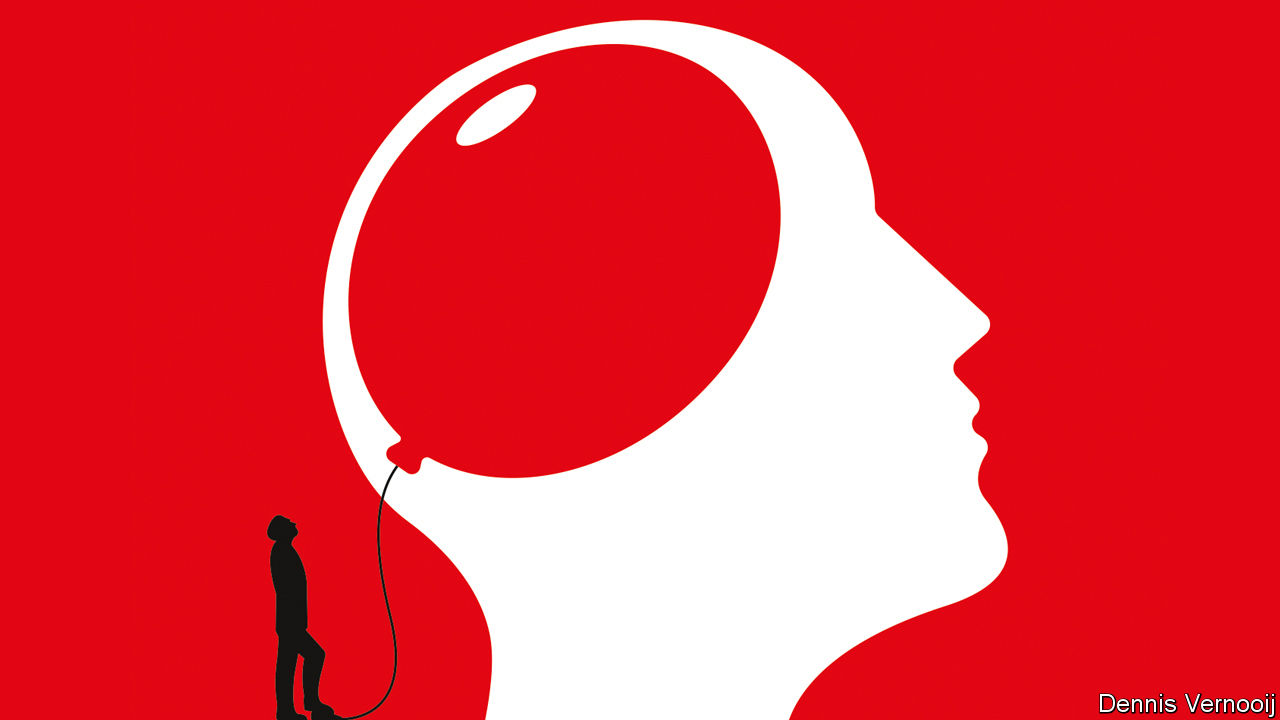
Print edition | Science and technology
May 31st 2018
“HOW the human got his brain” is probably the most important “Just So” story that Rudyard Kipling never wrote. Kipling did not ignore people in his quirky take on evolution.
Two of his tales describe the invention of the alphabet and the invention of letter-writing. But he took for granted the human brains behind these inventions, which are three times the size of those of humanity’s closest living relatives, the great apes, and are thus as characteristic of people as trunks are of elephants or humps are of camels.
This week, though, sees the publication of two studies which, added together, form an important paragraph in the story of the human brain. Both concern a version of a gene called NOTCH2, which has been known for some time to be involved in embryonic development.
Both point to an event in the past which changed the activity of this gene in the evolutionary line that leads to modern people. And both are supported by experiments which suggest that the change in question is crucial to the emergence of the big brains which distinguish human beings from all other living animal species.
.
The two studies, which were carried out independently, are published in Cell. One was by a team led by David Haussler, a bioinformatician at the University of California, Santa Cruz. The other was directed by Pierre Vanderhaeghen, a developmental biologist at the Free University of Brussels, in Belgium.
Dr Haussler stumbled on his discovery while comparing the development of the brain’s cortex in human beings and in macaques, a type of monkey. He and his colleagues found in humans what appeared to be several previously undiscovered versions of NOTCH2, alongside the established one.
The new genes, which they refer to as NOTCH2NLs, were absent from their macaques and—as a search of genetic databases showed—from all other living animals except chimpanzees and gorillas. In these two great apes there were two NOTCH2NL genes, but they seemed to be inactive.
The difference between apes and humans is that in the human line one of these NOTCH2NLs has now become active, and has multiplied to create three versions, known as A, B and C.
Crucially, this A, B, C pattern is replicated in the DNA of two extinct species of human, Neanderthals and Denisovans. By looking at minor differences between the various NOTCH-related genes in the three human species and the two great apes, the researchers were able to estimate when the active NOTCH2NL arose: 3m-4m years ago. That is when, according to the fossil record, the craniums of mankind’s ancestors started expanding.
To follow up this discovery Dr Haussler created what are known as organoids (specifically, brainoids), which are in vitro replicas of developing brains, made in this case using mouse cells. He used these to test the effects of adding or deleting his newly discovered genes.
In the absence of NOTCH2NL, the organoids developed normally. With it added, stem cells in the organoid which would otherwise have generated new neurons divided instead to create more stem cells. The result, when those stem cells did eventually turn into neurons, was more neurons than normal, and thus a bigger organoid. In effect, NOTCH2NL had generated a larger brain.
Encouraged by this discovery, Dr Haussler and his colleagues performed one further test, with the co-operation of real human beings. These were people with macro- or microcephaly (unusually large or small brains).
After testing the DNA of each of these volunteers, the team found that NOTCH2NL, though present in people with larger than average brains, was absent from those whose brains were abnormally small—confirming the suspicion that it is involved in the hypertrophication of human brains.
Cogito ergo sum
Unlike Dr Haussler, who came across his initial result serendipitously, Dr Vanderhaeghen set out from the start to find genes that are unique to people, are directly responsible for creating new brain cells in the cortex, are active and are specifically working to encourage the development of stem cells into neurons.
The needle that emerged from this haystack of demands was the same set of NOTCH2NLs that Dr Haussler’s team had lit upon. Seeking confirmation of the genes’ function, Dr Vanderhaeghen introduced them into mouse embryos and found that the number of stem cells in the embryos’ brains was thereby increased.
He then repeated the experiment using stem cells taken from human fetuses and got the same results as Dr Haussler’s team had observed in their organoids. Sure enough, NOTCH2NLs encouraged stem cells to proliferate without turning into neurons, increasing the total number of neurons generated.
Taken together, these two studies suggest that NOTCH2NL has played a crucial role in the tale of “How the human got his brain”. They do not, however, answer the question of why this happened.
Mutations occur all the time. It is improbable that this was the first occasion in history something like NOTCH2NL has arisen. For NOTCH2NL to have prospered in the way that it did, natural selection would have had to have favoured it. Big brains, in other words, must have been useful in the context in which the mutation occurred.
What that context was is unclear. Though it is hard for human beings to contemplate the idea that big brains could ever be undesirable, small-brained animals do perfectly well without them.
And big brains are expensive to maintain. Some calculations suggest humans could not afford them calorifically without the invention of cooking—a process that liberates otherwise indigestible nutrients.
Humans now dominate Earth, but that was not true for most of the 3m-4m years since active NOTCH2NL arose and brain hypertrophication began. Until 10,000 years or so ago, when agriculture was adopted, humans were rare.
The ultimate cause of human brain expansion thus remains unknown. Tool-making is one explanation. A more intriguing theory is that human brains are the equivalent of brightly coloured plumage in birds, permitting the sexes to show off to each other what good mates they would make.
Yet another idea, the Machiavellian-intelligence hypothesis, is that big brains enable people to manipulate others to their own advantage—a trick that the invention of language would also assist. Nor need manipulation be malevolent. Collaboration is also a form of manipulation.
These ideas are not, of course, mutually exclusive. Any or all of them may be correct. Whether human beings are big-brained enough to decide between them and thus complete the missing “Just So” story remains to be seen.
A history of big-headedness How humans got their
Scroll down for more posts ▼
Top 10 Most Recent News Articles
Swanson Nexus Pro Launch: Boost for Dietitians
Swanson Enters the Education Arena for Nutritionists Swanson Vitamins is mixing things up again! This time, they're launching something called Swanson Vitamins Nexus Pro, aimed squarely at the registered dietitians and licensed nutritionists crowd. Starting out as the place to grab your basic vitamins, Swanson's not resting on their supplement laurels. No, siree. They've...
Continue Reading
Wenda Pharma's NHWD-870 HCl Shows Promise in Trial
Breaking Through in NUT Carcinoma Treatment Imagine battling an aggressive disease with barely any options left, and then something hopeful shows up in the pipeline. That's the story with Zhejiang Wenda Pharma's NHWD-870 HCl, an oral BET inhibitor making waves at the 2026 ESMO Annual Meeting. Facing off against the nasty beast that is NUT carcinoma, this drug didn't just...
Continue Reading
ASTS Faces Crucial Deadline Amidst Legal Turmoil
Ah, the ticking clock in the world of stock investments, where a nifty little thing called a class action lawsuit can flip your investment on its head. Right now, AST SpaceMobile (NASDAQ: ASTS) investors are staring down the barrel of one such lawsuit. With the November 13, 2026, deadline looming, it's time to sort the facts from the muck. Pins and Needles for ASTS...
Continue Reading
Kelun-Biotech's Sacituzumab Tirumotecan Shows Promise in NSCLC
Kelun-Biotech's Recent Breakthrough Grab your coffee, and let's chat about something that might just change the lung cancer treatment game: Kelun-Biotech's sacituzumab tirumotecan, or sac-TMT, showing some serious promise in a Phase III trial. With numbers that could make any investor sit up a little straighter, this study has turned heads at the European Society for...
Continue Reading
Borr Drilling's Rig Sinks, Uncertainty Looms Offshore
Unexpected Turn of Events at Sea Now here's a gut-punch nobody saw coming. Borr Drilling Limited (NYSE and OSE: BORR) got hit hard when their Prospector 5 drilling rig went under the waves offshore Gabon. This ain't no desk job dilemma; we're talking about a real-life offshore catastrophe. It all went down on October 24, 2026, when the rig experienced a punch through...
Continue Reading
Innovent's IBI3001 Shows Promise in Phase 1 Trials
Pioneering Path with IBI3001 at ESMO 2026 Navigating through the crowded landscape of oncology trials, Innovent Biologics recently rolled out some riveting Phase 1 clinical data for their new darling, IBI3001. Top brass from Innovent took to the European Society for Medical Oncology (ESMO) Congress stage to lay bare their findings. Obviously, when you're presenting a...
Continue Reading
Axon Body 5: A Leap Forward in AI for Public Safety
Axon Raises the Stakes with Body 5 Camera Boy, oh boy, Axon's dropped a bombshell with the Body 5. We're talking a colossal leap into the AI era for public safety, and if you're in the biz, you can't just shrug this one off. We're looking at 25 times the AI processing power compared to Axon's old units. That's right, I said twenty-five. Real-time situational awareness in...
Continue Reading
Spooky Dining at CARNE: A Halloween Hit in Oxnard
A Festive Transformation at CARNE Rolling into Oxnard, you're met with an unconventional dining spectacle at CARNE. It's not your average restaurant fare as they've pulled out the stops with their spirited Halloween pop-up, A Nightmare at CARNE. Channeling the eerie charm of "The Nightmare Before Christmas," this temporary transformation morphs the venue into a lively,...
Continue Reading
Alaska's Insurance Maze: Coverage Over Cheap Policies
Beyond Premiums: Assessing Real Coverage Needs The Alaskan wilderness isn't just home to stunning views; it's also a land where insurance needs to go beyond the average cookie-cutter policy. You'd think the cheapest option would suffice, but that's where residents might trip into financial quicksand. Devery Prince, a seasoned insurance principal, sheds light on why...
Continue Reading
World Young Scientist Summit 2026 in Wenzhou Kicks Off
Young Minds Meet AI Innovation Crack open the playbook, and it's clear: young brains from across the globe are gathering in Wenzhou, Zhejiang, China, to wrangle with AI and chart the course of science toward a sustainable future. The World Young Scientist Summit 2026 isn't just a parade of speeches and accolades. Nah, it's a deep dive into where innovative minds believe...
Continue ReadingTop 5 Most Recently Viewed Articles

Exploring Precious Metals and Energy Investors' Strategies
Current Trends in Precious Metals The appeal of precious metals like gold and silver continues to gather momentum, particularly in light of recent global events. Many analysts believe that geopolitical tensions have created a catalyst for increased interest in gold as a safe haven. As governments grapple with economic challenges, investors are keenly observing changes in...
Continue Reading
Understanding P/E Ratios in the Context of Casey's General Stores
Analyzing P/E Ratios for Investment Decisions In today’s market, understanding the performance metrics of stocks is vital. Currently, Casey's General Stores Inc. (NASDAQ: CASY) is noted at an impressive share price of $536.66. This reflects a modest increase of 0.33%. In examining market trends, the past month saw a slight decline of 4.39% in share value. However,...
Continue Reading
China's New Lending Outlook: Economic Recovery Strategies
China's Recent New Lending Trends Recent updates reveal a significant rise in new bank lending in China. However, it didn't quite meet expectations, as analysts had hoped for a stronger performance. After disappointing figures in July, which hit a 15-year low, new data shows that Chinese banks issued around 900 billion yuan (approximately $126.86 billion) in new loans in...
Continue Reading
ParkOhio Shares Important Quarterly Dividend News for Investors
ParkOhio Holdings Announces Latest Dividend Declaration Park-Ohio Holdings Corp. (NASDAQ: PKOH) recently declared a significant quarterly cash dividend of $0.125 per share to its common stockholders. This distribution demonstrates the company's ongoing commitment to providing returns to its shareholders. This dividend will be payable soon, marking another positive...
Continue Reading
Investigation Launched for Tourmaline Bio's Shareholders
Investigation Overview on Tourmaline Bio, Inc. Recently, Monteverde & Associates PC, a renowned law firm, has initiated an investigation concerning Tourmaline Bio, Inc. (NASDAQ: TRML) and its proposed sale to Novartis AG. This potential acquisition raises several questions about the fairness of the deal, specifically regarding the cash payment offered to shareholders....
Continue Reading