
Experts Warn China’s ‘One Belt One Road’ Initiative
Seeks to Undermine U.S.-Led World Order < >
The United States and China are in a battle for global supremacy — one that the U.S. is losing, experts said at a congressional hearing on Wednesday.
“The United States and China are locked in a consequential geopolitical competition right now that will determine the character of the 21st Century,” said Ely Ratner, the Maurice R. Greenberg Senior Fellow for China Studies at the Council on Foreign Relations.
“The United States is losing that competition right now,” he added.
Ratner’s warning came during a day-long hearing held by the congressionally-appointed U.S. China Commission, on China’s new “One Belt One Road” initiative, which experts warned is aimed at replacing the current U.S.-led world order.
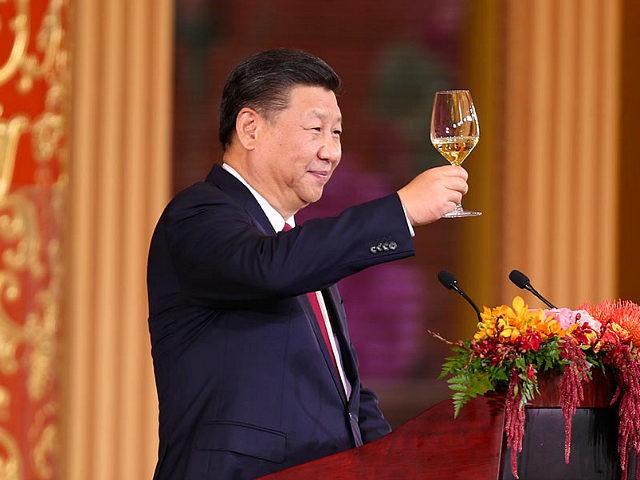
The “Belt and Road Initiative,” or “BRI,” as Western experts call it, is Chinese President Xi Jinxing’s plan to build roads — literally and figuratively — across Central Asia to Western Europe, in a bid to further integrate their economies.
The name of the initiative purposely hearkens back to the ancient “Silk Road” trade routes, when China was a great empire. China’s dream is to recapture that status and become the world’s leading power by 2050. In that regard, BRI is aimed at slowly reorienting nations away from the U.S. and towards China and its preferred world order.
“BRI is a comprehensive vision for political and economic integration under Beijing’s helm,” said Nadege Rolland, senior fellow for political and security affairs at the National Bureau of Asian Research.
Under BRI, China will work with other nations, particularly developing countries, to build infrastructure linking the East to the West, including railways, pipelines, fiber optic cables, ports, and other infrastructure.
To build this network, China will use its growing economic might to loan developing countries money to build the infrastructure, in what they hope will become “even bigger than the Marshall plan,” said Randal Phillip, managing partner at the Mintz Group.
advertisement
Rolland said BRI’s “intangible manifestations are as important if not more than its actual physical development.”
It is really a “multilayer web of … security ties that China is developing with the developing world … shaping before our very eyes,” she said. The goal is “unleveled Chinese influence over a key region, if not the world,” she added.
Already, several countries have announced their intention to link their development to one belt one road, said Jonathan Hillman, fellow and director of the Reconnecting Asia Project at the Center for Strategic and International Studies. The initiative is also drawing China closer with Pakistan, he said.
Phillips called BRI’s mission statement “beautiful” and attractive to other nations.
“It talks a lot about win-win,” for China and other nations, he said. But, he added, the joke is that it really means “China wins twice.”
Experts noted that the concept for the BRI first emerged in 2013 to little fanfare, as a response to the Obama administration’s “Asia Pivot” and to the U.S. joining the Trans-Pacific Partnership, a trade pact with Asian nations excluding China.
But since then, Chinese President Xi Jinping has embraced it and elevated it to Chinese Communist Party doctrine and integrated it throughout all levels of Chinese government. Rolland said China’s determination to implement it is “deadly serious.”
Experts also testified that BRI would have huge military implications for the U.S. by giving the Chinese military more places to deploy and potentially try to block the U.S. military.
“BRI will increase demand to send the Chinese military abroad,” said Daniel Kliman, senior fellow at the Asia-Pacific Security Program at the Center for a New American Security.
The more involved Chinese companies are in other nations, the more China’s military will be involved in humanitarian missions, as well as rescue missions, Kliman said. It will also reinforce voices within the People’s Liberation Army for more “power projection” — ports, airfields, and a more robust logistics network, he said.
As an example, he pointed to how China first built a commercial port in Djibouti, and then built its first military overseas base there as well, right next to a U.S. military base.
From these military bases, Chinese ships can operate farther away from its shores and hold the U.S. military off with weapons such as long-range anti-ship missiles, Kliman said.
BRI would also allow China to use the growing infrastructure network to glean large amounts of data that would fuel China’s artificial intelligence industry, he said.
And if developing nations cannot afford to pay China back for loans, Chinese would likely seize the assets or demand concessions as they have over a Sri Lankan port they helped build in Colombo — in what experts called a “debt trap.”
Either way, Ratner said, China will gain “increased access” and coercive power over so-called “BRI countries” over time.
Overall, experts said, if BRI is successful, it could have very serious implications for Americans in everyday life.
Under a China-led world, “markets will be closed to American business. China’s policies will bankrupt American businesses,” Ratner said. “They’re being completely transparent about their goals to do just that.”
Already, he noted, Hollywood is censoring their movies for Chinese audiences. Newspapers are self-censoring the reporting they’re doing on Xi. Universities are censoring themselves in exchange for Chinese money, he said.
“Do we want our selves and our children to live in a world … that is fundamentally free or not?” he said.
Experts said BRI did have some risks for China. Nations could turn on China if there is a gap between expectations and reality from developing nations, or if China turns predatory. But so far, Phillips said, developing countries are “happy to see the cash come in.”
Experts testifying to the commission agreed that BRI could already be considered a success, particularly since it has no hard objectives, targets, or end date. They noted that it has already succeeded in piquing international leaders’ interest.
They noted that China’s Belt and Road Forum — which they jokingly called “BARF” — drew 29 world leaders and representatives from more than 130 countries.
“People didn’t kowtow but they came with gifts. In return for that they got access, investment, protection,” Rolland said. “It’s already happening, it’s already successful.”The United States and China are in a battle for global supremacy — one that the U.S. is losing, experts said at a congressional hearing on Wednesday.
“The United States and China are locked in a consequential geopolitical competition right now that will determine the character of the 21st Century,” said Ely Ratner, the Maurice R. Greenberg Senior Fellow for China Studies at the Council on Foreign Relations.
“The United States is losing that competition right now,” he added.
Ratner’s warning came during a day-long hearing held by the congressionally-appointed U.S. China Commission, on China’s new “One Belt One Road” initiative, which experts warned is aimed at replacing the current U.S.-led world order.
The “Belt and Road Initiative,” or “BRI,” as Western experts call it, is Chinese President Xi Jinxing’s plan to build roads — literally and figuratively — across Central Asia to Western Europe, in a bid to further integrate their economies.
The name of the initiative purposely hearkens back to the ancient “Silk Road” trade routes, when China was a great empire. China’s dream is to recapture that status and become the world’s leading power by 2050. In that regard, BRI is aimed at slowly reorienting nations away from the U.S. and towards China and its preferred world order.
“BRI is a comprehensive vision for political and economic integration under Beijing’s helm,” said Nadege Rolland, senior fellow for political and security affairs at the National Bureau of Asian Research.
Under BRI, China will work with other nations, particularly developing countries, to build infrastructure linking the East to the West, including railways, pipelines, fiber optic cables, ports, and other infrastructure.
To build this network, China will use its growing economic might to loan developing countries money to build the infrastructure, in what they hope will become “even bigger than the Marshall plan,” said Randal Phillip, managing partner at the Mintz Group.
advertisement
Rolland said BRI’s “intangible manifestations are as important if not more than its actual physical development.”
It is really a “multilayer web of … security ties that China is developing with the developing world … shaping before our very eyes,” she said. The goal is “unleveled Chinese influence over a key region, if not the world,” she added.
Already, several countries have announced their intention to link their development to one belt one road, said Jonathan Hillman, fellow and director of the Reconnecting Asia Project at the Center for Strategic and International Studies. The initiative is also drawing China closer with Pakistan, he said.
Phillips called BRI’s mission statement “beautiful” and attractive to other nations.
“It talks a lot about win-win,” for China and other nations, he said. But, he added, the joke is that it really means “China wins twice.”
Experts noted that the concept for the BRI first emerged in 2013 to little fanfare, as a response to the Obama administration’s “Asia Pivot” and to the U.S. joining the Trans-Pacific Partnership, a trade pact with Asian nations excluding China.
But since then, Chinese President Xi Jinping has embraced it and elevated it to Chinese Communist Party doctrine and integrated it throughout all levels of Chinese government. Rolland said China’s determination to implement it is “deadly serious.”
Experts also testified that BRI would have huge military implications for the U.S. by giving the Chinese military more places to deploy and potentially try to block the U.S. military.
“BRI will increase demand to send the Chinese military abroad,” said Daniel Kliman, senior fellow at the Asia-Pacific Security Program at the Center for a New American Security.
The more involved Chinese companies are in other nations, the more China’s military will be involved in humanitarian missions, as well as rescue missions, Kliman said. It will also reinforce voices within the People’s Liberation Army for more “power projection” — ports, airfields, and a more robust logistics network, he said.
As an example, he pointed to how China first built a commercial port in Djibouti, and then built its first military overseas base there as well, right next to a U.S. military base.
From these military bases, Chinese ships can operate farther away from its shores and hold the U.S. military off with weapons such as long-range anti-ship missiles, Kliman said.
BRI would also allow China to use the growing infrastructure network to glean large amounts of data that would fuel China’s artificial intelligence industry, he said.
And if developing nations cannot afford to pay China back for loans, Chinese would likely seize the assets or demand concessions as they have over a Sri Lankan port they helped build in Colombo — in what experts called a “debt trap.”
Either way, Ratner said, China will gain “increased access” and coercive power over so-called “BRI countries” over time.
Overall, experts said, if BRI is successful, it could have very serious implications for Americans in everyday life.
Under a China-led world, “markets will be closed to American business. China’s policies will bankrupt American businesses,” Ratner said. “They’re being completely transparent about their goals to do just that.”
Already, he noted, Hollywood is censoring their movies for Chinese audiences. Newspapers are self-censoring the reporting they’re doing on Xi. Universities are censoring themselves in exchange for Chinese money, he said.
“Do we want our selves and our children to live in a world … that is fundamentally free or not?” he said.
Experts said BRI did have some risks for China. Nations could turn on China if there is a gap between expectations and reality from developing nations, or if China turns predatory. But so far, Phillips said, developing countries are “happy to see the cash come in.”
Experts testifying to the commission agreed that BRI could already be considered a success, particularly since it has no hard objectives, targets, or end date. They noted that it has already succeeded in piquing international leaders’ interest.
They noted that China’s Belt and Road Forum — which they jokingly called “BARF” — drew 29 world leaders and representatives from more than 130 countries.
“People didn’t kowtow but they came with gifts. In return for that they got access, investment, protection,” Rolland said. “It’s already happening, it’s already successful.”
“Their global stature is already enhanced,” she added. “There is no leader around the world that is not paying attention to China’s proposal and how they can get some benefit from it. Just that … is very important.”
“Their global stature is already enhanced,” she added. “There is no leader around the world that is not paying attention to China’s proposal and how they can get some benefit from it. Just that … is very important.”
Seeks to Undermine U.S.-Led World Order < >
The United States and China are in a battle for global supremacy — one that the U.S. is losing, experts said at a congressional hearing on Wednesday.
“The United States and China are locked in a consequential geopolitical competition right now that will determine the character of the 21st Century,” said Ely Ratner, the Maurice R. Greenberg Senior Fellow for China Studies at the Council on Foreign Relations.
“The United States is losing that competition right now,” he added.
Ratner’s warning came during a day-long hearing held by the congressionally-appointed U.S. China Commission, on China’s new “One Belt One Road” initiative, which experts warned is aimed at replacing the current U.S.-led world order.
The “Belt and Road Initiative,” or “BRI,” as Western experts call it, is Chinese President Xi Jinxing’s plan to build roads — literally and figuratively — across Central Asia to Western Europe, in a bid to further integrate their economies.
The name of the initiative purposely hearkens back to the ancient “Silk Road” trade routes, when China was a great empire. China’s dream is to recapture that status and become the world’s leading power by 2050. In that regard, BRI is aimed at slowly reorienting nations away from the U.S. and towards China and its preferred world order.
“BRI is a comprehensive vision for political and economic integration under Beijing’s helm,” said Nadege Rolland, senior fellow for political and security affairs at the National Bureau of Asian Research.
Under BRI, China will work with other nations, particularly developing countries, to build infrastructure linking the East to the West, including railways, pipelines, fiber optic cables, ports, and other infrastructure.
To build this network, China will use its growing economic might to loan developing countries money to build the infrastructure, in what they hope will become “even bigger than the Marshall plan,” said Randal Phillip, managing partner at the Mintz Group.
advertisement
Rolland said BRI’s “intangible manifestations are as important if not more than its actual physical development.”
It is really a “multilayer web of … security ties that China is developing with the developing world … shaping before our very eyes,” she said. The goal is “unleveled Chinese influence over a key region, if not the world,” she added.
Already, several countries have announced their intention to link their development to one belt one road, said Jonathan Hillman, fellow and director of the Reconnecting Asia Project at the Center for Strategic and International Studies. The initiative is also drawing China closer with Pakistan, he said.
Phillips called BRI’s mission statement “beautiful” and attractive to other nations.
“It talks a lot about win-win,” for China and other nations, he said. But, he added, the joke is that it really means “China wins twice.”
Experts noted that the concept for the BRI first emerged in 2013 to little fanfare, as a response to the Obama administration’s “Asia Pivot” and to the U.S. joining the Trans-Pacific Partnership, a trade pact with Asian nations excluding China.
But since then, Chinese President Xi Jinping has embraced it and elevated it to Chinese Communist Party doctrine and integrated it throughout all levels of Chinese government. Rolland said China’s determination to implement it is “deadly serious.”
Experts also testified that BRI would have huge military implications for the U.S. by giving the Chinese military more places to deploy and potentially try to block the U.S. military.
“BRI will increase demand to send the Chinese military abroad,” said Daniel Kliman, senior fellow at the Asia-Pacific Security Program at the Center for a New American Security.
The more involved Chinese companies are in other nations, the more China’s military will be involved in humanitarian missions, as well as rescue missions, Kliman said. It will also reinforce voices within the People’s Liberation Army for more “power projection” — ports, airfields, and a more robust logistics network, he said.
As an example, he pointed to how China first built a commercial port in Djibouti, and then built its first military overseas base there as well, right next to a U.S. military base.
From these military bases, Chinese ships can operate farther away from its shores and hold the U.S. military off with weapons such as long-range anti-ship missiles, Kliman said.
BRI would also allow China to use the growing infrastructure network to glean large amounts of data that would fuel China’s artificial intelligence industry, he said.
And if developing nations cannot afford to pay China back for loans, Chinese would likely seize the assets or demand concessions as they have over a Sri Lankan port they helped build in Colombo — in what experts called a “debt trap.”
Either way, Ratner said, China will gain “increased access” and coercive power over so-called “BRI countries” over time.
Overall, experts said, if BRI is successful, it could have very serious implications for Americans in everyday life.
Under a China-led world, “markets will be closed to American business. China’s policies will bankrupt American businesses,” Ratner said. “They’re being completely transparent about their goals to do just that.”
Already, he noted, Hollywood is censoring their movies for Chinese audiences. Newspapers are self-censoring the reporting they’re doing on Xi. Universities are censoring themselves in exchange for Chinese money, he said.
“Do we want our selves and our children to live in a world … that is fundamentally free or not?” he said.
Experts said BRI did have some risks for China. Nations could turn on China if there is a gap between expectations and reality from developing nations, or if China turns predatory. But so far, Phillips said, developing countries are “happy to see the cash come in.”
Experts testifying to the commission agreed that BRI could already be considered a success, particularly since it has no hard objectives, targets, or end date. They noted that it has already succeeded in piquing international leaders’ interest.
They noted that China’s Belt and Road Forum — which they jokingly called “BARF” — drew 29 world leaders and representatives from more than 130 countries.
“People didn’t kowtow but they came with gifts. In return for that they got access, investment, protection,” Rolland said. “It’s already happening, it’s already successful.”The United States and China are in a battle for global supremacy — one that the U.S. is losing, experts said at a congressional hearing on Wednesday.
“The United States and China are locked in a consequential geopolitical competition right now that will determine the character of the 21st Century,” said Ely Ratner, the Maurice R. Greenberg Senior Fellow for China Studies at the Council on Foreign Relations.
“The United States is losing that competition right now,” he added.
Ratner’s warning came during a day-long hearing held by the congressionally-appointed U.S. China Commission, on China’s new “One Belt One Road” initiative, which experts warned is aimed at replacing the current U.S.-led world order.
The “Belt and Road Initiative,” or “BRI,” as Western experts call it, is Chinese President Xi Jinxing’s plan to build roads — literally and figuratively — across Central Asia to Western Europe, in a bid to further integrate their economies.
The name of the initiative purposely hearkens back to the ancient “Silk Road” trade routes, when China was a great empire. China’s dream is to recapture that status and become the world’s leading power by 2050. In that regard, BRI is aimed at slowly reorienting nations away from the U.S. and towards China and its preferred world order.
“BRI is a comprehensive vision for political and economic integration under Beijing’s helm,” said Nadege Rolland, senior fellow for political and security affairs at the National Bureau of Asian Research.
Under BRI, China will work with other nations, particularly developing countries, to build infrastructure linking the East to the West, including railways, pipelines, fiber optic cables, ports, and other infrastructure.
To build this network, China will use its growing economic might to loan developing countries money to build the infrastructure, in what they hope will become “even bigger than the Marshall plan,” said Randal Phillip, managing partner at the Mintz Group.
advertisement
Rolland said BRI’s “intangible manifestations are as important if not more than its actual physical development.”
It is really a “multilayer web of … security ties that China is developing with the developing world … shaping before our very eyes,” she said. The goal is “unleveled Chinese influence over a key region, if not the world,” she added.
Already, several countries have announced their intention to link their development to one belt one road, said Jonathan Hillman, fellow and director of the Reconnecting Asia Project at the Center for Strategic and International Studies. The initiative is also drawing China closer with Pakistan, he said.
Phillips called BRI’s mission statement “beautiful” and attractive to other nations.
“It talks a lot about win-win,” for China and other nations, he said. But, he added, the joke is that it really means “China wins twice.”
Experts noted that the concept for the BRI first emerged in 2013 to little fanfare, as a response to the Obama administration’s “Asia Pivot” and to the U.S. joining the Trans-Pacific Partnership, a trade pact with Asian nations excluding China.
But since then, Chinese President Xi Jinping has embraced it and elevated it to Chinese Communist Party doctrine and integrated it throughout all levels of Chinese government. Rolland said China’s determination to implement it is “deadly serious.”
Experts also testified that BRI would have huge military implications for the U.S. by giving the Chinese military more places to deploy and potentially try to block the U.S. military.
“BRI will increase demand to send the Chinese military abroad,” said Daniel Kliman, senior fellow at the Asia-Pacific Security Program at the Center for a New American Security.
The more involved Chinese companies are in other nations, the more China’s military will be involved in humanitarian missions, as well as rescue missions, Kliman said. It will also reinforce voices within the People’s Liberation Army for more “power projection” — ports, airfields, and a more robust logistics network, he said.
As an example, he pointed to how China first built a commercial port in Djibouti, and then built its first military overseas base there as well, right next to a U.S. military base.
From these military bases, Chinese ships can operate farther away from its shores and hold the U.S. military off with weapons such as long-range anti-ship missiles, Kliman said.
BRI would also allow China to use the growing infrastructure network to glean large amounts of data that would fuel China’s artificial intelligence industry, he said.
And if developing nations cannot afford to pay China back for loans, Chinese would likely seize the assets or demand concessions as they have over a Sri Lankan port they helped build in Colombo — in what experts called a “debt trap.”
Either way, Ratner said, China will gain “increased access” and coercive power over so-called “BRI countries” over time.
Overall, experts said, if BRI is successful, it could have very serious implications for Americans in everyday life.
Under a China-led world, “markets will be closed to American business. China’s policies will bankrupt American businesses,” Ratner said. “They’re being completely transparent about their goals to do just that.”
Already, he noted, Hollywood is censoring their movies for Chinese audiences. Newspapers are self-censoring the reporting they’re doing on Xi. Universities are censoring themselves in exchange for Chinese money, he said.
“Do we want our selves and our children to live in a world … that is fundamentally free or not?” he said.
Experts said BRI did have some risks for China. Nations could turn on China if there is a gap between expectations and reality from developing nations, or if China turns predatory. But so far, Phillips said, developing countries are “happy to see the cash come in.”
Experts testifying to the commission agreed that BRI could already be considered a success, particularly since it has no hard objectives, targets, or end date. They noted that it has already succeeded in piquing international leaders’ interest.
They noted that China’s Belt and Road Forum — which they jokingly called “BARF” — drew 29 world leaders and representatives from more than 130 countries.
“People didn’t kowtow but they came with gifts. In return for that they got access, investment, protection,” Rolland said. “It’s already happening, it’s already successful.”
“Their global stature is already enhanced,” she added. “There is no leader around the world that is not paying attention to China’s proposal and how they can get some benefit from it. Just that … is very important.”
“Their global stature is already enhanced,” she added. “There is no leader around the world that is not paying attention to China’s proposal and how they can get some benefit from it. Just that … is very important.”