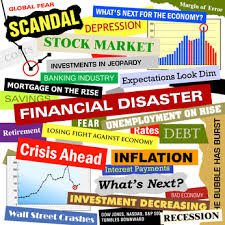
Causes of 2007 (great) Recession.
From the Conclusion below.
The U.S. Financial Crisis Inquiry Commission reported its findings in January 2011. It concluded that "the crisis was avoidable and was caused by: Widespread failures in financial regulation, including the Federal Reserve’s failure to stem the tide of toxic mortgages; Dramatic breakdowns in corporate governance including too many financial firms acting recklessly and taking on too much risk; An explosive mix of excessive borrowing and risk by households and Wall Street that put the financial system on a collision course with crisis; Key policy makers ill prepared for the crisis, lacking a full understanding of the financial system they oversaw; and systemic breaches in accountability and ethics at all levels
Many factors directly and indirectly caused the Great Recession (which started in 2007 with the US subprime mortgage crisis), with experts and economists placing different weights on particular causes.
Major causes of the initial subprime mortgage crisis and following recession include: International trade imbalances and tax lending standards contributing to high levels of developed country household debt and real-estate bubbles that have since burst; U.S. government housing policies; and limited regulation of non-depository financial institutions. Once the recession began, various responses were attempted with different degrees of success. These included fiscal policies of governments; monetary policies of central banks; measures designed to help indebted consumers refinance their mortgage debt; and inconsistent approaches used by nations to bail out troubled banking industries and private bondholders, assuming private debt burdens or socializing losses.
One narrative describing the causes of the crisis begins with the significant increase in savings available for investment during the 2000–2007 period when the global pool of fixed-income securities increased from approximately $36 trillion in 2000 to $80 trillion by 2007. This "Giant Pool of Money" increased as savings from high-growth developing nations entered global capital markets. Investors searching for higher yields than those offered by U.S. Treasury bonds sought alternatives globally.[1]
The temptation offered by such readily available savings overwhelmed the policy and regulatory control mechanisms in country after country, as lenders and borrowers put these savings to use, generating bubble after bubble across the globe.
While these bubbles have burst, causing asset prices (e.g., housing and commercial property) to decline, the liabilities owed to global investors remain at full price, generating questions regarding the solvency of consumers, governments and banking systems.[2] The effect of this debt overhang is to slow consumption and therefore economic growth and is referred to as a "balance sheet recession" or debt-deflation.[3]
The fall in asset prices (such as subprime mortgage-backed securities) during 2007 and 2008 caused the equivalent of a bank run on the U.S. shadow banking system, which includes investment banks and other non-depository financial entities. This system had grown to rival the depository system in scale yet was not subject to the same regulatory safeguards.[3] Struggling banks in the U.S. and Europe cut back lending causing a credit crunch. Consumers and some governments were no longer able to borrow and spend at pre-crisis levels. Businesses also cut back their investments as demand faltered and reduced their workforces. Higher unemployment due to the recession made it more difficult for consumers and countries to honor their obligations. This caused financial institution losses to surge, deepening the credit crunch, thereby creating an adverse feedback loop.[4]

The U.S. Financial Crisis Inquiry Commission reported its findings in January 2011. It concluded that "the crisis was avoidable and was caused by: Widespread failures in financial regulation, including the Federal Reserve’s failure to stem the tide of toxic mortgages; Dramatic breakdowns in corporate governance including too many financial firms acting recklessly and taking on too much risk; An explosive mix of excessive borrowing and risk by households and Wall Street that put the financial system on a collision course with crisis; Key policy makers ill prepared for the crisis, lacking a full understanding of the financial system they oversaw; and systemic breaches in accountability and ethics at all levels
From the Conclusion below.
The U.S. Financial Crisis Inquiry Commission reported its findings in January 2011. It concluded that "the crisis was avoidable and was caused by: Widespread failures in financial regulation, including the Federal Reserve’s failure to stem the tide of toxic mortgages; Dramatic breakdowns in corporate governance including too many financial firms acting recklessly and taking on too much risk; An explosive mix of excessive borrowing and risk by households and Wall Street that put the financial system on a collision course with crisis; Key policy makers ill prepared for the crisis, lacking a full understanding of the financial system they oversaw; and systemic breaches in accountability and ethics at all levels
Many factors directly and indirectly caused the Great Recession (which started in 2007 with the US subprime mortgage crisis), with experts and economists placing different weights on particular causes.
Major causes of the initial subprime mortgage crisis and following recession include: International trade imbalances and tax lending standards contributing to high levels of developed country household debt and real-estate bubbles that have since burst; U.S. government housing policies; and limited regulation of non-depository financial institutions. Once the recession began, various responses were attempted with different degrees of success. These included fiscal policies of governments; monetary policies of central banks; measures designed to help indebted consumers refinance their mortgage debt; and inconsistent approaches used by nations to bail out troubled banking industries and private bondholders, assuming private debt burdens or socializing losses.
One narrative describing the causes of the crisis begins with the significant increase in savings available for investment during the 2000–2007 period when the global pool of fixed-income securities increased from approximately $36 trillion in 2000 to $80 trillion by 2007. This "Giant Pool of Money" increased as savings from high-growth developing nations entered global capital markets. Investors searching for higher yields than those offered by U.S. Treasury bonds sought alternatives globally.[1]
The temptation offered by such readily available savings overwhelmed the policy and regulatory control mechanisms in country after country, as lenders and borrowers put these savings to use, generating bubble after bubble across the globe.
While these bubbles have burst, causing asset prices (e.g., housing and commercial property) to decline, the liabilities owed to global investors remain at full price, generating questions regarding the solvency of consumers, governments and banking systems.[2] The effect of this debt overhang is to slow consumption and therefore economic growth and is referred to as a "balance sheet recession" or debt-deflation.[3]
The fall in asset prices (such as subprime mortgage-backed securities) during 2007 and 2008 caused the equivalent of a bank run on the U.S. shadow banking system, which includes investment banks and other non-depository financial entities. This system had grown to rival the depository system in scale yet was not subject to the same regulatory safeguards.[3] Struggling banks in the U.S. and Europe cut back lending causing a credit crunch. Consumers and some governments were no longer able to borrow and spend at pre-crisis levels. Businesses also cut back their investments as demand faltered and reduced their workforces. Higher unemployment due to the recession made it more difficult for consumers and countries to honor their obligations. This caused financial institution losses to surge, deepening the credit crunch, thereby creating an adverse feedback loop.[4]
The U.S. Financial Crisis Inquiry Commission reported its findings in January 2011. It concluded that "the crisis was avoidable and was caused by: Widespread failures in financial regulation, including the Federal Reserve’s failure to stem the tide of toxic mortgages; Dramatic breakdowns in corporate governance including too many financial firms acting recklessly and taking on too much risk; An explosive mix of excessive borrowing and risk by households and Wall Street that put the financial system on a collision course with crisis; Key policy makers ill prepared for the crisis, lacking a full understanding of the financial system they oversaw; and systemic breaches in accountability and ethics at all levels