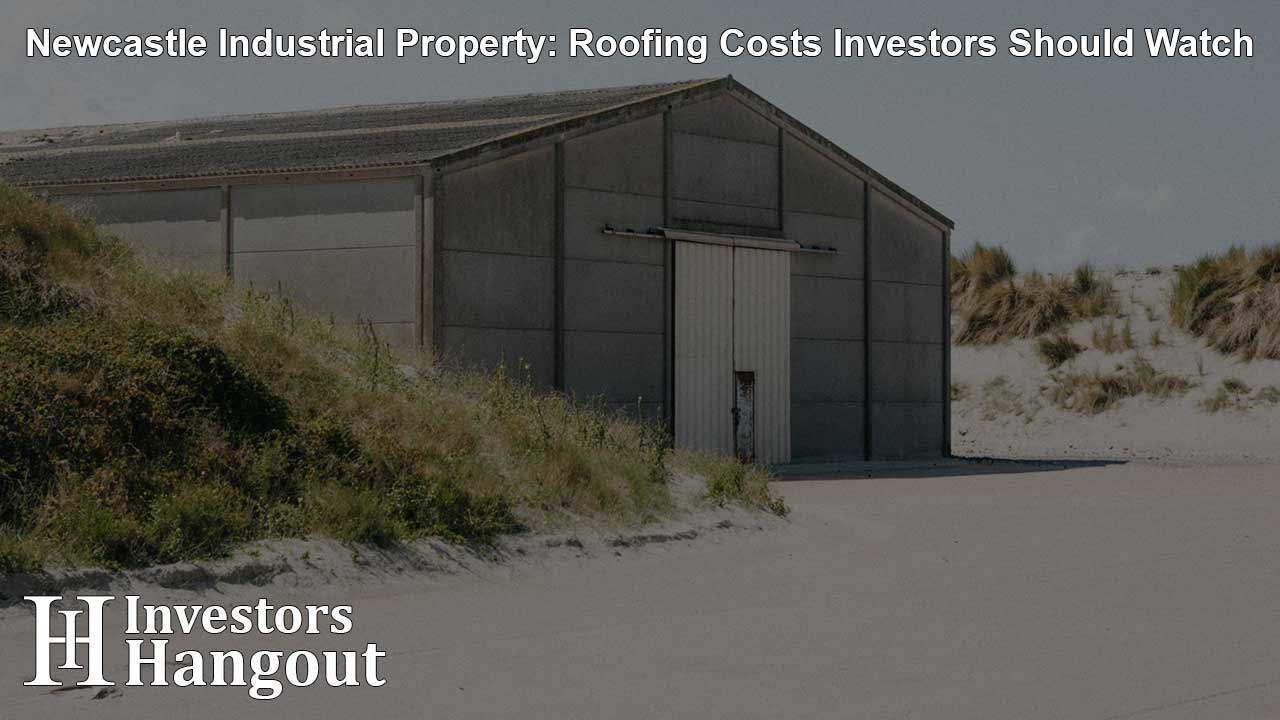
Industrial property in Newcastle has been one of the quieter success stories for Australian investors. Warehouses and light industrial sheds that once sat empty for months now lease quickly, and tenants compete for well-located space.
That kind of demand makes it tempting to focus only on yield. Buy the shed, sign the tenant, collect the rent.
But tight markets have a way of hiding costs. When a building is almost guaranteed to lease, owners can put off maintenance for years. The roof is usually the first thing to suffer, and the last thing anyone checks properly.
Why Tight Vacancy Changes the Investment Math
The numbers behind the Newcastle story are striking. Colliers research reported by The Industrialist found that established industrial and logistics suburbs in Newcastle’s inner west had vacancy rates of around 2% or less. Across the wider Lower Hunter, vacancy was 3.53% in the first half of 2025, up from a record low of 2.45% in 2023.
For comparison, the Property Council’s industrial land study puts Greater Sydney industrial vacancy at 3.7% in the second quarter of 2026, well below what it describes as a 5% market equilibrium level.
In plain terms, the best Newcastle industrial stock is tighter than many parts of Sydney. That supports rents and values. It also changes owner behavior.
When tenants are easy to find, there is less pressure to keep a building in top condition. Small leaks get patched instead of fixed. Rusting sheets get ignored. Gutter problems become someone else’s issue. Over time, those deferred repairs build into a large and often unexpected bill.
There is another factor older sheds bring with them. According to the NSW Government’s asbestos guidance, many buildings built or renovated before 1990 still contain asbestos, and workplaces built before 2004 must keep an asbestos register. Older industrial suburbs often include buildings from exactly that era.
Commercial Roofing Is the Cost Hiding in Plain Sight
For industrial investors, the roof is often the single most expensive building element to fix or replace. It is also one of the hardest to assess from the ground.
A shed can look perfectly fine from the street while hiding corroded fixings, failing sealant around skylights or gutters that overflow every time a storm rolls in. By the time a tenant reports water inside, the damage may already have spread to insulation, framing or stock.
This is why due diligence should include a proper roof inspection, not just a glance at photos. Local specialists handle commercial roofing Newcastle projects across the Hunter, from repairs with leak detection through to full replacements, tile-to-metal conversions, guttering and roof plumbing, plus maintenance plans and inspections. The company notes that a properly installed metal roof usually lasts a minimum of 40 years.
That lifespan is a useful benchmark. If an investor is buying a shed with a roof that is already decades old, the replacement cost should be priced into the deal from day one.
How the Roof Bill Shows Up
A roof rarely fails all at once. Instead, the cost appears in several smaller ways that are easy to miss on a spreadsheet.
The first is reactive repairs. Each leak call-out might seem minor, but repeated emergency work costs more than planned maintenance. It also disrupts tenants.
The second is tenant risk. In a tight market, a good tenant may tolerate a problem for a while. But if water damages stock or equipment, the relationship can sour quickly. Disputes over repairs can also complicate lease renewals.
The third is weather. Newcastle is not a dry city. Bureau of Meteorology records for Nobbys Signal Station show annual mean rainfall of 1,117.6 mm, with an average of 97.6 days of rain of at least 1 mm a year. Every one of those days tests an aging roof, gutters and downpipes.
The fourth is coastal exposure. Sheds near the port and the coast face salt-laden air that can speed up corrosion on metal sheeting and fixings. What looks like minor surface rust can become structural damage if left untreated.
The Safety Side of Roof Work
Roof work is not something tenants or property managers should try to handle themselves. It is one of the riskiest jobs on any site.
A SafeWork NSW falls from heights report recorded 26 work-related fatalities from falls between July 2014 and June 2017, with roofs the most common thing people fell from, accounting for eight of those deaths.
For owners, that has two implications. First, roof inspections and repairs should always be done by qualified professionals with proper safety systems. Second, if a building has older roofing materials that may contain asbestos, specialist assessment is needed before any work begins.
Both factors can add time and cost to a roofing project. Smart investors budget for that from the start.
What Investors Should Check Before Buying
A careful roof review can change the price an investor is willing to pay.
Start with the age of the roof and any records of past repairs or replacements. If the seller cannot provide them, treat that as a warning sign.
Commission an independent roof inspection as part of due diligence. Ask specifically about corrosion, fixings, sealants, skylights, gutters and box gutters, which are a common source of leaks on industrial sheds.
Check whether the building is old enough to require an asbestos register, and review it if one exists.
Review the lease. Understand who is responsible for roof maintenance and capital repairs, and whether the tenant has a history of reporting leaks.
Finally, build a realistic capital works budget into the purchase. A roof replacement may not be needed this year, but if it is likely during your holding period, it belongs in the valuation.
Turning Maintenance Into a Strategy
The good news is that roof costs are manageable when they are planned.
Regular inspections catch small problems early, when repairs are cheaper. Scheduled maintenance keeps gutters clear and fixings secure. Energy-efficient upgrades, such as better ventilation and skylights, can even make a building more attractive to tenants.
In a real estate market as tight as Newcastle’s established industrial suburbs, a well-maintained building can also be a competitive advantage. It may attract stronger tenants, support higher rents and reduce downtime between leases.
In conclusion, low vacancy is a strong tailwind for Newcastle industrial real estate investors, but it should not hide the true cost of ownership. Roofs age, weather takes its toll and older buildings carry extra risks. Investors who inspect early, budget realistically and treat commercial roofing as a core part of their strategy are far more likely to protect both their yield and their capital. As always, investors should seek independent property, tax and financial advice before buying.