
Why It Matters for Your Business
Some people use the terms security guard and security officer interchangeably. However, there are significant differences in these roles. By understanding how they differ, organizations and individuals can be better equipped to determine which of the protections is right for their situation. While each of these positions is dedicated to the safekeeping or protection of property, the roles differ in their responsibilities, authority, and the level of training required. If you understand why someone is better suited for a job, you can make more informed hiring decisions and manage risk accordingly.
Primary Responsibilities
To fully understand the difference between security guard and security officer, you must understand their responsibilities. the primary role of a security guard. The primary role of a security guard is to patrol and observe a specific area, reporting any incidents that occur. Guards usually patrol premises, monitor entrances, and enforce rules and regulations that prohibit unauthorized visitors from entering restricted areas. It prevents theft, vandalism, or trespassing simply by its physical presence.
The guards will usually follow the protocols of their respective employers, thus not deviating from protocol unless there is an immediate and serious threat. What they do is more preventive than it is interventive.
However, security officers typically take on a wider range of roles. Officers may be responsible for supervising other guards and coordinating responses during events. They frequently exhibit seemingly improbable behavior, create extensive written documents, and also interact with law enforcement if necessary.
In some instances, decision-making is required on the part of the officer, who may be periodically responsible for access control systems or surveillance technology. They can also take on a more interventionist role and become involved in trying to solve the problem.
Authority and Decision-Making
Informal power and authority are vastly different between the two roles: guards and officers. Security guards usually have to strictly adhere to the rules given by their superiors. They will only call in law enforcement or management when something happens. Guards are allowed to make citizens' arrests in some circumstances, but seldom exercise their own discretion when it comes to more complicated situations.
Security officers, on the other hand, have a lot more freedom. They are empowered to make rapid decisions, particularly in crises. Officers could oversee evacuation efforts, mediate disputes, or communicate with first responders. They know what they are doing and act with confidence in these changing circumstances. This improvement in power comes with the responsibility to safeguard people, assets, and information.
Training and Qualifications
The training requirements for security guards are typically very low. Most individuals receive training while working, which includes patrol, reporting, and fundamental emergency response. In some areas of the country, guards need only complete a brief certification course, if one is required at all; elsewhere, a bare minimum background check is needed before hiring. It is primarily about helping guards perform their daily duties reliably.
For their part, security officers are more thoroughly trained. Trained in areas as complex as crisis management, surveillance systems operation, report writing, and conflict resolution. They sometimes train in specialist areas such as first aid, physical intervention, or customer service. This broader approach prepares most individuals to deal with a wider range of conditions and manage others effectively. Their qualifications demonstrate how they've progressed and gained trust in their position.
Appearance and Uniform
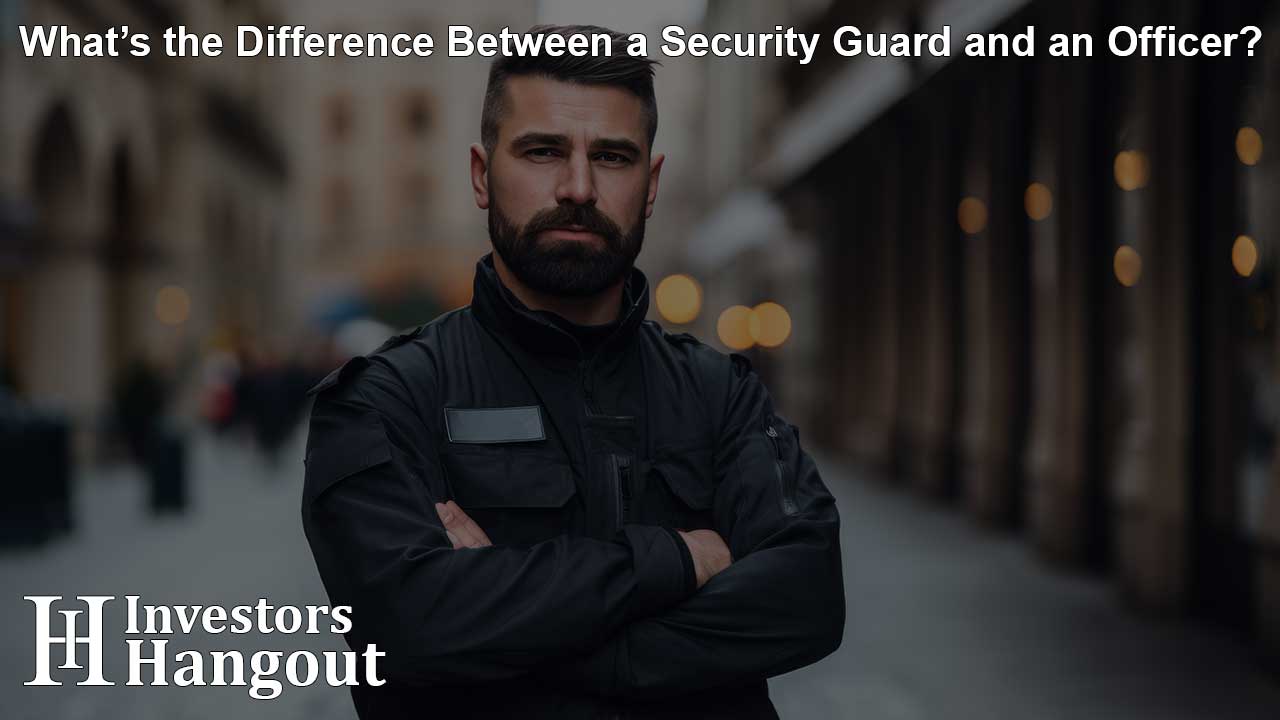
They were wearing uniforms, which helped separate guards from officers. Unlike police officers who engage in undercover work, security guards are usually dressed from head to toe in a uniform that is clearly identifiable to the public and potential intruders. The post mentions that the uniforms are practical, focusing on function and comfort while patrolling or standing at posts on a daily basis.
Uniforms are similar, but security officers also typically wear additional insignia or badges designating their authority. In some instances, particularly in corporate environments, officers will wear business attire.
The clothes they wear indicate that they are supervisors or function specialists. One of the best ways to reassure your clients and ensure order is through a professional appearance, which is particularly important during special events or emergencies.
Conclusion
Due to the differences in responsibility, authority, training, and interaction, the distinction between a security guard and a security officer stems from the scope of their respective positions. Guards provide an essential layer of security by performing regular duties and maintaining a presence on the premises. It makes officers more cost-effective, as their command provides a higher level of expertise, supervision, and decision-making. By taking these differences into account, organizations and individuals can help create safer environments and implement more effective security solutions.