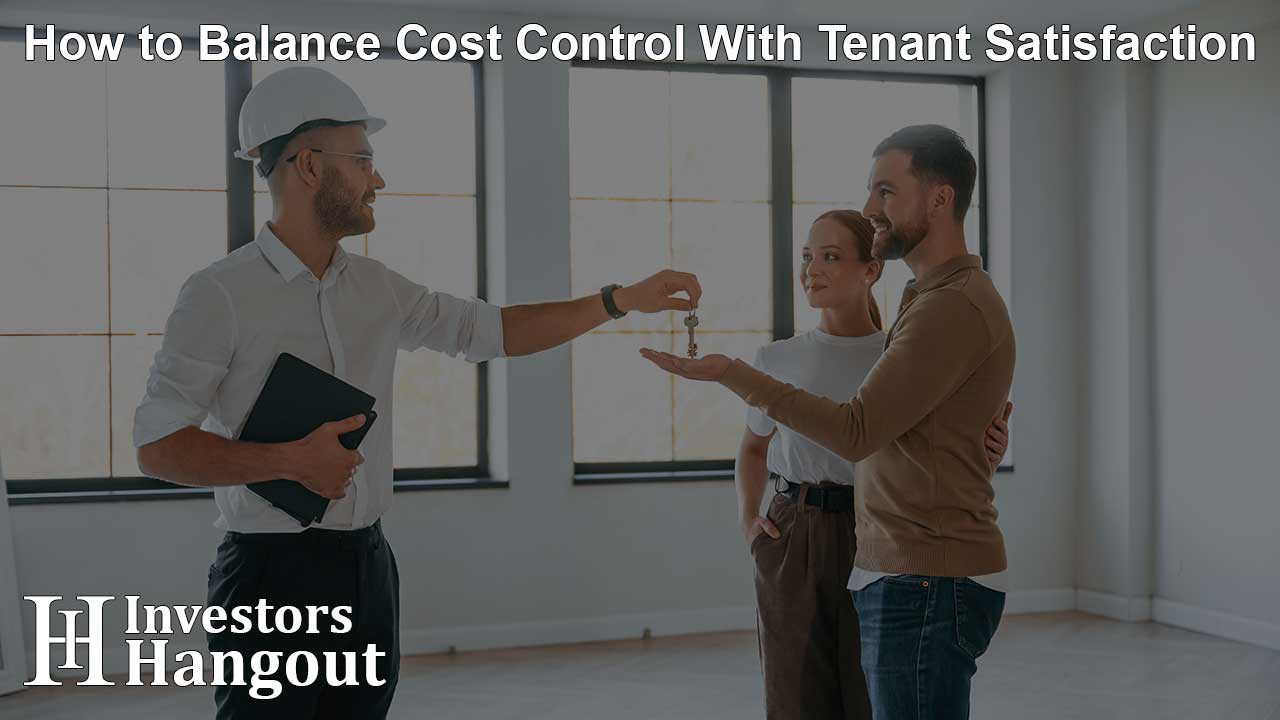
One of the long-standing challenges of property management is the management to balance between the control of costs and satisfaction of tenants. The owners and managers of the property should ensure profitability along with providing dependable service, accommodation, and good experiences of the tenants. Cost cutting is a sensitive issue that may result in frustration, increased turnover and financial losses in the long run unless properly handled. Even the well maintained property may find it difficult to deal with the reputation and occupancy when the needs of tenants are not taken into consideration. Considerate equilibrium permits financial and loyalty of tenants to co-exist.
Understanding Financial Pressures
Cost control starts by the identification of the complete scope of costs incurred in the running of a property. These expenses are maintenance, utilities, staffing, insurance, compliance and administrative operations. When there is no clear idea of the money aspects used, then it will be hard to make informed decisions to safeguard the budgets and the quality of the services. The strategic cost management emphasizes on visibility, predicted cost and prioritization in place of across the board predictions.
There is no financial discipline that implies standard sacrifice. Rather it needs to match expenditure with long term value. Property management Scarborough companies monitoring performance metrics and cost trends have a greater opportunity to determine inefficiencies without negatively affecting the tenant satisfaction. In this way, the managers will have an opportunity to minimize wastefulness without giving up on the points that have a direct impact on the comfort and trust of tenants.
Prioritizing Essential Services
The delivery of the essential services is one of the main sources of judgment by tenants. The sources of satisfaction are heating, plumbing, security, cleanliness and timely repairs. Reduction of costs in such areas usually attract customer grievances, negative feedbacks and a high turnover. By focusing on these fundamental services, it is possible to have a balance of ensuring that cost management strategies do not compromise the fundamental expectations of the residents.
The pragmatic solution is to draw a line between necessary spending and luxury expenditure. Cosmetic improvements and non essential facilities may be postponed but other services that impact on safety and ordinary living must be preserved. Scarborough is a competitive property management environment where tenants can only be retained by meeting the minimum expectations to sustain their occupancy rates.
Preventive Maintenance Planning
One of the best means to maintain the cost control and assist in satisfying tenants is preventive maintenance. The adaptation of minor problems at an initial stage minimizes the chances of costly repairs, emergency calls, and time-consuming downtimes. Proactive care is also appreciated by tenants because it is an indication of professionalism and interest in their living environment.
Regular maintenance plans facilitate budget stabilization and avoid shocks. In the long term, this strategy prolongs the lifespan of the building systems and reduces replacement expenses. To the tenants, preventive maintenance gives them an impression of credibility and confidence. They will not feel inconvenienced as much, they will renew their lease when they realize that the problems are tackled before they turn into serious problems.
Communication With Tenants
Effective and consistent communication is important in striking a balance between costs and satisfaction. The limitations or delays are usually more acceptable when informed and respected by tenants. Open communication of maintenance schedules, new policies and cost-based decisions will allow managing expectations and minimizing frustrations.
Communication is also effective in preventing problems that may arise before they become too serious. Tenants can report on issues when they are comfortable at an earlier stage, thus enabling the property managers to handle the issues at a cheaper cost. The two way conversation minimises misunderstanding and develops a better relationship between parties, enabling cost control measures to be adopted without ruining the trust of tenants.
Smart Use of Technology
Technology can provide useful instruments to facilitate effectivity and manage expenses without reducing the quality of services. Online maintenance requests, rent payments, and communication lower the workload on the administration and enhance the response time. Such systems usually reduce the costs of operation as well as simplifying interactions among tenants.
Better decision making is also supported by automation and tracking of data. The property management companies are able to understand trends, anticipate maintenance requirements and resource allocation in a better way. To the tenants, technology improves openness and availability, which lead to a better experience despite the tight control of operating costs.
Vendor and Contract Management
Another key to balancing cost and satisfaction in the selection of vendors is to work with reliable vendors. The choice of the contractors due to the lowest cost may result in bad workmanship, recurrent repairs, and dissatisfaction of the tenants. A more value-based approach is more sustainable, reliability-based and long-term relationships.
Fair contracts and stable relationships with the vendors can be achieved by negotiation and lead to improved services and cost predictability. Quality work also helps to lessen the rework and the disturbances of the tenant. This strategy promotes financial objectives and at the same time tenants receive timely and professional services whenever problems are encountered.
Staff Training and Efficiency
Properly trained employees help to keep the costs down as well as the tenants happy. When employees are aware of the systems, policies and customer service standards then it makes them more efficient and reduces mistakes. This saves time wastage, unwarranted costs, and complaints by tenants.
Training can seem to be expensive in the short run but in the long run it will yield savings. Qualified personnel are able to diagnose the problems correctly, communicate effectively with the tenants and utilize the resources in a responsible manner. The tenants have the added advantage of a smoother interaction and quicker resolutions which strengthens the confidence of the management.
Balancing Amenities and Expectations
Amenities have the potential to increase the satisfaction of tenants, but they need to be budget-constrained. Provisions of amenities that are most appreciated by tenants give higher returns compared to amenities that are not utilized or are very expensive. The study of the demographics and preferences of the tenants assists in making more intelligent investment choices.
A periodical assessment of the amenity use and expenditure would help identify areas of change. Sometimes a few additions or even improvements to the existing features can bring more satisfaction than costly ones. Such a balance will make sure resources are deployed in areas which have the highest impact on the tenant experience.
Measuring Satisfaction and Performance
The evaluation of the tenant satisfaction on a regular basis will be an important insight into the perception of the strategies of cost control. Renewal rates, surveys and feedback forms assist in determining the strengths and weaknesses. These measures enable managers to modify strategies before the problems impact retention.
Accountability is also supported with performance measurement. The financial decisions can be observed in terms of their effect on the tenant experience because by monitoring response times, expenses on maintenance, and satisfaction levels, property managers will be able to observe the correlation between these two and financial choices. Such a middle ground promotes constant betterment and informed decision making.
Long Term Perspective
To be able to balance between cost control and tenant satisfaction involves the long term mindset. The benefits of short term savings obtained by disadvantage of the tenant experience usually result in increased turnover, vacancy costs and damaged reputation. Sustainable success through the protection of both financial health and tenant relationships.
The cost management makes properties more resilient and competitive when cost management is in line with service quality. The tenants will be willing to remain, refer their friends, and collaborate with the management. Such equilibrium eventually leads to sustainable revenues, managed costs, and sustainable value to both property owners and managers.