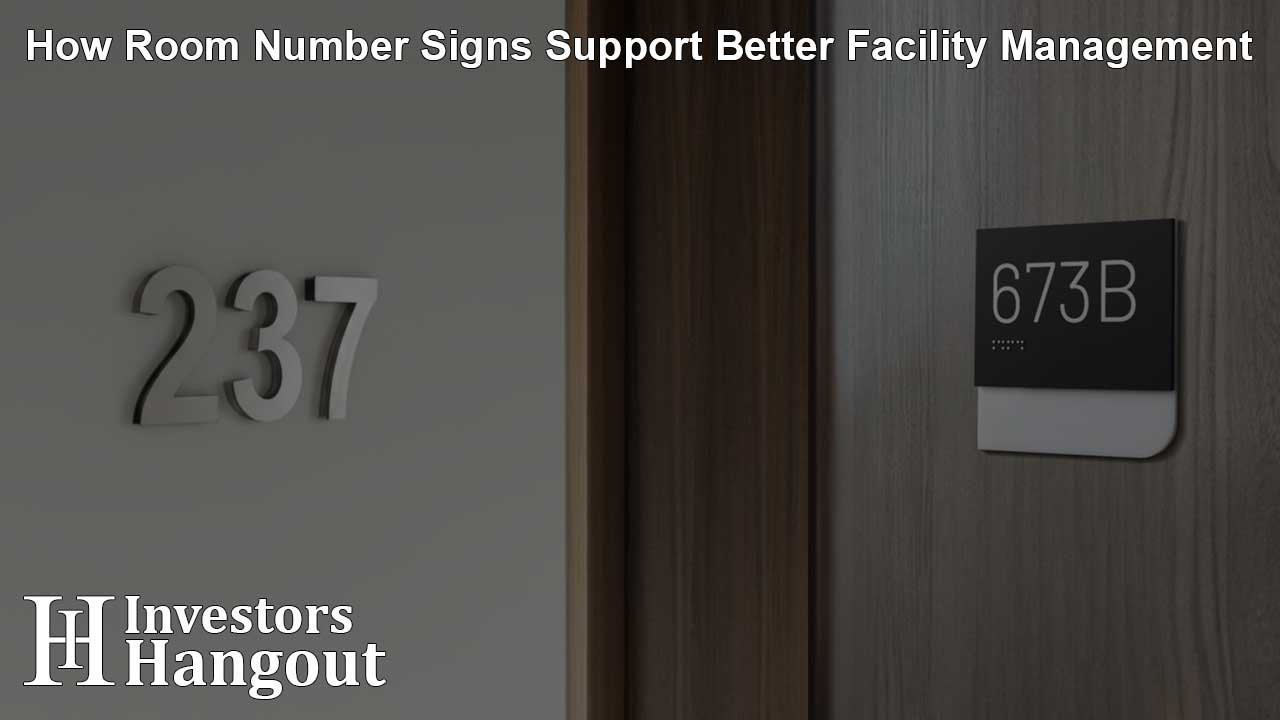
Room numbers are an essential part of how office buildings are organized and managed. They help employees find the right space, allow maintenance teams to identify locations, and connect physical rooms with floor plans, asset registers, and facility management records.
When these identifiers remain consistent across documents, digital systems, and door signs, day-to-day business operations become easier to coordinate. A clear room numbering standard also helps facility managers handle renovations, changes in room layouts, and future signage updates without losing track of individual spaces.
Establishing this consistency starts with accurate records and a clear process for updating them. It also ensures that the room number signs installed throughout the building reflect the approved numbering system and complement the interior design.
Where a Room Number Does Its Work
In an office building, a room number is used far more often than it is read from a door. Maintenance teams attach it to work orders, so a request can be routed to the right floor and the right trade. Asset registers use it to record where a fire extinguisher, a distribution board, or an air handling unit is installed. Cleaning schedules, inspection rounds, and keys and access lists are commonly organized around rooms. And the floor plans used by tenants, contractors, and emergency planners carry the same numbers.
Facility management teams often use room numbers to connect maintenance requests, asset records, and floor plans. Keeping office room number signs consistent with the identifiers used in a facility management system can make it easier for staff to locate rooms and maintain accurate building records.
A caution applies to how far that goes. A door number is one identifier among several, and not every system uses it as its primary key. Some platforms generate their own space or asset IDs, some use a code from the architect's model, and some carry the door number only as a display field. The practical task is to know, for each system in the building, which identifier it treats as authoritative, and to keep a mapping to the number on the door where they differ.
Keeping Three Views of a Room in Agreement
Every room exists in at least three places: on the door, on the plan, and in the facility records. These tend to drift for ordinary business reasons. Plans are revised by the design team on one schedule, records are updated by facility staff on another, and signs are ordered when someone notices a damaged plate.
A workable approach is to treat one of them as the register of record and the other two as views of it. In most offices, the register is a room list held by the facility team, with a column for the number on the door, a column for the identifier used in the plans, and a column for the identifier used in the management system where those differ. The plans and the signs are then checked against the register, not against each other.
The register does not need to be sophisticated. A controlled spreadsheet with an owner and a revision date serves the purpose, provided that business-related changes are made there first.
What to Do After a Reconfiguration
Rooms change function and boundaries more often than people expect. A storage room becomes two offices, a meeting room is absorbed into an open-plan area, and a corridor is closed off. Each change touches several records, and the order of operations decides whether the three views stay aligned.
After a reconfiguration, a short sequence helps:
- Update the register first. Record the new rooms, retire the numbers that no longer exist, and note the date. A retired number should be marked as retired, not left blank, so it is not reused for a different room while old work orders and asset records still point to it.
- Amend the plans. The design or space planning team issues a revised plan, and the revision is noted against the register entry.
- Adjust the management system. Whoever administers it applies the changes, including the mapping where the system uses its own identifier.
- Refresh the signs last, from the register. Order and install plates for new rooms and replace plates where a number changed.
- Walk the affected area. Compare each door against the register and record any differences.
The sign update comes after the register, plans, and management system have been reconciled. Confirming the final list before production helps avoid unnecessary replacement orders and installation work.
Preparing the List for a Sign Order
When an order for door plates is being prepared, the list should come from the register and not from the existing signs on the wall, since the signs are the records most likely to be out of date. A usable order list contains, for each room:
- the number exactly as it is to appear on the plate, including any prefix, punctuation, or leading zero;
- the floor or zone, taken from the current plan;
- the room function where the plate carries it;
- the revision of the register and of the plan the entry was checked against;
- the reason for the order, such as a new room, a replacement, or a changed number, so that an unexplained difference from the existing plate is visible.
When a number has changed, the plate order is a good moment to confirm that the old number has been retired in the register and that open work orders and asset records referring to it have been reassigned.
Who Checks and Who Approves
The step that most often goes missing is a named business approver. Several people hold part of the information, and without an agreed owner, each assumes another has checked.
The facility manager usually owns the register and is the natural approver of the number list. The administrator of the management system confirms that the identifiers on the list match what the system holds, or supplies the mapping where they differ. The architect or space planner confirms that the numbers agree with the current plan revision. A named person, often the facility manager or a project coordinator, issues the final list to the supplier and records the revision that was issued.
It is worth agreeing in advance who can authorize a business-related change to a number once an order has been placed. A change made by telephone to the supplier, with no entry in the register, recreates the problem the process was meant to prevent.
A Short Check Before Production
Before an order is released, confirm that:
- the list was produced from the current register and not copied from existing plates;
- each number agrees with the current plan revision, and the revision is recorded;
- numbers that changed or were retired have been reflected in the management system and the open records;
- the identifier mapping is current for any system that does not use the door number as its key;
- a named person has approved the list and the revision issued to the supplier is the one on file.
After installation, a walk of the affected floors against the register closes the loop. A difference found then is a small correction. The same difference found when a technician cannot find the room is a lost afternoon.