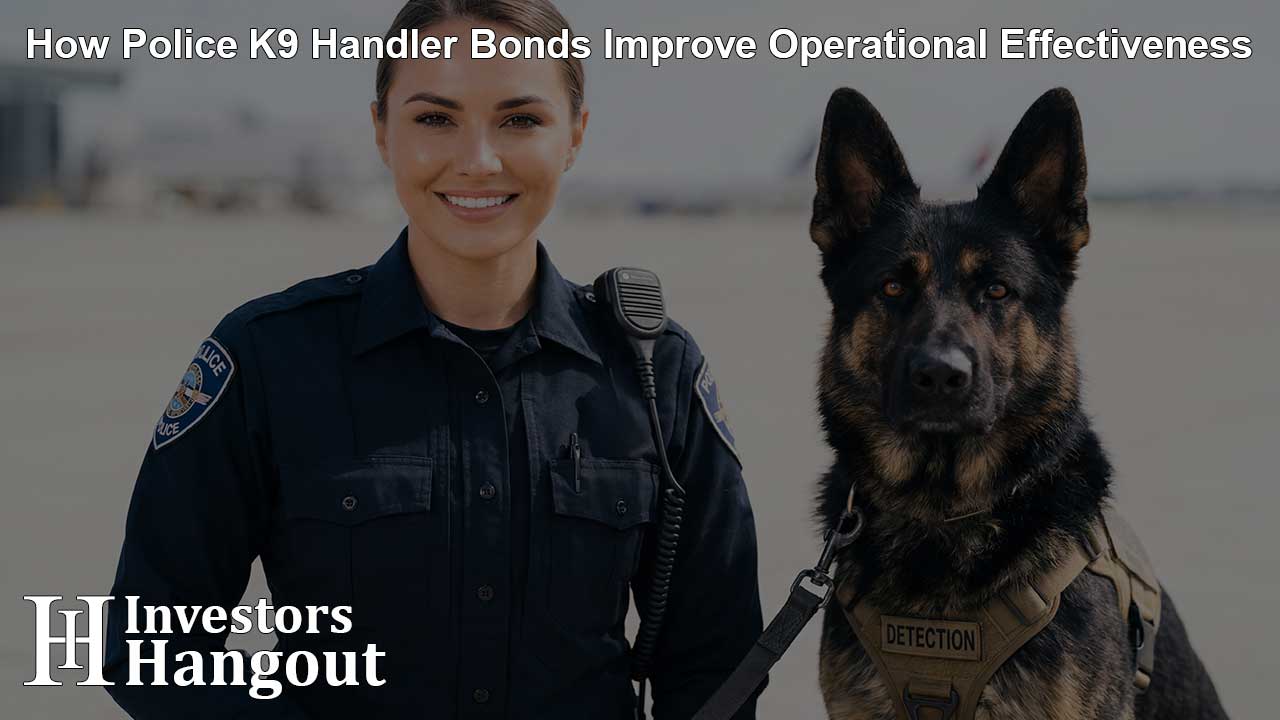
Police dog training, whether undertaken for personal or business purposes, produces a specific set of operational capabilities in a dog. This includes detection work, tracking, apprehension behavior, and controlled aggression, which the training record documents and the certification confirms.
What the training record doesn’t capture is the quality of the working relationship between the handler and the dog, and that relationship is the variable that determines whether the certified capabilities are accessible under the conditions where they’re actually needed. A dog with excellent training and a poor handler relationship is a different operational asset from the same dog with the same training and a strong handler relationship. The difference shows up in the specific situations where operational outcomes are determined by marginal performance.
What the Handler Relationship Does to Stress Response
Police dogs operate in environments with high arousal, unpredictable stimuli, and the specific stress signature of genuine operational deployment. How a dog manages its arousal in those environments, whether it channels the stress into focused operational behavior or whether it becomes less accessible to handler direction as arousal increases, is partly a function of training and partly a function of how the dog reads the handler’s own stress response in the same situation.
A dog that has developed a strong attunement to its handler’s emotional state uses the handler as a reference point in ambiguous or high-stress situations. A handler who is calm and directive communicates to the dog that the situation is manageable, which supports the focused operational behavior the training was designed to produce. A dog without that attunement, because the handler relationship hasn’t been developed to that level of communication depth, loses access to the handler as a regulating reference point precisely when that regulation is most operationally relevant.
Police dog training develops the dog’s technical capabilities and its responsiveness to commands, but the attunement that allows the handler’s presence to regulate the dog’s arousal in genuine operational conditions develops through the hours of daily contact, shared experience, and the specific quality of attention the handler brings to reading and responding to the dog’s behavioral signals. That development happens outside formal training sessions as much as within them.
How Communication Develops Beyond Command Response
A working police dog that responds correctly to every trained command and nothing else is less operationally capable than one that has developed the capacity to communicate information back to the handler through behavioral signals the handler has learned to read accurately. A detection dog that has found a source and is communicating its location through body language the handler interprets correctly is providing operational information beyond the formal indication behavior. A tracking dog whose change in body posture communicates that the track is aging or that the subject is close is giving the handler information that changes tactical decisions.
That bidirectional communication develops through handler investment in learning to read the specific dog rather than the generic behavioral language dogs display, because individual dogs communicate differently enough that reading one dog well doesn’t automatically transfer to reading a different dog. A handler who has worked with the same dog long enough to know the dog’s specific signals, the difference between the body language that means strong source odor and the body language that means distraction, is extracting more operational information from the dog than a handler who is only reading generic dog behavior.
What Happens to Operational Performance When the Relationship Is Disrupted
The operational impact of handler changes, temporary reassignments, or relationship disruptions becomes most apparent in the transition period when a new handler is working a dog that had a strong relationship with a previous handler. The dog’s technical capabilities remain intact. What changes is the accessibility of those capabilities under operational stress, the dog’s arousal management, and the bidirectional communication that had developed over time with the previous handler. That transition cost is the clearest evidence of how much of the dog’s operational effectiveness was residing in the relationship rather than solely in the training, and it’s a cost that police dog training programs account for in how they structure handler assignment and transition processes.