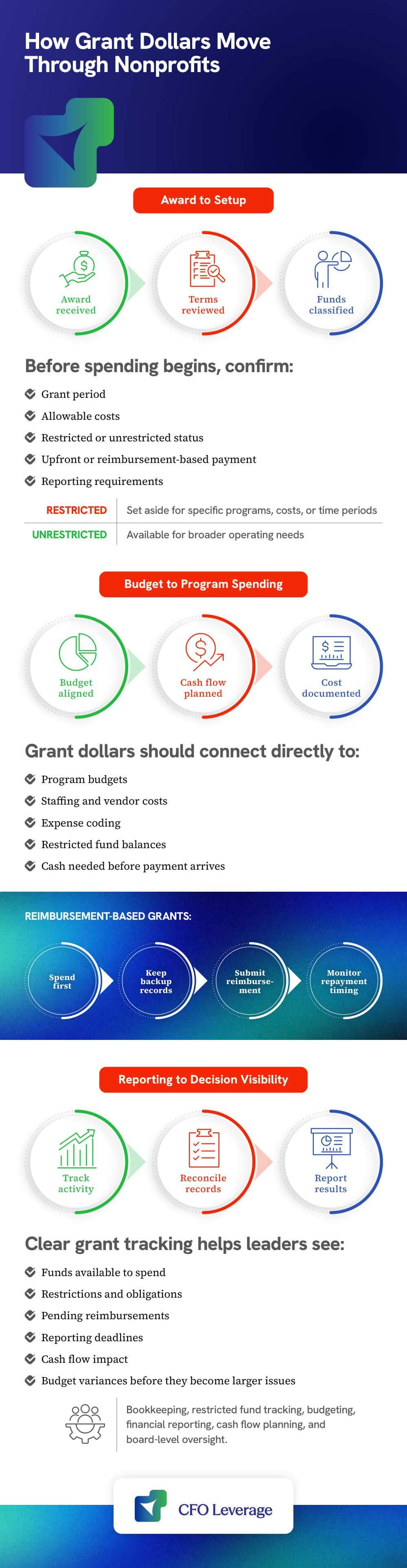
Grant funding supports nonprofit programs, staffing, equipment, and community services. However, receiving a grant award does not mean an organization can immediately spend the entire amount. Funds move through several financial and administrative stages, each with specific requirements. For nonprofit leaders, donors, and business and financial professionals, knowing how this process works helps explain why cash flow, documentation, and financial oversight are essential to delivering measurable results.
Stage One: Grant Approval and Funding Agreements
The funding process begins when a grantmaker approves an organization's application. Before money changes hands, both parties typically finalize an agreement outlining the award amount, permitted expenses, reporting deadlines, and payment schedule.
Some grants provide funding upfront, while others reimburse organizations after eligible expenses occur. This distinction matters because reimbursement arrangements require nonprofits to cover initial costs using existing cash reserves. Grant agreements may also restrict spending to particular programs or time periods. Finance teams must identify these conditions before establishing project budgets.
Stage Two: Budget Allocation and Financial Planning
Once the agreement is finalized, nonprofit managers translate the award into an operating budget. Funds may be allocated to employee salaries, program materials, transportation, administrative expenses, or contracted services.
Each allocation must comply with the grant's spending restrictions. For example, funding designated for after-school tutoring generally cannot be redirected toward unrelated building improvements without appropriate authorization.
Effective accounting for nonprofits helps organizations distinguish restricted grant resources from unrestricted operating funds. This separation supports accurate reporting and reduces the risk of spending money outside its intended purpose. Financial teams should also prepare cash flow forecasts that account for payment timing and expected program expenses.
Stage Three: Spending and Expense Documentation
Grant funds move into daily operations as nonprofits purchase supplies, compensate employees, and deliver services. However, every business transaction should have supporting documentation. Payroll records, vendor invoices, purchase approvals, and receipts help demonstrate that expenses were necessary and consistent with funding requirements.
Organizations should establish approval procedures before purchases occur. For larger expenditures, these controls may include spending limits, competitive purchasing requirements, and independent authorization. Accurate records become particularly important when nonprofits manage several grants simultaneously. Without consistent tracking, expenses may accidentally be charged to the wrong funding source.
Stage Four: Reporting and Performance Measurement
Grantmakers often require financial reports showing how awarded funds were spent. These reports may include budget comparisons, expenditure summaries, and explanations for significant differences. Financial accountability is only part of the process. Many grants also require evidence that funded activities achieved their intended business or community outcomes.
For example, a workforce development nonprofit might report participant enrollment, completed training hours, and job placement results. Reliable reporting connects financial expenditures with program performance, helping funders evaluate whether resources are producing meaningful benefits.
Stage Five: Reconciliation and Grant Closeout
As the grant period ends, finance teams reconcile expenses against the approved budget and confirm that required documentation is complete. Unspent funds may need to be returned, carried forward with permission, or handled according to the funding agreement. Organizations must also address outstanding reimbursements and submit final reports. Grant closeout may involve audits or additional record retention requirements, particularly for government-funded programs.
The movement of grant dollars reflects a structured financial process connecting funders, nonprofit operations, and community outcomes. Clear budgets, documented expenses, and consistent reporting help organizations demonstrate responsible stewardship. When nonprofit leaders monitor each stage, they can reduce financial disruptions, meet grant obligations, and maintain the confidence of future funding partners. Look over the accompanying resource for more information.