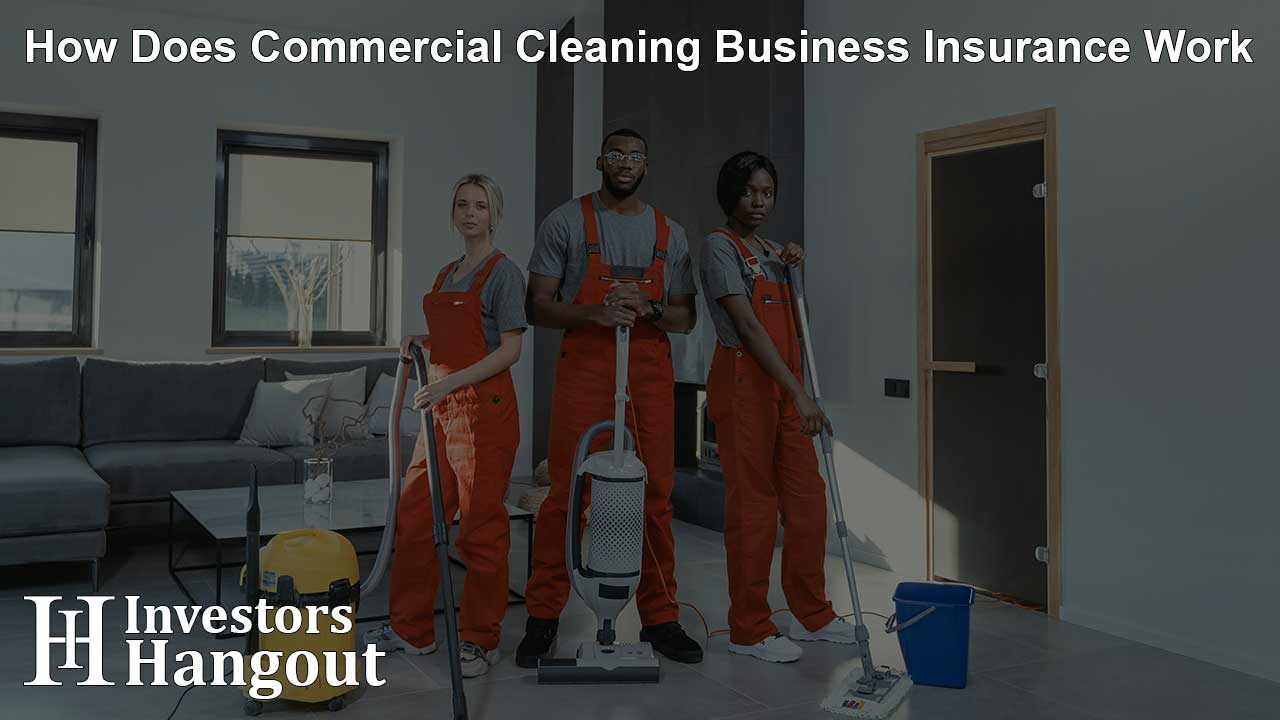
The commercial cleaning sector is thriving, particularly after the global pandemic heightened awareness of the dangers of contamination.
Industry reports indicate that these businesses have continued to grow over the past decade, surpassing sectors connected to consumer spending. Some researchers predict that the commercial cleaning products market in the US will grow at a rate of almost 8% to exceed its 2024 size of USD 33.23 billion. Healthcare, education, and hospitality will likely lead this growth.
While these figures are inspiring, businesses in this sector must be cautious of the risks that can derail operations rapidly. From a botched-up contract to an unfavorable connection to employee physical health, commercial cleaners have a lot to guard against.
A sturdy, capable insurance plan has become crucial to see continued and sustained growth in this business.
Why Do Commercial Cleaning Businesses Need Insurance?
First, as an organization in this critical sector, you are responsible for disinfecting and sanitizing sensitive operations. These could be in hospitals, warehouses, or retail environments.
Inadequate or inefficient services could directly impact the health and safety of patients and workers. It could mean poorer health parameters in schools and contamination in supermarket food aisles.
Having dependable commercial cleaning business insurance ensures that you address the inherent risks involved in such setups, from worksite safety to project timing and scheduling. Your chosen insurance protection will offer exclusive coverage tailored to match the business sectors you work in.
According to Moody Clean Insurance, working with experienced risk management experts can also help businesses improve human resource management and processes, such as hiring and training. It helps firms be more prepared for eventualities. Further, partnering with experts also provides businesses with the assistance and advocacy to navigate the claims process.
Cleaning Business Insurance Needs Amid Market Slowdown
Traditionally, cleaning businesses have boasted impressive resilience. Even when markets are going through a slowdown. After all, shut offices and retail spaces also need cleaning from a future standpoint.
However, in such circumstances, it becomes imperative for businesses to strengthen themselves from within and cover all their bases. CleanLink notes that businesses that depend solely on government contracts or consumer credit can freeze during a slowdown. But firms that have a diverse portfolio and associate with private clients are likely to flourish.
Having commensurate insurance coverage for your cleaning business can prove to be a reliable support system during tough times.
Cleaning & Maintenance Management magazine highlights the significance of a straightforward directive, such as using personal protective equipment (PPE) for cleaning workers. A slower time for business can increase the risk of oversight or the unavailability of necessary PPE.
Thus, guaranteeing worker safety becomes even more challenging, subjecting your business to the risk of litigation and reputational losses. It is evident how insurance and associated risk management advice can prevent unfortunate situations from transpiring.
Key Lookouts for Insuring Your Cleaning Business
When selecting the right insurance policy, commercial cleaning firms should conduct a comprehensive risk evaluation. Accordingly, they can assess which areas will demand the maximum protection.
For example, if your company uses harsh cleaning agents, you may face possible damage to a client’s carpeting. This is a considerable risk if your firm cannot change its cleaning supplies at present due to contractual issues or vendor limitations.
However, for another firm with a history of employee problems, the risk of damage to a client’s property from carelessness may be more relevant. Workplace accidents such as slipping on wet floors are fairly common but can prove disastrous. Even fires during commercial cleaning operations are not unheard of.
Based on your risk evaluation, consider the following aspects of a solid insurance plan:
-
Liability insurance to protect against a client getting injured due to the cleaning practices of questionable quality
-
Workers’ compensation to support your staff in case of injuries or suffering health problems from harsh cleaning supplies and tools
-
Access to professional advice on sector-specific risks, such as student wellness in schools and food safety in supermarkets
The Takeaway
Cleaning firms are enjoying consistent business even while global markets reshape and transform.
A February 2026 McKinsey report shows that an innovation focus is sharpening in the home cleaning and hygiene market. Brands are exploring hitherto unseen experiences, from agentic AI to a multi-channel mix to reach consumers. The “better for you” focus remains paramount in cleaning, which also applies to commercial operations with sensitive stakeholders, such as patients and children.
Contrary to what one might assume, even hybrid workshifts have not halted this sector’s growth. They have only changed the approach.
For example, hybrid workspaces need greater focus on high-traffic areas, such as keyboards, light switches, and breakroom appliances. Failing to adapt your style to these requirements can impact the work environment and harm employee health, both of which can spell doom for a cleaning business.
The volatile times of today need a renewed approach to business longevity, one that considers evolving cleaning needs and seeks commensurate insurance support to achieve them.