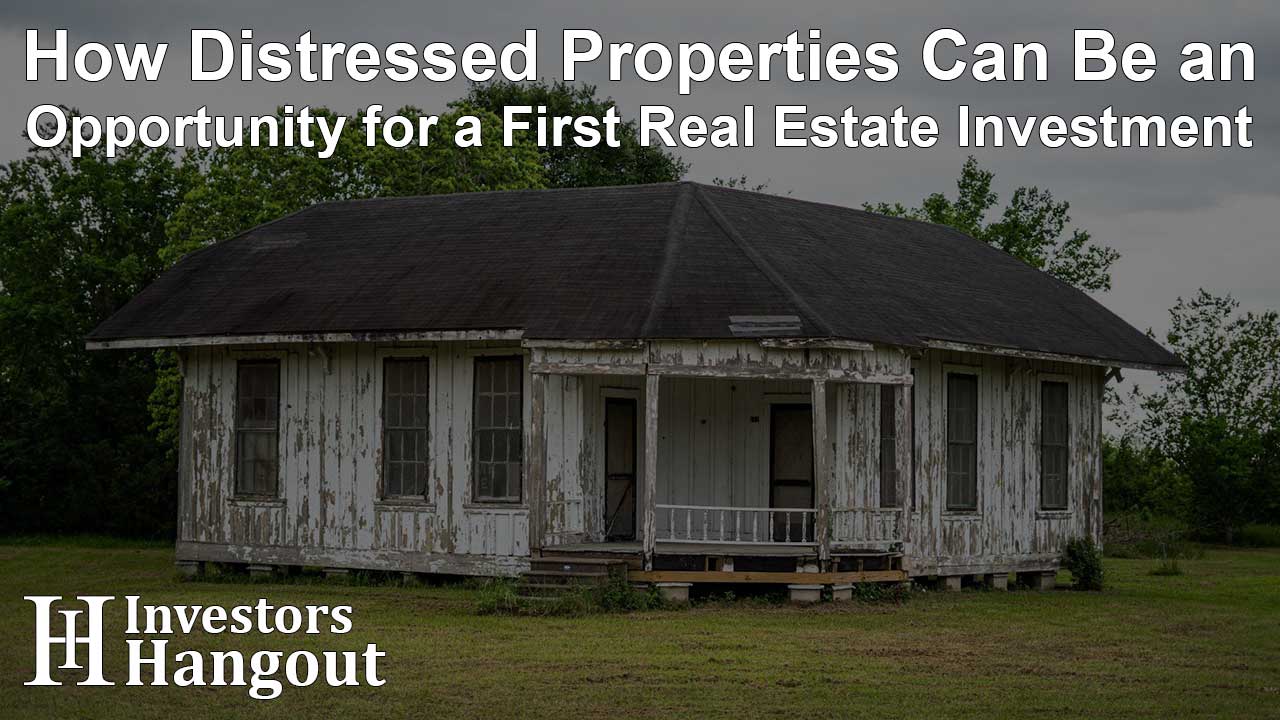
Investing in real estate always seems like something very serious and unattainable, especially for those who have no experience in this field and do not know where to start. Large down payments, high prices, and fear of making the wrong move are the most common reasons why many are afraid to make their first purchase. But what if we say that there is a segment of the market that savvy investors have long been using as a way to get into real estate at a lower cost? Yes, this really exists, and this segment is called distressed property. Here, we mean objects that require repairs, have financial or legal difficulties, or are sold after a foreclosure. At first glance, it may seem that this is a dubious option that will not lead to profit, but this is not the case at all. In this article, we will talk about the real value of a distressed property and explain why it is not an unkempt house with risks, but a real opportunity to buy real estate below the market price and create real value.
Distressed Property in Simple Terms
Distressed properties can be extremely profitable investments if an investor buys them at a significant discount and implements a clear plan to turn them around. However, before we get into the details, let’s understand what distressed property is in general. A distressed property is an object whose legal status or technical condition makes it difficult to use, sell, or legally register rights in it. As a rule, such objects are sold at a significant discount.
However, this does not mean that such houses are half-collapsed or anything like that. For example, you can check the ForeclosureHub platform and see that distressed properties generally look pretty good and could actually be a great investment.
A distressed property is a real estate forced to be put up for sale at a discount due to:
-
Financial difficulties, for example, the inability to make regular payments
-
Changes in living conditions, that is, the need to expand or reduce the area
-
Legal risks, such as liens or litigation
-
Physical deterioration of objects
Why Distressed Properties Can Be a Good Option for a First Investment
Distressed real estate transactions are not only about “cheap”, but also about strategy. When objects with legal or financial instability enter the market, a prepared investor has a chance to buy below market and exit with a gain. Investing in distressed property can provide investors with several significant benefits, which we will describe in detail below.
Reduced Cost
As a rule, such real estate is sold at a price significantly lower than the market value, which can be caused by any of the factors that we described above. Thus, even a novice investor can purchase real estate at an attractive price and receive a high degree of profitability in the long term.
Variety of Possibilities
Distressed property can be of different types, including both residential and commercial. This allows investors to select properties that suit their investment goals and strategies. Moreover, such properties can be located in different cities and regions, providing diversification of the real estate portfolio.
High Potential for Adding Value
Distressed properties almost always require renovation or restoration to bring them back into usable condition. Thus, investors have the opportunity to add value to the property by carrying out repair or improvement work. As practice shows, the market value of the object increases after a good repair and improvement of its quality, which leads to an increase in investment profit.
Key Strategies for Generating Income from Distressed Properties Today
Perhaps the main reason for the popularity of distressed property today is that when purchasing it, several options for earning money open up at once, and each investor can choose the most suitable one for themselves. This flexibility makes distressed properties a good investment even for those just starting in the real estate market.
The most common option today is fix-and-flip, the essence of which is to buy a problem object at a low price, carry out a repair, and resell it at a higher price. In most cases, simply refreshing the walls, new floors, or modern furniture is enough to increase the profitability of the investment.
Other popular strategies include purchasing such properties for long-term rental purposes, and this is especially popular in areas with high housing demand. If the property is located in a tourist area, then a short-term rental strategy is suitable. Thus, the investor will quickly recoup the costs of repairs and increase the overall profitability of the property.
Final Thoughts
Thus, it becomes clear that today, distressed property is not so much about problems, but about potential and the opportunity to make good money in the long term. This is especially true for those planning to make their first investment, as these properties can be a practical way to gain experience and enter the real estate market.