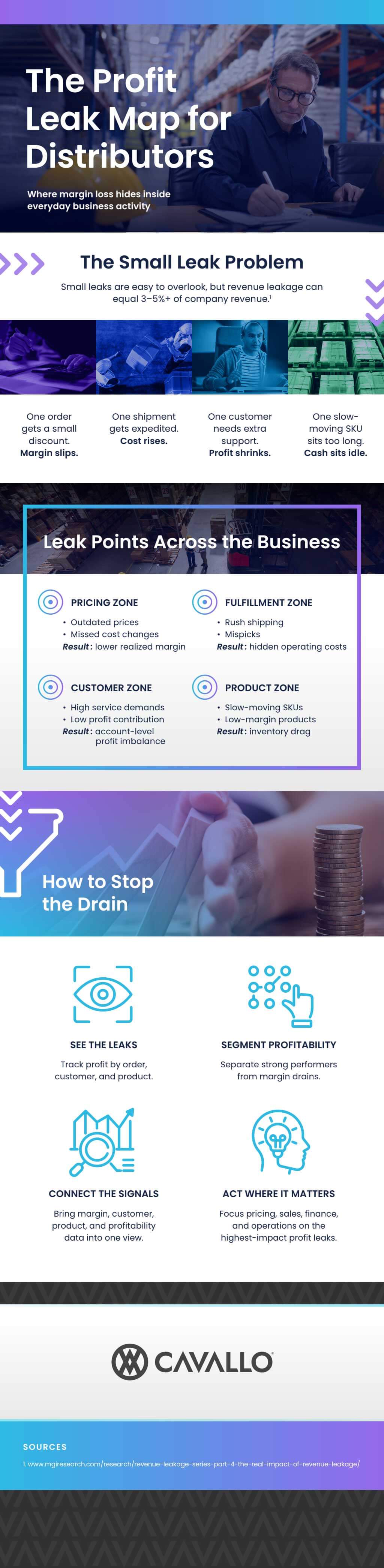
Revenue growth attracts attention, but long-term profitability often depends on controlling costs that quietly accumulate throughout daily operations. Distribution businesses face constant pressure from transportation expenses, inventory carrying costs, labor shortages, and changing customer expectations. Small inefficiencies repeated across thousands of transactions can gradually reduce margins without immediately appearing in financial reports.
Inventory Is Often the First Place to Look
Inventory represents one of the largest investments for many distributors. Overstocking ties up working capital, increases storage expenses, and raises the risk of obsolete products. Understocking creates lost sales opportunities, delayed shipments, and dissatisfied customers.
Regular inventory reviews help identify slow-moving products, seasonal demand patterns, and purchasing trends. Forecasting based on historical sales and current market conditions allows businesses to maintain healthier inventory levels while reducing unnecessary carrying costs.
Warehouse Operations Influence Margins
Warehouse productivity directly affects profitability. Poor product placement, inefficient picking routes, and unnecessary handling increase labor costs while slowing order fulfillment.
Evaluating warehouse layouts, travel distances, and picking processes often reveals opportunities to improve efficiency without major capital investments. Standardized procedures and employee training also reduce errors that lead to returns, reshipments, or damaged goods. Monitoring order accuracy alongside fulfillment speed provides a more complete picture of operational performance.
Transportation Costs Require Continuous Review
Shipping expenses fluctuate because of fuel prices, carrier availability, delivery distances, and customer service expectations. Businesses that fail to evaluate transportation costs regularly may experience shrinking margins despite stable sales volumes.
Analyzing delivery routes, shipment consolidation, and carrier performance helps reduce unnecessary expenses. Reviewing freight contracts periodically also ensures pricing remains competitive as market conditions change. Measuring transportation performance using cost per shipment and on-time delivery rates supports more informed operational decisions.
Technology Improves Operational Visibility
Modern distribution businesses generate large amounts of operational data. Turning that information into useful insight requires integrated systems that connect inventory, purchasing, finance, warehouse management, and sales activities.
Many organizations implement Microsoft Dynamics 365 Finance and Operations (F&O) distribution software to improve visibility across these functions while supporting inventory management, financial reporting, and operational planning. Access to centralized information allows leadership to identify trends more quickly and respond to changing business conditions with greater confidence.
Financial Metrics Reveal Hidden Opportunities
Revenue alone rarely reflects operational health. Gross margin by product category, inventory turnover, order accuracy, warehouse productivity, freight costs, and customer profitability all provide valuable insight into where profit may be leaking.
Regular performance reviews allow management to identify declining trends before they become larger financial concerns. Comparing operational metrics over time also helps determine whether process improvements are producing measurable results. Investors often evaluate these indicators because they provide a clearer picture of long-term operational quality than revenue growth alone.
Small Improvements Create Lasting Value
Distribution businesses rarely lose profitability because of a single major issue. Instead, profit often slips away through many small inefficiencies occurring across purchasing, warehousing, transportation, inventory management, and financial reporting. Organizations that regularly evaluate operational performance, invest in accurate data, and monitor key performance indicators are better positioned to strengthen margins while improving customer service.
For investors, a distributor that actively identifies and addresses hidden profit leaks often demonstrates disciplined management, stronger operational controls, and greater potential for sustainable long-term growth. Look over the infographic below for more information.