
Key Highlights
-
AML compliance software helps Australian businesses handle regulatory requirements with less manual effort.
-
It supports customer due diligence through identity verification, screening, and customer risk checks.
-
Real-time transaction monitoring can flag suspicious activity and support faster reporting.
-
Strong risk management tools keep risk profiles updated as customer behaviour changes.
-
Audit trails and record-keeping make reviews, reporting, and inspections easier for compliance teams.
-
Platforms such as easyAML also support training, reporting, and daily compliance processes.
Introduction
AML compliance software gives businesses a practical way to manage regulatory compliance without relying on spreadsheets and guesswork. If you need to verify clients, watch for suspicious activity, and keep records ready for AUSTRAC, the right system can make that work much simpler. For Australian firms facing Tranche 2 change, this matters now, not later.
The Critical Role of AML Compliance Software in Australian Business

Australian business owners are under pressure to meet AML regulations accurately and on time. That is hard when compliance processes sit across emails, paper files, and separate tools.
AML compliance software brings those tasks into one place. It helps manage customer risk, guide staff, and keep compliance software solutions aligned with AUSTRAC expectations. The next sections show how that support works in real day-to-day operations.
How AML Compliance Software Simplifies Meeting Regulatory Requirements
AML software streamlines compliance by turning manual tasks into guided workflows. Teams can use program builders, complete risk assessments, and follow reporting prompts instead of starting from scratch.
Compliance teams also get audit trails showing what was checked, when, and by whom—essential for secure, review-ready records.
If suspicious activity arises, the system triggers alerts, re-evaluates risk, and prompts action. This minimises missed steps and ensures faster, more consistent compliance.
Key Industries Facing Strict AML Obligations in Australia
Not every sector faces the same level of pressure, but several Australian industries have strict obligations under AML laws. These businesses need strong customer due diligence and practical risk management processes.
Common examples include:
-
Real estate firms needing AML software for real estate
-
Lawyers needing AML compliance software for lawyers
-
Conveyancing practices needing AML compliance software for conveyancers
-
Accountancy firms needing AML software for accountants
Financial institutions and other financial services businesses also need reliable systems. For many small and medium teams, an option like easyAML stands out because it combines verification, monitoring, reporting, and training in one AUSTRAC-aligned platform.
Core Features of Modern AML Compliance Software
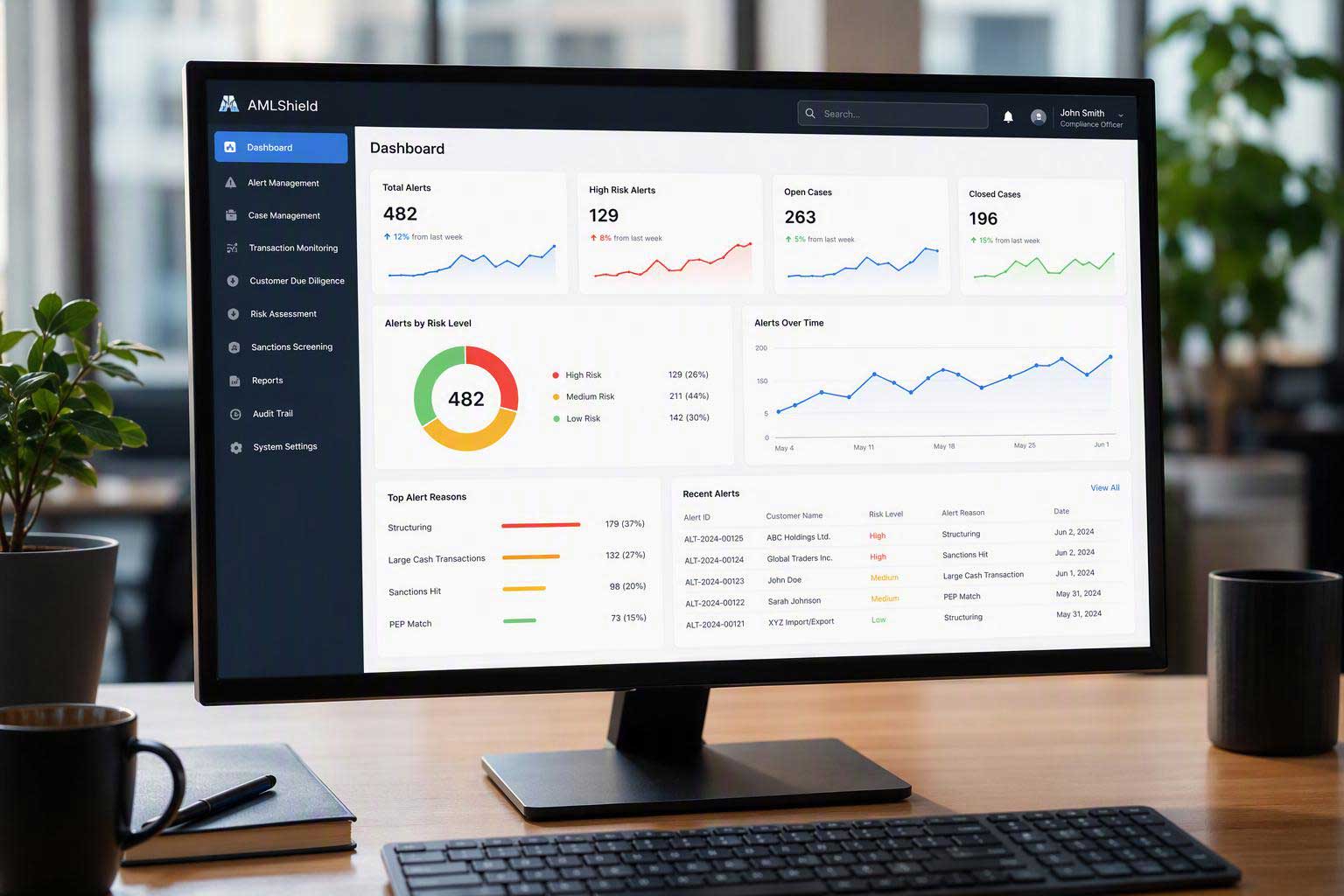
When people ask what key features matter most, the answer is usually simple: tools that reduce risk and save time. Good AML compliance software should support customer due diligence, sanctions screening, risk profiles, and case management.
It should also connect those features instead of treating them as separate tasks. That is where modern AML software becomes useful, especially when onboarding, monitoring, and reporting all need to work together.
Automated Customer Due Diligence and KYC Checks
A strong KYC process begins with automation. AML compliance software streamlines customer due diligence by collecting data, verifying identities, and creating profiles—eliminating manual document checks.
For example, clients receive a link to complete verification. The system then manages data collection, liveness and biometric checks, and screening automatically.
|
KYC Task |
Software Support |
|
Identity verification |
Automates document checks, liveness, biometrics, and record validation |
|
Screening |
Conducts PEPs, sanctions, and adverse media reviews |
|
Business checks |
Performs ABN/ACN lookups and beneficial owner verification |
|
Customer profile |
Builds risk records for ongoing monitoring |
Real-Time Transaction Monitoring and Suspicious Activity Alerts
One of the clearest benefits of AML software is real-time transaction monitoring. It helps businesses spot suspicious activity early instead of finding issues weeks later during a manual review.
In practice, the system watches customer transactions, behaviour changes, and unusual patterns. When needed, it can update risk scores and support fraud detection with less delay.
This often includes:
-
Continuous transaction monitoring across customer activity
-
Behaviour analysis to detect unusual patterns
-
Alerts that prompt suspicious activity reporting
-
Automated reviews that can cut false positives through better context
How Effective AML Compliance Software Integrates with Daily Operations

Compliance fails when it sits outside normal work. Effective software solutions improve operational efficiency by fitting into existing compliance processes rather than adding another layer of admin.
That also supports a better customer experience. Faster checks, cleaner workflows, and fewer repeat requests help businesses meet regulatory compliance goals without slowing every client interaction. Integration is a big part of that.
Seamless Integration with Existing Business Systems
Integration matters because most firms already use multiple business systems. If staff must enter the same information twice, errors grow, and compliance becomes harder to manage.
That is why compliance software with dedicated integration options is valuable. It can pull data from existing data sources, support automated data entry, and create timely prompts for review, assessment, and reporting.
A simple example is linking CRM records with compliance tasks. That supports effective AML compliance by reducing duplicate entry, speeding onboarding, and making sure customer information moves through the workflow in a consistent way.
Reducing Manual Effort and Human Error in Compliance Tasks
Many businesses ask if software is worth the cost when they could do it themselves. The main issue is not only time. Manual effort increases human error, especially when compliance teams are already busy.
Using AML compliance software can improve operational efficiency and help with regulatory compliance by standardising routine tasks. Internal testing mentioned in the compiled information showed time savings of up to 80% compared with manual processes.
This usually happens through:
-
Automated reminders for key deadlines and reporting
-
Prepopulated reports that reduce rework
-
Secure record-keeping that stays organised and audit-ready
Balancing Technology and Human Oversight in AML Compliance
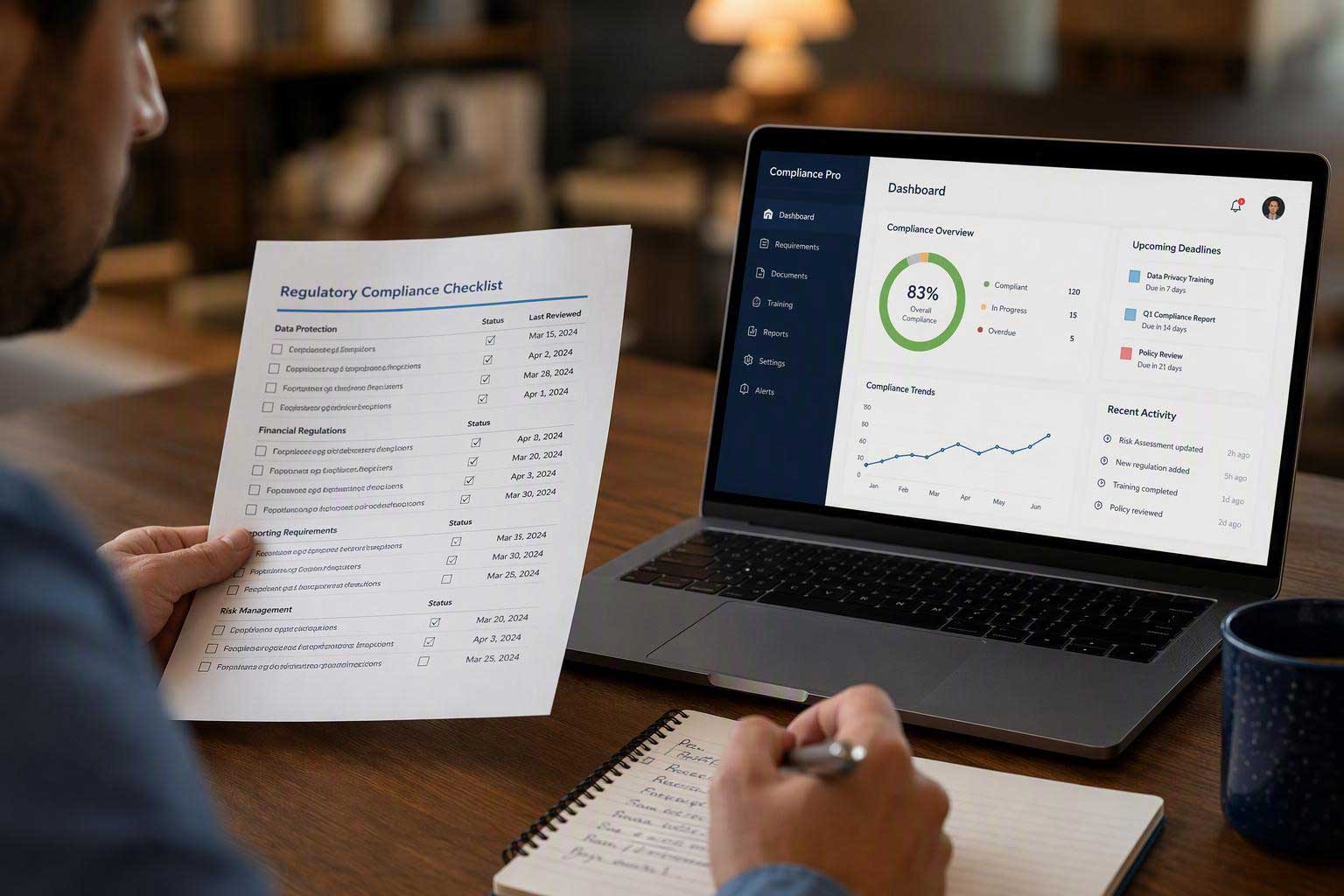
Even the best technology solutions do not remove the need for human oversight. Software can organise checks, support risk assessments, and guide action, but people still decide how to respond in difficult situations.
That balance matters most when customer risk is not straightforward. Compliance professionals still need to review alerts, apply expert judgment, and make sure the business response fits the facts.
Can AML Compliance Software Fully Replace Manual Processes?
Short answer: no. AML compliance software can replace many manual processes, but it cannot fully replace people within a compliance program.
It does handle a large share of routine work. That includes onboarding steps, monitoring, reporting prompts, record-keeping, and updates tied to changing regulatory requirements.
Still, software solutions are there to reduce human error, not remove human responsibility. A business must still enrol with AUSTRAC, follow guided steps, train staff, and make decisions when a case needs review beyond the automated workflow.
The Value of Human Review and Expert Judgment
Some regulatory requirements need more than a system prompt. Human review is important when potential risks are unclear, when a customer risk profile changes sharply, or when staff need to decide whether activity should be escalated.
Compliance professionals also play a key role in training and internal accountability. Software can restrict access for untrained staff, but people still need to understand the compliance processes behind the steps.
That is why expert judgment remains valuable. The software gives structure and evidence, while the team applies context, judgment, and responsibility to the final action.
Conclusion
AML compliance software is essential for Australian businesses to meet regulatory requirements. By automating customer due diligence and real-time transaction monitoring, these tools streamline compliance and reduce human error. Combining technology with human oversight ensures a strong compliance strategy. When choosing AML software, consider your industry’s unique needs and the features that best support your operations. Contact us for a free consultation—our experts can help you find the right solution for your business.
Frequently Asked Questions
What key features should Australian businesses look for in AML compliance software?
Look for key features that support your regulatory requirements in one place: customer due diligence, identity checks, monitoring, reporting prompts, record-keeping, training, and a guided compliance program. Good AML software should also suit your business type, whether you need tools for lawyers, conveyancers, accountants, or real estate teams.
Are there any AML regulatory requirements that software alone cannot address?
Yes. Software helps with structure, records, and routine tasks, but some regulatory requirements still need compliance professionals. Manual processes and human oversight remain important for judgement calls, staff accountability, and risk management decisions when alerts or customer behaviour are not clear-cut.
Will AML compliance software help us stay future-proof against new regulations?
It can help a lot if the platform updates with regulatory changes. An AML solution such as easyAML can keep the compliance program and risk assessments aligned with AUSTRAC updates, which makes software solutions more practical for businesses that want to stay ready for future change.