Newer commercial properties can make older assets feel harder to keep competitive. Tenants may expect flexible work areas, shared spaces, and amenities that older buildings weren't designed to provide.
If you own an aging property, those expectations can raise questions about where to spend your capital. A full redevelopment may be unnecessary when specific parts of the asset still work well.
Start by finding where the property falls short for current users. Your capital plan should follow those gaps. Some spaces need small changes, while others need a deeper review.
Factor in tenant needs before you set the budget each year. Consider which parts of the property still work well and which ones need attention. How people use the property can show which spaces need attention first.
Make the Property Work Better for How People Use It Now
Start by watching how people use the building during a normal workday. Empty rooms, busy corridors, and avoided spaces can reveal problems with the current layout.
You can then compare those patterns with what people expect from their workplace. Gensler surveyed 16,809 full-time office workers across 15 countries for its 2025 research. It found that in-person collaboration keeps growing across global workplaces.
Time spent working alone continues to decline, while socializing has nearly doubled in the U.S. since the pandemic. Those workplace changes can create new demands for older office layouts.
Andrew Werner, a senior associate principal and licensed architect, has seen this issue through his adaptive reuse work. He notes that older offices were designed for different ways of working and interacting with colleagues.
That shift matters when you assess whether the existing layout still fits today's work patterns. Look at underused rooms or shared areas before considering major structural changes.
A simple layout change may create meeting spots without changing the building's main structure. Before moving walls, check noise levels, access routes, and furniture placement.
These details can determine whether people use each space as intended. Ask tenants which areas they use most during the week. Their answers can help you focus spending on changes with a clear purpose.
Turn Overlooked Outdoor Areas Into Useful Property Features
Start your review outside the main entrance. Courtyards, terraces, walkways, and entry areas can shape how people move through your property. You can add seating, greenery, or defined gathering spots where space allows.
Each change should fit the site's foot traffic, available space, and maintenance needs. A July 2024 study in Applied Ergonomics examined how greenery affects office environments. Its 63 participants completed cognitive tasks in virtual office settings.
The researchers found that greenery affected visual attention and cognitive load, while larger greenery could distract from tasks. Use that finding when deciding where to place greenery and how much to add.
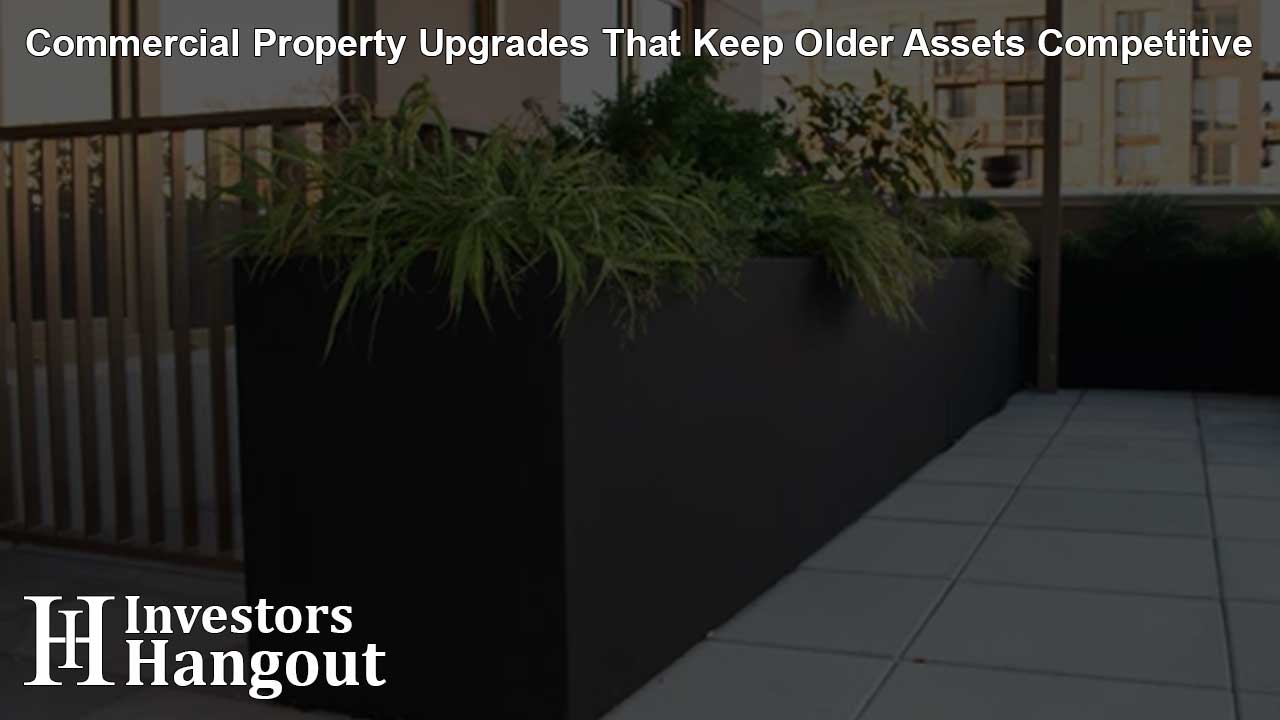
Physical limits matter, too, especially when you add planters to rooftops or patios. PolyMade notes that these spaces have different load limits, so heavy planters may not suit every location.
For larger projects, you may work with planter manufacturers on sizes that fit existing spaces. Proper dimensions can keep planting areas clear of walkways and doors.
You can also use planters to divide a courtyard or define an entrance. Check irrigation, drainage, sun exposure, and maintenance access before buying them. A small exterior area can work well when you plan around how people move through it.
Spend on Improvements That People Actually Notice
A long list of new amenities can make an upgrade plan harder to manage. Focus first on features that affect daily work and building use. A 2024 study in the Journal of Environmental Psychology analyzed 614 worker responses from the U.S. and Canada.
The study found that perceived work performance was higher in offices, while comfort and well-being were higher at home. Temperature, noise, workstation furniture, and aesthetics strongly predicted perceived work performance.
Access to amenities and outdoor areas also predicted connectedness and physical activity. These findings can help you decide which improvements deserve attention first.
Focus on conditions that affect daily work before adding features for appearance alone. Look at shared areas and work settings before deciding where additional changes are needed.
Then compare each proposed change with the problem it should solve. You can also check whether one space can support several common uses. A shared room could handle meetings during the day and tenant events later.
After each upgrade, ask tenants whether the change improved how they use the space. Their feedback can guide your next capital decision.
Decide Whether the Asset Needs an Upgrade or a Larger Change
Some older properties can compete after focused upgrades. Others need a deeper review of their current use and long-term fit. Start with location, tenant demand, building condition, and the property's current layout.
Then consider whether its existing use still matches local demand. Market activity can give you another reference point when deciding how much change an aging property needs.
CBRE found that 23.3 million square feet of U.S. office space was slated for conversion or demolition in 2025. Developers planned 12.7 million square feet of new office construction across the same 58 major markets.
It was the first year since at least 2018 when removals exceeded new construction. Use that comparison when assessing the property's future before committing major capital.
Renovation can make sense when the location remains strong, and the building supports current needs. Conversion may suit properties where the existing office layout no longer matches demand.
Check zoning, structural limits, and renovation costs before choosing that path. Building systems also need attention. Older systems can raise operating costs even when the space remains useful.
A focused assessment can show whether targeted upgrades are enough for the property's next phase.
Commonly Asked Questions
What should you check before renovating an older commercial building?
Review the building’s structural condition, electrical capacity, HVAC systems, accessibility, and applicable codes. You should also check how much work the existing layout can support. This early review helps identify hidden constraints before design work begins and gives you a clearer picture of the likely renovation scope.
Can energy upgrades make an older commercial building more competitive?
Yes. Energy upgrades can reduce operating costs while improving indoor comfort for occupants. Improvements may include better HVAC controls, efficient lighting, insulation, or building management systems. The right measures depend on the building’s existing systems, local climate, operating patterns, and the involved costs.
When does adaptive reuse make sense for an older office building?
Adaptive reuse can make sense when an office property has limited demand for its current use. Building configuration matters, including floor depth, ceiling height, and floor size. Local zoning, conversion costs, infrastructure, and demand for the proposed new use also need careful review.
Commercial Real Estate Modernization by the Numbers
|
Global Workplace Shift (Gensler) |
16,809 workers surveyed across 15 nations; U.S. workplace socializing nearly doubled; solo desk work continuing downward trend. |
|
Greenery & Cognitive Load (Applied Ergonomics) |
63-participant study; verified visual attention shifts; cognitive interference observed with oversized, poorly scaled foliage. |
|
Workplace design and employee experience (JEP) |
614 U.S./Canadian workers analyzed; workplace ergonomics and aesthetics key drivers of output; outdoor access tied to higher connection. |
|
U.S. Office Inventory Realignment (CBRE) |
23.3M sq. ft. targeted for conversion/demolition; 12.7M sq. ft. planned construction; first cycle since 2018 where removals outpaced new starts. |
Give the Property Room to Adapt
Your older property can stay competitive when upgrades solve real user problems. Start by studying how people move, work, meet, and spend time there. Then focus your capital on spaces that need attention.
Outdoor areas, shared rooms, and work settings can influence how tenants use the property each day. Keep the property's long-term use in view. Some assets need targeted changes, while others need a different plan.
Review tenant needs, property limits, and local demand before you commit. That process can show where a modest upgrade works and where a larger change makes sense. It gives you a clearer basis for deciding where your next capital investment should go.