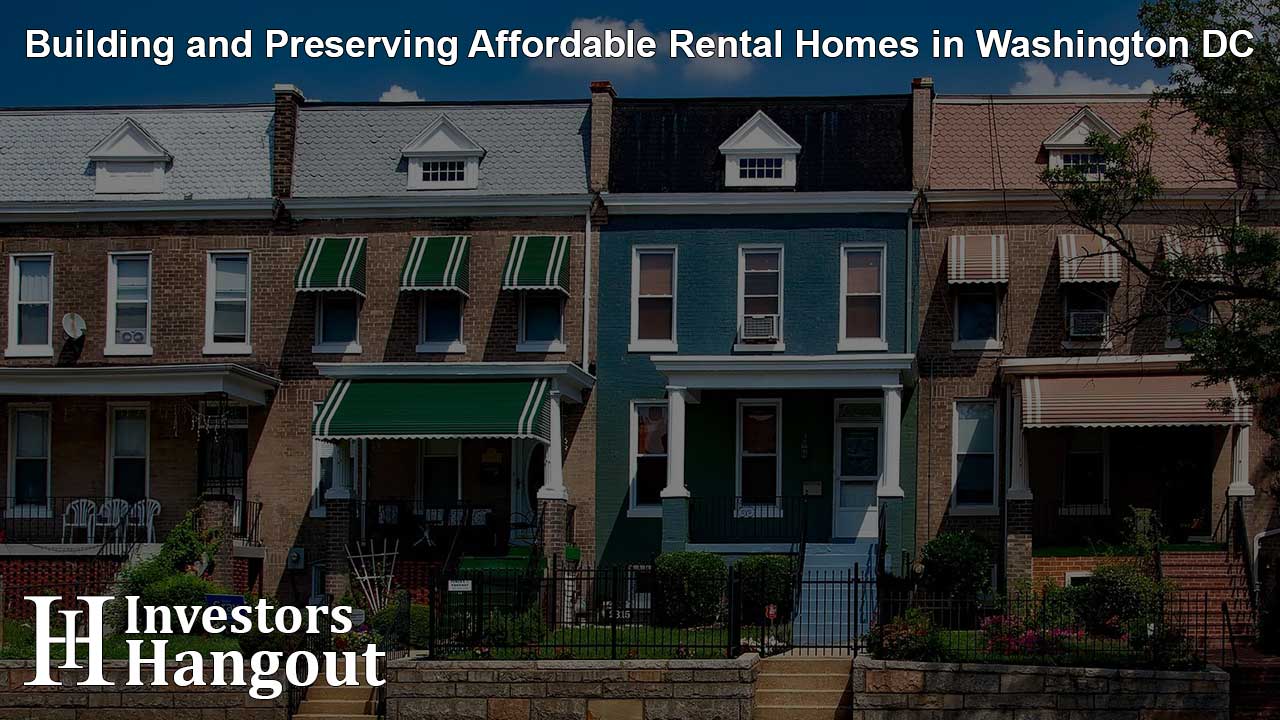
Washington, DC, is a major destination for individuals from across the U.S., and as a result, that demand comes at a price. Rents are dramatically increasing every year, forcing residents who have lived in the neighborhood for many years to leave their homes. Finding affordable rental housing in the district is turning into a crisis for many working families, teachers, healthcare workers, and service employees.
That’s why discussions about affordable rental housing are urgent. This is a good reason for any investor interested in making a meaningful investment to get involved in this discussion or for everyone else who wants to gain a better understanding of how the Washington, DC housing market functions. Continue reading below for more insights on how to build and preserve affordable rental homes in DC.
What "Affordable" Housing Means in the DC Rental Market
In Washington, DC, affordable housing is typically defined as housing that costs no more than 30% of a household's gross income. The city doesn't work from a one-size-fits-all income figure. Instead, affordability is tied to the Area Median Income (AMI), a benchmark set annually by the U.S. Department of Housing and Urban Development (HUD) that reflects the midpoint income for the Washington metro area.
Most affordable housing programs in DC target households earning between 30% and 80% of AMI. So if you're looking at a Low-Income Housing Tax Credit (LIHTC) property, for example, the rent limits and tenant eligibility are directly tied to these AMI thresholds. Build strong partnerships with a reliable Washington DC property manager to ensure tenant stability. For you as an investor, understanding AMI directly shapes what rents you can charge, who qualifies as a tenant, and which funding programs your project may be eligible for.
Why Property Owners Should Care: Impact on Investment
-
Affordability
If you believe that affordable housing translates into lower profits, you should reconsider that assessment, because the data tells a different story.
Affordable rental properties in DC come with a set of financial advantages that market-rate investments often don't. When building or preserving an affordable unit, you are likely tapping into a suite of incentives, tax credits, low-interest loans, and grant financing options that may help reduce your upfront investment and increase your overall financial return.
There’s also a stability factor associated with affordable housing. They have lower vacancy rates than market-rate properties, indicating that demand for units in DC has historically exceeded supply. As a result, your units are unlikely to be empty for any length of time. Moreover, long-term tenants mean lower turnover costs, less marketing dollars spent to fill units, fewer tenant-to-tenant repair costs, and lower administrative overhead. Beyond the financials, there's a reputational dimension worth considering. Investors who actively contribute to DC's affordable housing stock are increasingly viewed as community partners, which opens doors with local government, nonprofit collaborators, and mission-aligned lenders that purely market-rate developers don't always have access to. It's suggested that investors integrate affordable housing with existing neighborhood amenities and public transit options.
-
Occupancy Stability
Reliable occupancy is one of the less well-known benefits of affordable rental housing. Since your tenants are paying rent they can afford, they are more likely to remain in their homes for an extended period. They are not always searching for less expensive housing or trying to cover the gap between what they earn and what they owe. Because of this stability, your turnover will be reduced, resulting in fewer vacancy gaps, less time and money spent on unit preparation, and fewer leasing expenses that eat into your profits.
In the DC market, there is consistently more demand than supply for affordable units, which means you're unlikely to struggle finding qualified tenants. The number of applicants on the waitlist for affordable housing in the District often reaches into the hundreds, and sometimes even the thousands. A market like this is not a soft market; that's a built-in tenant pipeline that most market-rate landlords would envy. This gives you a competitive advantage.
How Does Proactive Management Help Build Sustainable Rental Housing Communities?
Owning affordable rental housing is about creating an environment where people can truly build a stable living situation. This starts by being proactive in managing your property, which means preventing costly repairs by anticipating maintenance issues, fostering open communication with your tenants, and ensuring the building remains a place people are proud to call home. When tenants feel they are given respect and consideration, they will take better care of their units, report problems sooner, and stay in those units longer.
This also means you need to understand your tenant community. Many tenants in affordable housing are under financial pressure, and a proactively responsive management style rather than a reactive one will help build trust. When you're trusted, you get practical results: fewer disputes, lower vacancy rates, and a good reputation to bring in quality tenants. Good management of an affordable property benefits both the community and protects an investor's financial interests.
Conclusion
In Washington, DC, affordable rental homes are a real financial opportunity with real longevity. Understanding how AMI works, what financial incentives are available, and how proactive management drives sustainable outcomes will help you position yourself in a relatively stable market while simultaneously addressing the community's needs. The housing crisis in Washington DC will not resolve itself anytime soon; however, as an investor, landlord, or just an observer, you are in a position to help change that.