Thinking about holding Bitcoin inside your self-managed super fund? An SMSF can hold crypto in a hardware wallet, provided the wallet belongs to the fund and is documented for the audit. What changes the bill is how each accountant prices that extra evidence. This guide compares five accountants that serve Melbourne trustees with crypto funds, using what each firm publishes. General information only, not personal advice.
Quick findings
SMSF Australia: Crypto annual package $1,600 + GST, audit included, no extra charge for cold wallets.
Tax On Chain: Annual financial statements from $1,750, with $0 establishment and $0 audit fees listed.
CryptoSMSF (Nestwell): $1,890 setup; annual compliance typically $1,500 to $2,500.
AM Financial Services: Armadale practice covering SMSFs, DeFi, staking and NFT reporting.
Tailored Accounting Solutions: Prepares SMSF crypto returns and works with miners and stakers.
1. SMSF Australia: published, audit-inclusive pricing
SMSF Australia prices its crypto annual package at $1,600 + GST a year. The package covers the annual accounts, the SMSF tax return, the electronic service address, the registered office, ASIC agency work and the independent audit. The firm states that it does not charge extra for cold wallets or for the exchange you choose.
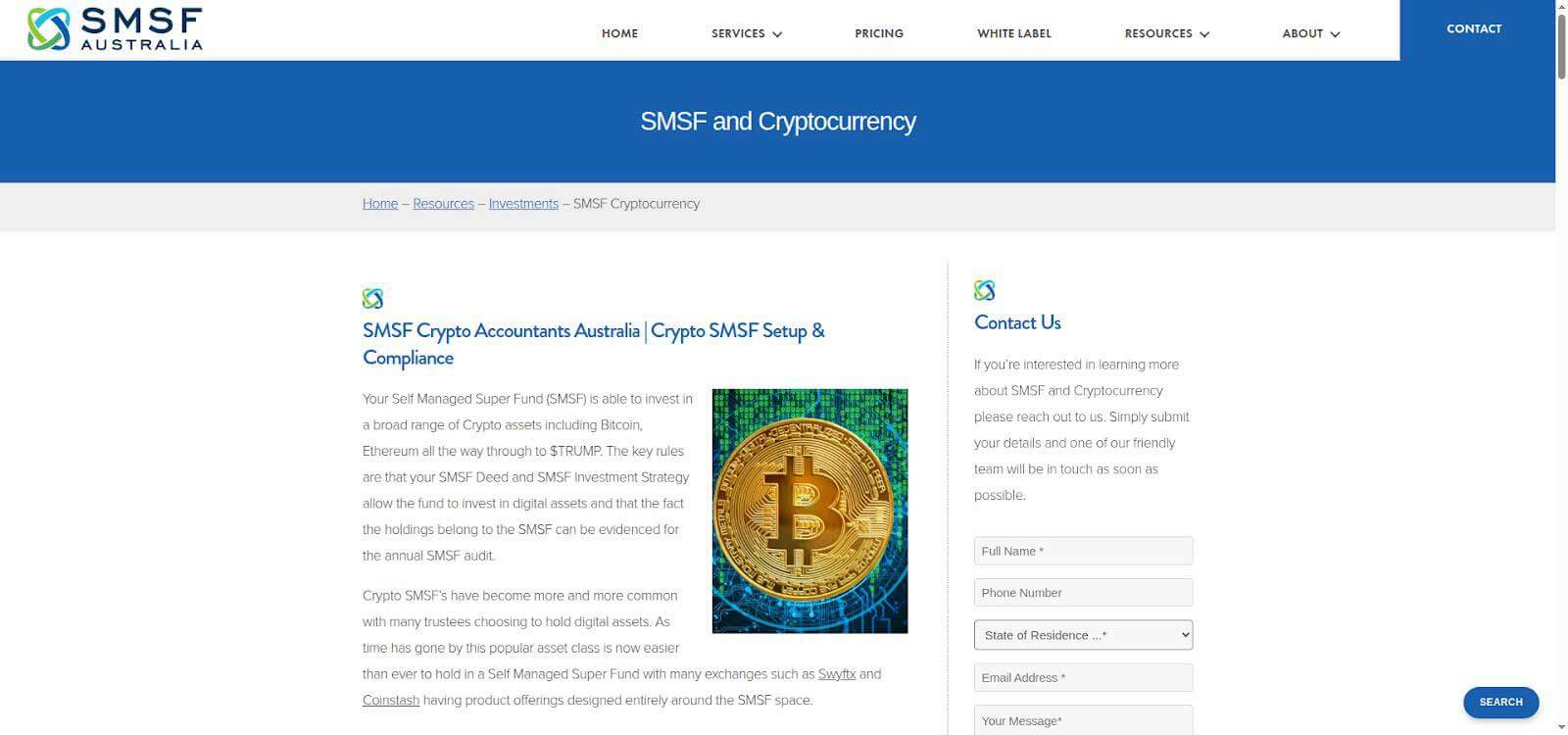
Image source: screenshot of smsfaustralia.com.au/smsf-cryptocurrency/, captured September 2026.
Funds that also hold NFTs or derivatives move to the Very Complex tier, from $2,000 + GST. Setting up a new SMSF with a corporate trustee costs $2,000 + GST. See SMSF Australia's crypto-SMSF service page to learn more about what the fixed fee covers.
Best for: trustees who want one audit-inclusive fee and access to in-house SMSF lawyers.
2. Tax On Chain: for DeFi, NFT and Web3 activity
Tax On Chain is a Melbourne crypto tax specialist that sets up crypto SMSFs and manages their ongoing crypto tax compliance. It also works with DAOs and crypto-native businesses. Its crypto SMSF page lists financial statements from $1,750, with establishment and annual audit fees shown as $0; the firm arranges the independent audit for you. It sets up data feeds for your bank, exchanges and wallets so transactions can be reconciled during the year.
Best for: funds with heavy on-chain activity.
3. CryptoSMSF (Nestwell): a clear setup price
CryptoSMSF is run by Nestwell SMSF, a team of CPAs, SMSF Association specialist advisors and registered tax agents.
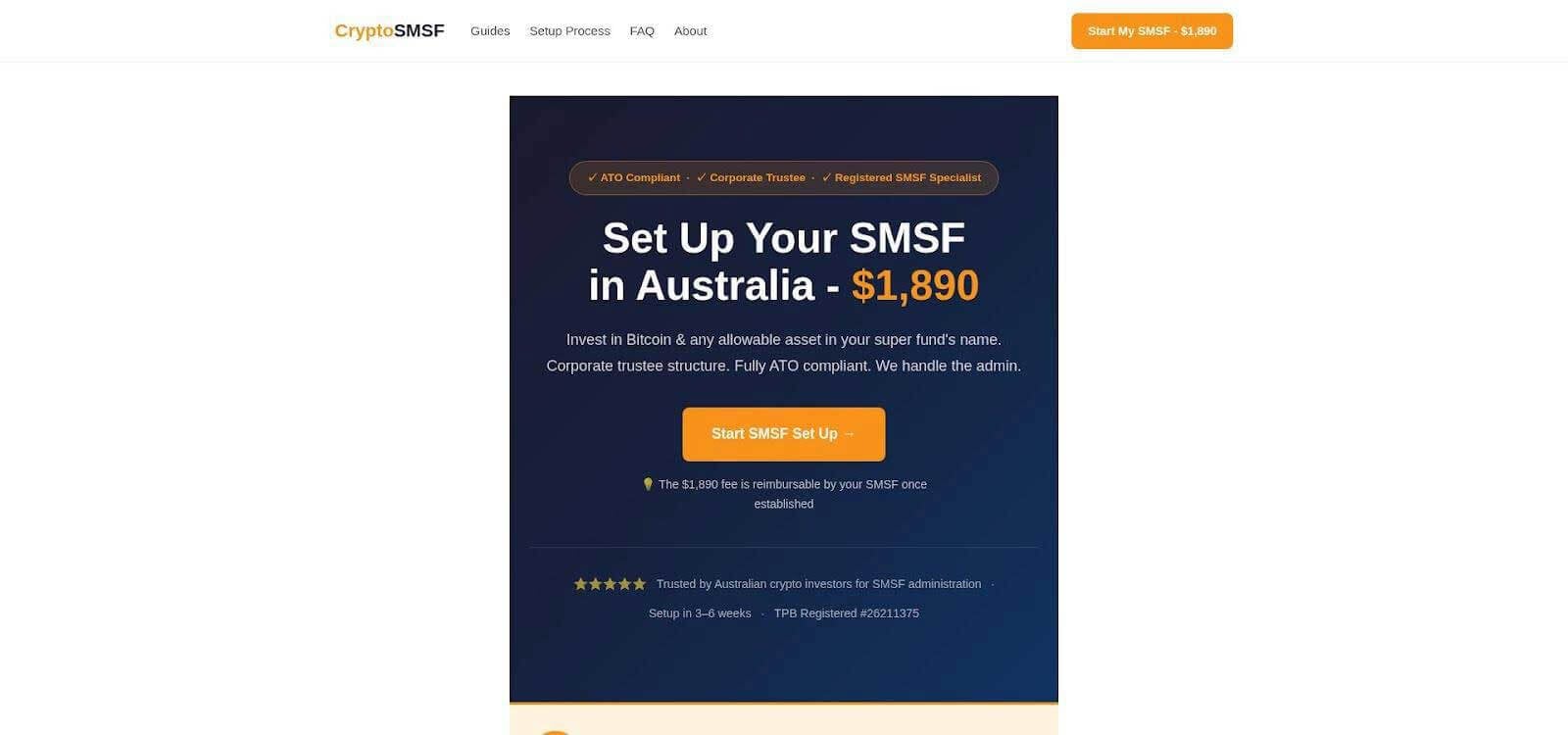
Image source: screenshot of cryptosmsf.com.au, captured September 2026.
Setup costs $1,890, which the fund can reimburse once it is running, and takes three to six weeks. Annual compliance typically runs $1,500 to $2,500, depending on complexity, and covers the tax return, independent audit and administration. The firm also guides trustees on documenting cold storage.
Best for: new trustees who want a fixed setup price.
4. AM Financial Services: a local boutique
AM Financial Services is an Armadale practice that handles SMSF setup and compliance alongside crypto reporting. Its site lists DeFi and staking reporting and NFT transaction compliance. Fees are not published, so ask for a written quote that states whether the independent audit is included.
Best for: trustees who want a Melbourne practice for SMSF and crypto work.
5. Tailored Accounting Solutions: for mining and staking
Tailored Accounting Solutions prepares tax returns for crypto investors, traders and miners, and it invites SMSFs with crypto to have their returns prepared. It also works with clients who earn staking rewards or use crypto in business. Fees are not published, so ask for a written quote.
Best for: funds with mining or staking income.
Do cold wallets actually cost more?
Not by rule. The extra cost comes from the evidence your accountant and auditor must check. For each hardware wallet, the auditor needs to confirm that the fund owns it. SMSF Australia lists the wallet ID and a trustee declaration that the wallet is used only by the SMSF and, for a cold wallet, where the device is stored.
Costs rise when the evidence is messy: many wallets, unsupported chains or high-volume DeFi. One well-documented wallet usually fits inside a fixed fee.
Rules every crypto trustee must know
Any crypto investment must be permitted by the fund's trust deed and covered by its investment strategy. The coins must sit in a wallet in the fund's name, not a member's, they cannot be bought from a member or related party, and they must be valued at 30 June each year. Crypto is not a listed security, which is why the related-party rule blocks transfers of coins you already own.
Conclusion
Crypto is where an SMSF accountant either knows the asset class or learns on your fund. Match the firm's scope to the assets you hold, and get the audit treatment and any wallet charges in writing.