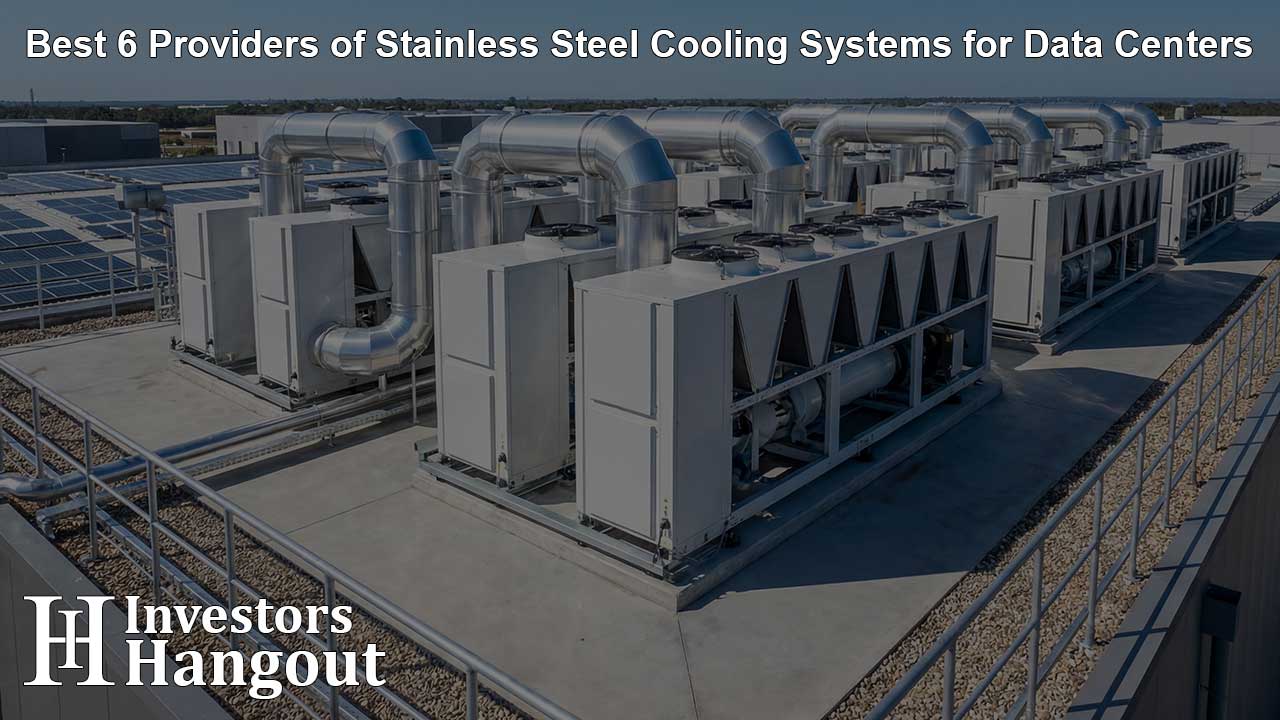
Stainless steel cooling systems are one of those purchases where getting it wrong costs far more than getting it right. Providers vary widely in what they actually fabricate, stock, and certify, and that gap shows up fast when your facility runs hygienic processes or high-density compute loads. Picking the wrong grade for your chemical environment, or overlooking ASME compliance during procurement, creates expensive problems down the line. After reviewing dozens of options across fabrication capability, inventory depth, and certification standards, this guide covers the six providers worth your serious attention.
How this ranking was put together
Options were assessed using publicly available information gathered from official websites, product documentation, and review platforms, with only providers demonstrating a proven track record in industrial equipment making the final cut.
→ See the full research breakdown
-
CSI Store - Best for food, dairy, beverage, and pharmaceutical facilities needing engineered fabrication, stocked sanitary parts, and preventative maintenance
-
CoolIT Systems - Best for AI and HPC cooling systems for hyperscalers and large compute clusters
-
STULZ - Best for data center cooling and high-performance industrial air-conditioning systems
-
McMaster-Carr - Best for industrial equipment and supplies distribution
-
Daikin Applied - Best for commercial and industrial HVAC systems
-
Schneider Electric - Best for industrial automation, energy management, and digitalization
Why Providers Of Stainless Steel Cooling Systems Are Worth a Closer Look
Stainless steel cooling systems aren't a commodity purchase, and treating them like one tends to create problems that carbon steel or aluminum alternatives simply don't carry.
Grade selection matters enormously. A 304-grade component that works fine in a food processing line can fail prematurely in a chloride-heavy pharmaceutical environment where 316L is the minimum acceptable spec.
Capital costs run higher upfront compared to alternatives, so the supplier relationship needs to deliver real engineering value, not just parts delivery.
When cooling capacity ratings (BTU/hr or kW) and heat transfer coefficients (W/m²·K) are matched to your actual process loads, and when corrosion resistance is validated against your specific environment, the service life expectancy stretches considerably. That's the real return on choosing the right provider.
Comparing the 6 Best Providers Of Stainless Steel Cooling Systems
Note: All data in this table is sourced from review platforms and the official websites of the listed companies.
|
Company Name |
Years Operating |
Headquartered In |
|
CSI Store |
Since 1977 |
Springfield, MO |
|
CoolIT Systems |
Since 2001 |
Calgary, Canada |
|
STULZ |
Since 1947 |
Hamburg, Germany |
|
McMaster-Carr |
Since 1901 |
Elmhurst, Illinois |
|
Daikin Applied |
Since 1924 |
Plymouth, Minnesota |
|
Schneider Electric |
Since 1838 |
Rueil-Malmaison, France |
1. CSI Store - Best for Hygienic Fabrication With ASME-Certified In-House Build Capability
How Does CSI Store Operate?
CSI Store runs as a full engineering, fabrication, and distribution operation serving hygienic liquid processing industries since 1977. Their in-house team includes ASME Section IX-certified welders and CNC machinists who build custom process skids, CIP systems, and HTST units in a climate-controlled facility. For facilities that need purpose-built equipment, their stainless steel data center cooling work falls within a broader industrial capability spanning five US distribution centers stocked with sanitary fittings, valves, pumps, tubing, and specialty alloys.
What Sets CSI Store Apart for Providers Of Stainless Steel Cooling Systems?
Most distributors either stock parts or build custom systems, but rarely do both under one roof with certified welders on staff. That single-source model removes the coordination friction that typically slows down complex fabrication projects in hygienic environments.
What Users Are Actually Saying:
From what the available information shows, facilities value CSI Store's combination of stocked inventory and fabrication depth, particularly for projects where lead time and compliance documentation both matter. The CSI Reliability preventative maintenance program gets consistent mention as a practical differentiator for operations that need to stay aligned with 3-A and ASME-BPE standards.
2. CoolIT Systems - Best for High-Density AI and HPC Liquid Cooling
How Does CoolIT Systems Operate?
Founded in 2001 and based in Calgary, CoolIT Systems designs and manufactures liquid cooling systems built for AI workloads and high-performance computing environments. Their product lineup includes cold plates for direct liquid cooling of compute hardware, coolant distribution units (CDUs) that manage fluid flow across large-scale cooling loops, rack manifolds, and integrated cooling loops with prefabricated piping. Their Rack DLC™ technology is the centerpiece here, enabling high-density rack configurations with measurable gains in power performance across hyperscaler deployments.
What Sets CoolIT Systems Apart for Providers Of Stainless Steel Cooling Systems?
CoolIT's Rack DLC™ system solves the thermal management problem created when rack densities climb beyond what air cooling can realistically handle. And honestly, a deployment track record that includes seven of the top ten supercomputers globally, including the #1 El Capitan system, is the kind of proof point that's hard to match at the enterprise scale.
What Users Are Actually Saying:
Recognition from Deloitte Technology Fast 500 and Financial Times' Americas' Fastest Growing Companies ranking tells you the market has noticed what they're doing. Clients operating at hyperscale tend to cite the combination of manufacturing rigor (100% leak and functional testing) and global service coverage as the reasons they stay.
3. STULZ - Best for High-Performance Data Center Climate Control
How Does STULZ Operate?
STULZ has been engineering precision cooling since 1947, building a portfolio that covers computer room air conditioners (CRACs), chillers, liquid cooling systems, and real-time monitoring software for data centers and high-performance facilities. The CyberCool WaterTec series represents their liquid cooling line, designed for demanding data center applications where temperature and humidity control can't be treated as an afterthought. With 8,200 employees, 11 production sites, and representation across 150+ countries, they operate at a scale few competitors can match.
What Sets STULZ Apart for Providers Of Stainless Steel Cooling Systems?
The problem STULZ consistently addresses is the gap between generic HVAC equipment and the precision requirements of high-performance compute environments. Seventy-seven years of doing exactly that creates depth that newer entrants simply don't have. Their monitoring software layer adds ongoing visibility into cooling system performance, which matters as much as the hardware itself for long-term thermal management.
What Users Are Actually Saying:
STULZ's global footprint means support is available in markets where other providers have thin coverage (not a small thing when your data center is outside North America). The CyberCool WaterTec series gets attention for its eco-friendly refrigerant approach, which fits how modern operators are thinking about long-term operating costs.
4. McMaster-Carr - Best for Fast Industrial Component Sourcing With No Order Minimums
How Does McMaster-Carr Operate?
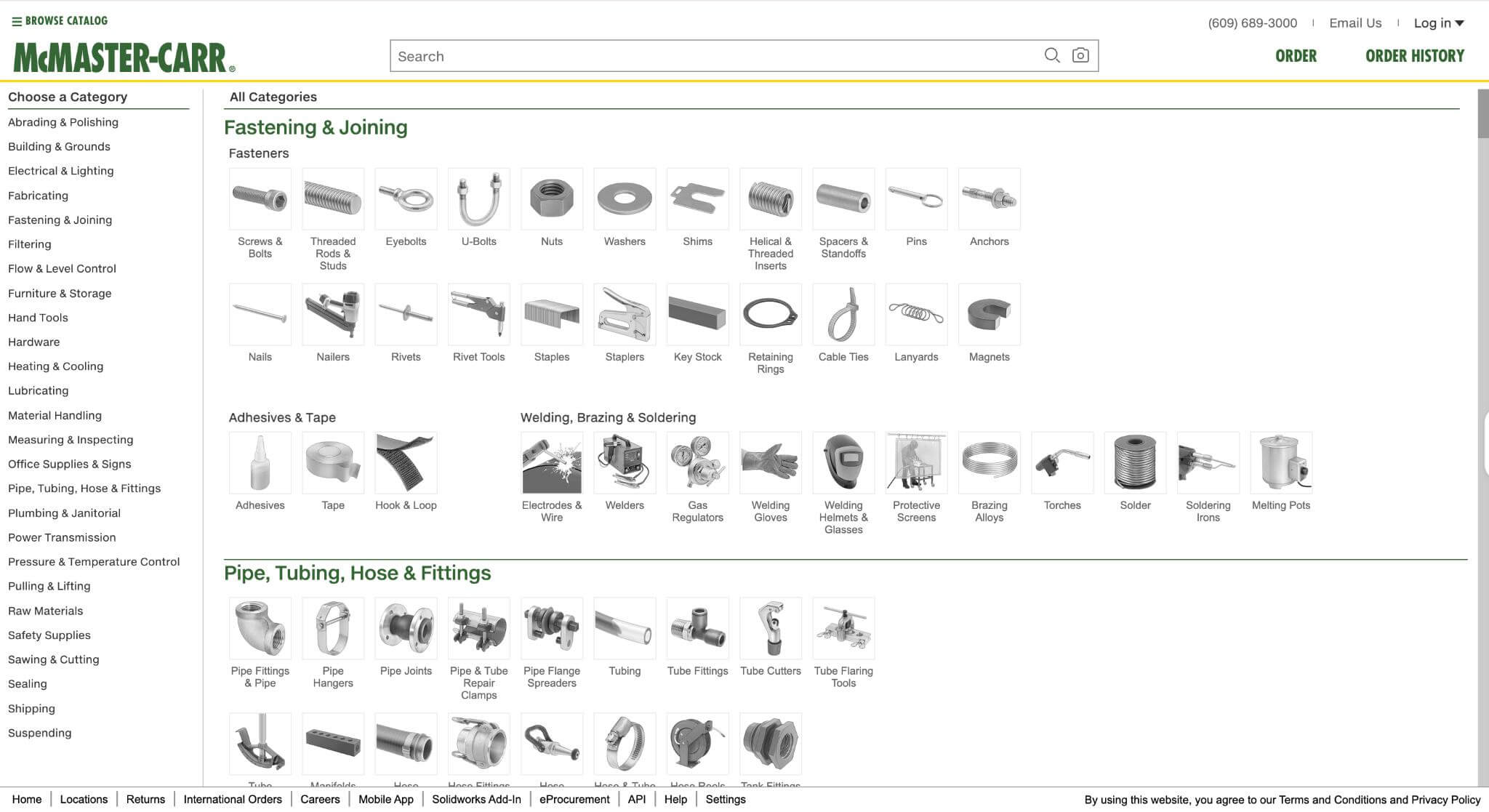
McMaster-Carr has operated as a B2B industrial distributor since 1901, running an e-commerce platform with over 580,000 products across hardware, raw materials, tools, and maintenance equipment. Their model is built around speed: 98% of products ship from stock, next-day delivery is available for orders placed by 6 p.m. EST, and there are no order minimums or restocking fees. Every call connects directly to a live representative, not an automated system, and they'll actively source items outside their standard catalog when needed.
What Sets McMaster-Carr Apart for Providers Of Stainless Steel Cooling Systems?
The depth of their stainless steel component inventory, combined with next-day delivery and zero minimum order requirements, makes them particularly useful for facilities that need specific fittings, tubing, or hardware to keep a cooling system build moving. That kind of availability and delivery reliability is rare at this scale, and it solves the procurement bottleneck that slows down custom cooling installations.
What Users Are Actually Saying:
The consistent theme across customer feedback is reliability. When McMaster-Carr says it ships next day, it ships next day. Their Campus Forward Award recognition for hiring practices reflects well on the internal culture, and customers tend to notice that the quality of service calls matches the quality of the catalog.
5. Daikin Applied - Best for Commercial and Industrial HVAC With Advanced Chiller Technology
How Does Daikin Applied Operate?
Daikin Applied designs and manufactures commercial and industrial HVAC equipment from its base in Plymouth, Minnesota, with a product range that includes chillers built around advanced compressor technology, air handlers with IoT capability, and rooftop HVAC systems engineered for custom industrial applications. Their data center cooling work centers on chillers that prioritize energy performance (a meaningful factor when evaluating operating cost per kW of heat removed). Operating through 170 dedicated sales, service, and parts offices worldwide, they back hardware with 24/7 service and rental equipment options across the US and Canada.
What Sets Daikin Applied Apart for Providers Of Stainless Steel Cooling Systems?
Their chiller lineup addresses the energy consumption challenge directly, with advanced compressor designs that improve the coefficient of performance (COP) compared to older generation equipment. Being backed by Daikin Industries, a $30.8 billion parent company with 98,000+ employees, means parts availability and long-term service continuity are genuinely dependable (think enterprise-grade stability over the full system lifecycle).
What Users Are Actually Saying:
Gold recognition in the HVAC Commercial Equipment category and Commercial Comfort Products of the Year Awards point to consistent peer recognition in the industry. From what customer feedback patterns suggest, the 24/7 service model and parts office network are what keep facility managers coming back for repeat installations.
6. Schneider Electric - Best for Industrial Automation and Integrated Energy Management
How Does Schneider Electric Operate?
Founded in 1838 and headquartered in Rueil-Malmaison, France, Schneider Electric operates as a global energy technology company covering electrification, automation, and digitalization across industrial and data center environments. Their EcoStruxure IoT platform ties together connected products, edge control, analytics, and services into one framework that covers important power infrastructure alongside cooling management. With 159,000 employees and a Fortune Global 500 position, their scale brings resources that smaller specialist providers simply can't replicate.
What Sets Schneider Electric Apart for Providers Of Stainless Steel Cooling Systems?
Schneider Electric addresses the challenge of managing cooling infrastructure as part of a larger energy and automation system, rather than treating it as a standalone mechanical installation. That kind of approach, where cooling performance data feeds back into broader facility energy management, tends to produce better long-term outcomes for large-scale data center operators.
What Users Are Actually Saying:
Being named the World's Most Sustainable Company by TIME Magazine and Statista, plus Top 100 Most Ethical Companies for 13 consecutive years, reflects a track record that carries real weight with procurement teams evaluating long-term vendor relationships. Enterprise clients like Whirlpool and Resorts World Las Vegas signal they can handle complex, high-stakes deployments at scale.
Methodology Behind These Picks
Gathering Your Baseline Data
The research process started by pulling together a broad initial list of providers active in stainless steel cooling systems for data centers and industrial applications. Sources included manufacturer directories, industrial equipment review platforms, trade publication mentions, and company case study documentation. Each entry was catalogued with available product information, service scope, geographic reach, and any publicly documented project history.
The Shortlist Cut
From that initial pool, providers without verifiable product documentation or traceable client history were removed. Review patterns across platforms were examined to identify consistent strengths and weaknesses rather than isolated opinions. Providers showing gaps between their marketed capabilities and documented outcomes were deprioritized, narrowing the field to options with genuine evidence behind their positioning.
Fact-Checking the Picks
Claims made on each company's official website were cross-referenced against independent sources, including award databases, trade press coverage, and platform review summaries. Where a company cited technical achievements, such as supercomputer deployments or certification compliance, those were checked against publicly available records. Any provider whose claims couldn't be corroborated at a foundational level was excluded from the final list.
Authority Signals and Industry Standing
Each shortlisted provider was evaluated for external recognition, including industry awards, appearances in respected trade publications, and documented client references from relevant sectors. Companies with multiple independent authority signals, not just self-reported achievements, were treated as more credible candidates. The combination of longevity, scale, and third-party recognition carried real weight in this phase of the assessment.
Providers Of Stainless Steel Cooling Systems Track Record
The final filter focused on each company's demonstrated activity in stainless steel cooling systems. Dedicated service pages, technical product documentation, relevant case studies, and verified reviews tied to cooling system work were all examined.
Picking the Right Providers Of Stainless Steel Cooling Systems for You
Choosing the right provider comes down to matching their actual capabilities to your specific facility requirements. A hyperscale data center has very different needs from a pharmaceutical processing line, and the best provider for one environment may be the wrong fit for the other. Here's what to evaluate before committing.
-
Industry and Domain Experience: Look for providers with documented work in your specific application environment, whether that's food processing, pharma, or high-density compute. Relevant experience shortens the engineering timeline and reduces specification errors.
-
Features and Service Offerings: Assess whether the provider fabricates custom systems, stocks standard components, or does both. Single-source providers with in-house fabrication and parts inventory reduce coordination overhead considerably.
-
Pricing Structure: Stainless steel systems carry higher upfront costs than carbon steel alternatives (not cheap, but the corrosion resistance and service life justify it). Clarify whether pricing includes engineering, installation support, and documentation, or whether those are billed separately.
-
Results Measurement: Ask how providers measure and report system performance, with cooling capacity in BTU/hr or kW and heat transfer coefficient (W/m²·K). Providers who can't speak to these metrics clearly are worth questioning.
-
Industry Knowledge and Compliance: Verify that the provider's team understands the certification requirements relevant to your environment, whether that's ASME Section VIII, 3-A Sanitary Standards, or ASME-BPE. Compliance gaps discovered after installation are expensive to fix.
The Verdict
Picking among business providers of stainless steel cooling systems really comes down to matching capability to context. CoolIT Systems and STULZ lead for data center-specific deployments at scale. CSI Store stands out when fabrication quality and hygienic compliance are non-negotiable. McMaster-Carr fills the sourcing gap when speed matters. Daikin Applied and Schneider Electric bring the depth of global infrastructure behind their systems. As rack densities rise and hygienic requirements tighten, this space will keep rewarding providers who combine engineering depth with certified build capability.