Most product teams don't fail because they had a bad idea. They fail because they validated the wrong thing, with the wrong people, using the wrong method. Concept Testing Platforms exist precisely to prevent that, but choosing one is harder than it looks. Panel quality, respondent bias, and stimulus design all affect whether your scores mean anything. After reviewing dozens of platforms across real case studies, client results, and reviews, this guide breaks down five options worth serious consideration.
The research approach for this ranking
Platform data was pulled from official websites, user reviews, and publicly available case studies across leading research directories and software review sites. Only platforms with a demonstrated track record in market research made the final cut, meaning real client results and verifiable use cases were required, not just feature lists.
→ See the full research breakdown
-
Peekage - Best for product testing and consumer insights research
-
Zappi - Best for enterprise brand research and advertising effectiveness
-
Suzy - Best for enterprise consumer insights and market research
-
Qualtrics - Best for enterprise experience management and market research
-
Quantilope - Best for enterprise consumer insights and advanced market research automation
Why Concept Testing Platforms Matter for Your Business
Choosing the wrong platform doesn't just slow you down or your business. It gives you data you can't trust, and that's a real problem when you're deciding whether to launch.
Panel quality is one of the biggest variables. Fraudulent completions and respondent bias can quietly corrupt your purchase intent score and concept appeal ratings before you even notice something's off.
Stimulus design is the other pressure point. Showing a polished render of a concept that barely exists yet? That inflates scores in ways that don't hold up under real shelf conditions.
The right platform handles these issues by design, not as an afterthought. And when that foundation is solid, your uniqueness and differentiation scores actually tell you something worth acting on.
Top 5 Concept Testing Platforms Breakdown and Comparison
Note: All data in this table is sourced from review platforms and the official websites of the listed companies.
|
Company Name |
Years Operating |
Team Size |
Headquartered In |
|
Peekage |
Est. 2019 |
18 |
Toronto, Canada |
|
Zappi |
Est. 2013 |
300 |
Boston, United States |
|
Suzy |
Est. 2009 |
186 |
New York, NY |
|
Qualtrics |
Est. 2002 |
6,018 |
Provo, UT |
|
Quantilope |
Est. 2014 |
198 |
Hamburg and New York |
1. Peekage - Best for Product Testing and Consumer Insights Research
What Does Peekage Do?
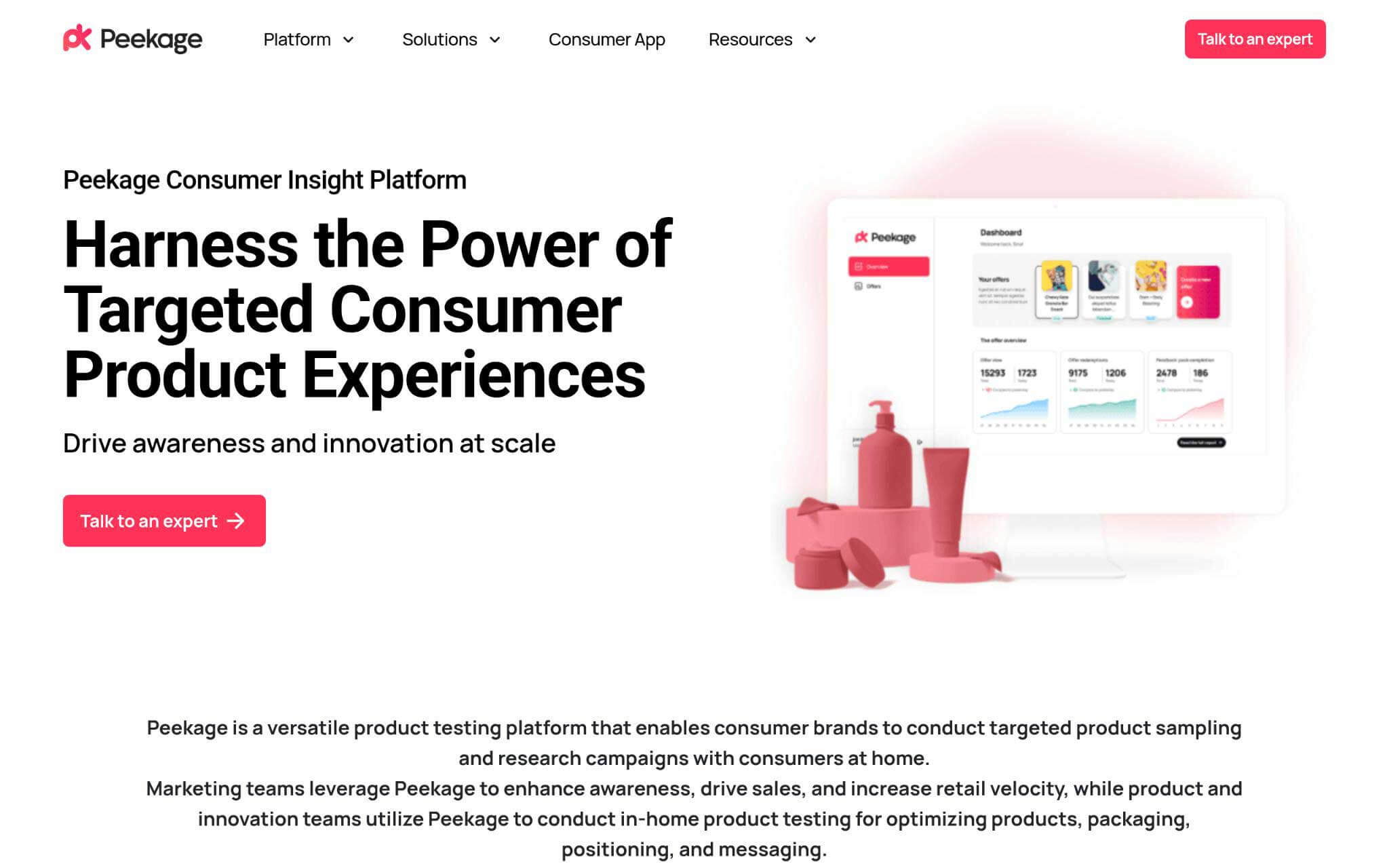
Peekage runs targeted in-home product testing and digital sampling campaigns for consumer brands, providing teams with real behavioral data from actual usage. The platform connects brands to a community of over 5 million shoppers and uses AI to build research studies without requiring an in-house data scientist. Teams looking at the full picture of what concept testing services by Peekage can deliver will find sampling, testing, and consumer insights all sitting inside one connected system.
Why Does Peekage Stand Out for Concept Testing Platforms?
Most platforms ask consumers what they think, but Peekage puts the actual product in their hands first, which produces a different quality of feedback. That kind of in-home testing environment is rare, and it tends to surface honest reactions that survey-only methods simply miss.
Summary of Real User Reviews:
From what the reviews show, clients respond positively to the platform's speed and the quality of its consumer targeting. Results like KIND achieving significant returns and Wise Snack cutting costs by 70% come up repeatedly as proof that the approach works beyond the pitch deck.
2. Zappi - Best for Enterprise Brand Research and Advertising Effectiveness
What Does Zappi Do?
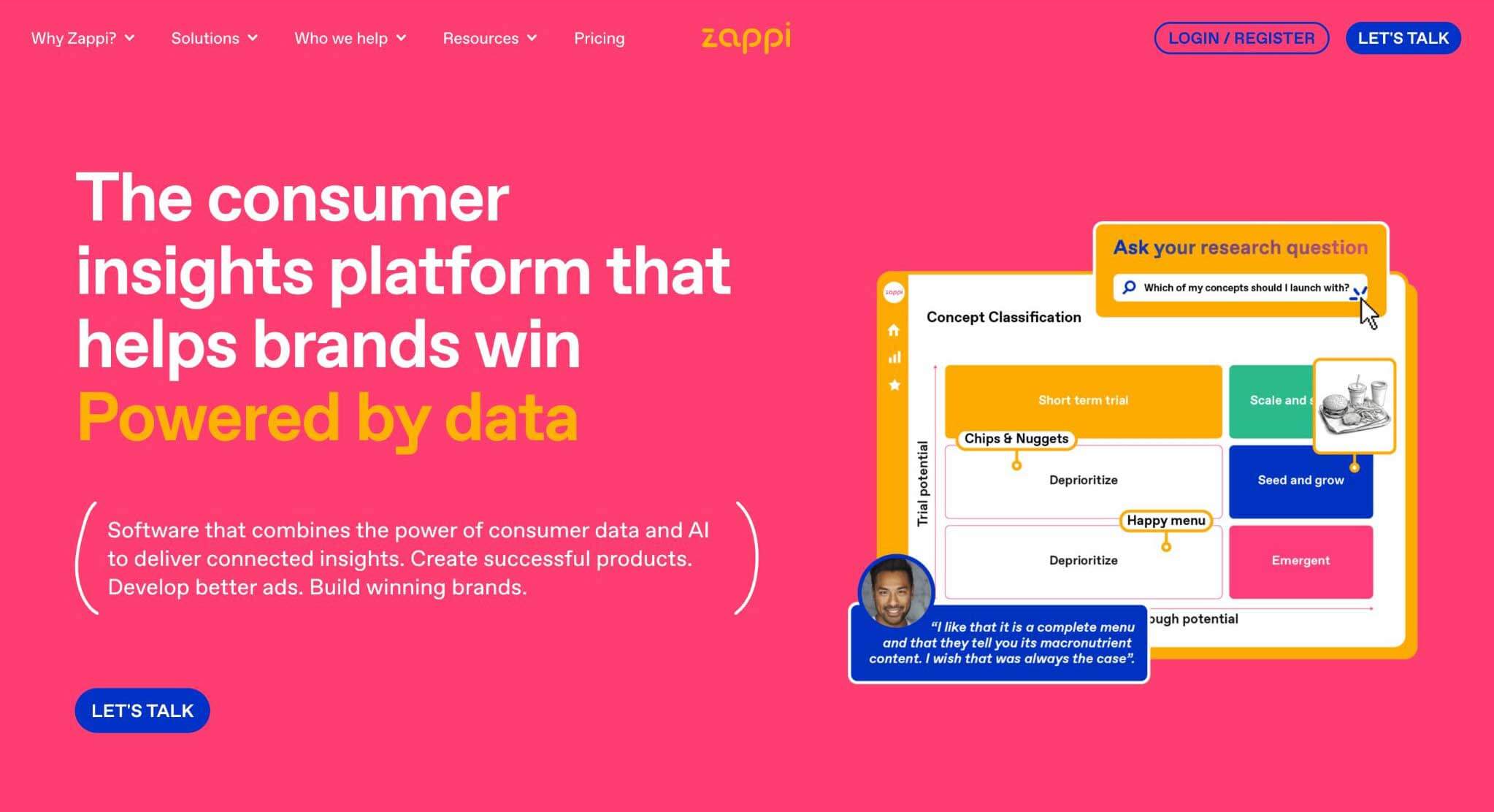
Zappi delivers consumer insights in 6 to 8 hours using AI, which is genuinely fast for enterprise-grade research. The platform runs three dedicated systems: one for product testing, one for advertising effectiveness, and one for continuous brand health tracking. Over 350 global brands, including PepsiCo and McDonald's, use it, which shows they're legit. The speed alone makes Zappi a serious option for teams running rapid product development cycles where waiting weeks for data isn't an option.
Why Does Zappi Stand Out for Concept Testing Platforms?
Zappi solves the speed problem that kills momentum in product development cycles, delivering statistically valid concept performance scores in hours rather than weeks. Honestly, for enterprise teams that need to test multiple concepts in rapid succession, that kind of turnaround is hard to match.
Summary of Real User Reviews:
Users consistently highlight the platform's speed and reliability as standout features. The recognition as Best Marketing Insights Platform at the 2024 MarTech Breakthrough Awards (for the second consecutive year) reinforces what users are already saying: that Zappi delivers results people actually trust.
3. Suzy - Best for Enterprise Consumer Insights and Market Research
What Does Suzy Do?
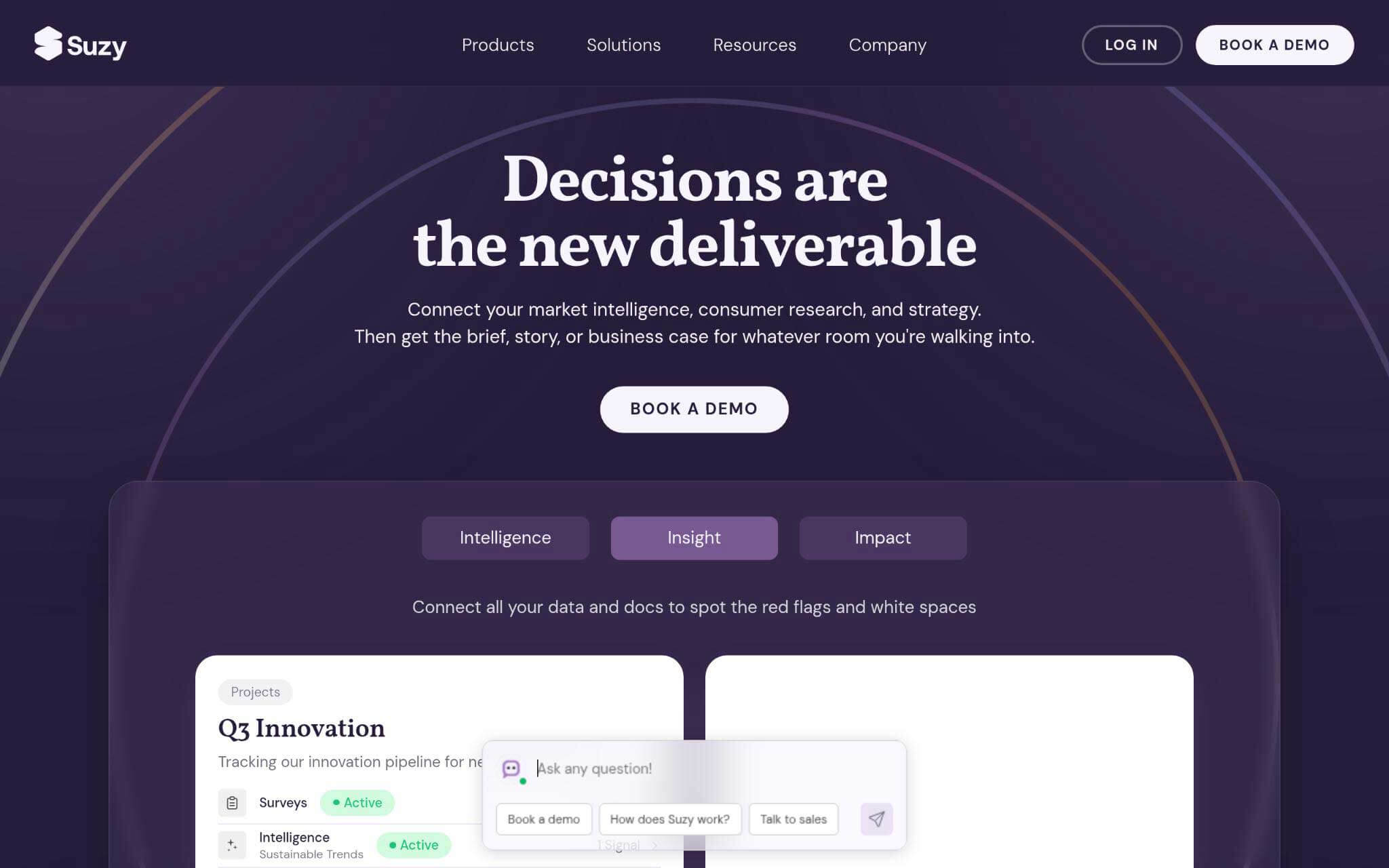
Suzy functions as an end-to-end research cloud that pulls quantitative data, qualitative feedback, and audience data into one platform. The proprietary consumer audience tops one million verified respondents, so panel quality concerns are handled at the structural level rather than managed case by case. Enterprise clients including DoorDash, Walmart, and Estée Lauder Companies run research across marketing, sales, and product teams inside the same system. The platform's AI handles analysis and automates templates, which cuts down the time between question and answer considerably.
Why Does Suzy Stand Out for Concept Testing Platforms?
For teams that need to run both qualitative and quantitative research without switching platforms, Suzy removes that friction by design. From what the data shows, that kind of connected research environment consistently produces faster concept-to-control benchmark lift because teams aren't losing context between methods.
Summary of Real User Reviews:
Review sentiment around Suzy tends to focus on the quality and diversity of its audience panel, which users treat as a genuine differentiator. The platform's recognition as an Outperformer among 15 competitors (including Qualtrics and SurveyMonkey) gives those user opinions some external weight.
4. Qualtrics - Best for Enterprise Experience Management and Market Research
What Does Qualtrics Do?
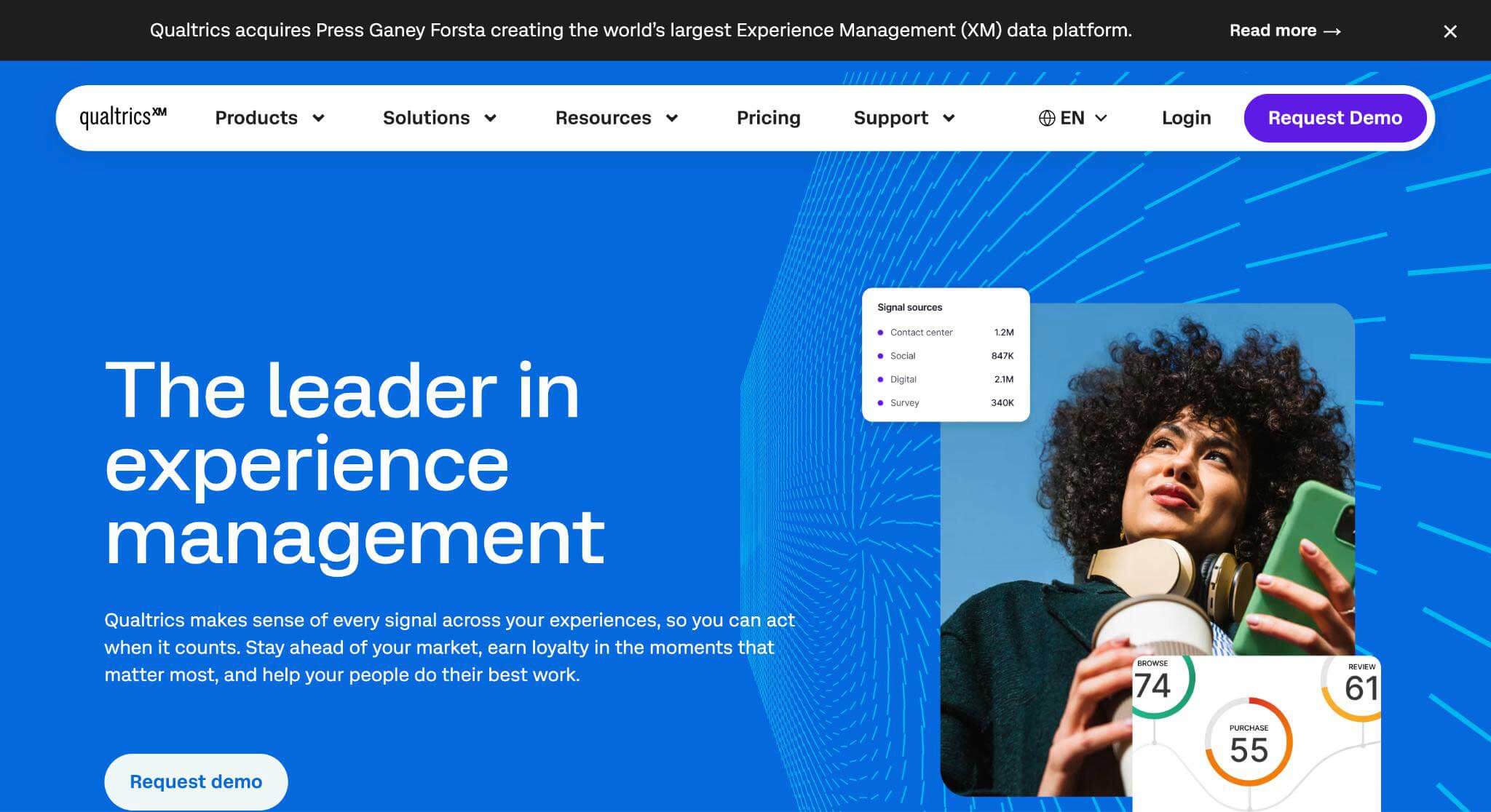
Qualtrics is a large-scale experience management platform that brings together survey data, call center signals, digital interactions, and service feedback under one connected intelligence layer. The platform's Experience Agents use agentic AI to run automated sentiment analysis and flag risks in real time. A dedicated Market Research suite includes research-grade synthetic audiences built on large language models, which lets teams pressure-test hypotheses before committing to full-scale fieldwork. Shake Shack's 30% improvement in likelihood to recommend and Gabb's 50% cost reduction versus traditional methods are both public case study results.
Why Does Qualtrics Stand Out for Concept Testing Platforms?
What sets Qualtrics apart is how it brings together signals across channels that most research platforms treat as completely separate data streams. For enterprise teams where stated willingness to pay needs to be triangulated against behavioral and operational signals, that unified view changes the quality of the go/no-go decision.
Summary of Real User Reviews:
Users at large organizations tend to point to Qualtrics' depth of features as the main reason they stay. The platform can feel like a lot to set up initially (not a lightweight tool by any measure), but teams that invest in it consistently report measurable outcomes that justify the learning curve.
5. Quantilope - Best for Enterprise Consumer Insights and Advanced Market Research Automation
What Does Quantilope Do?
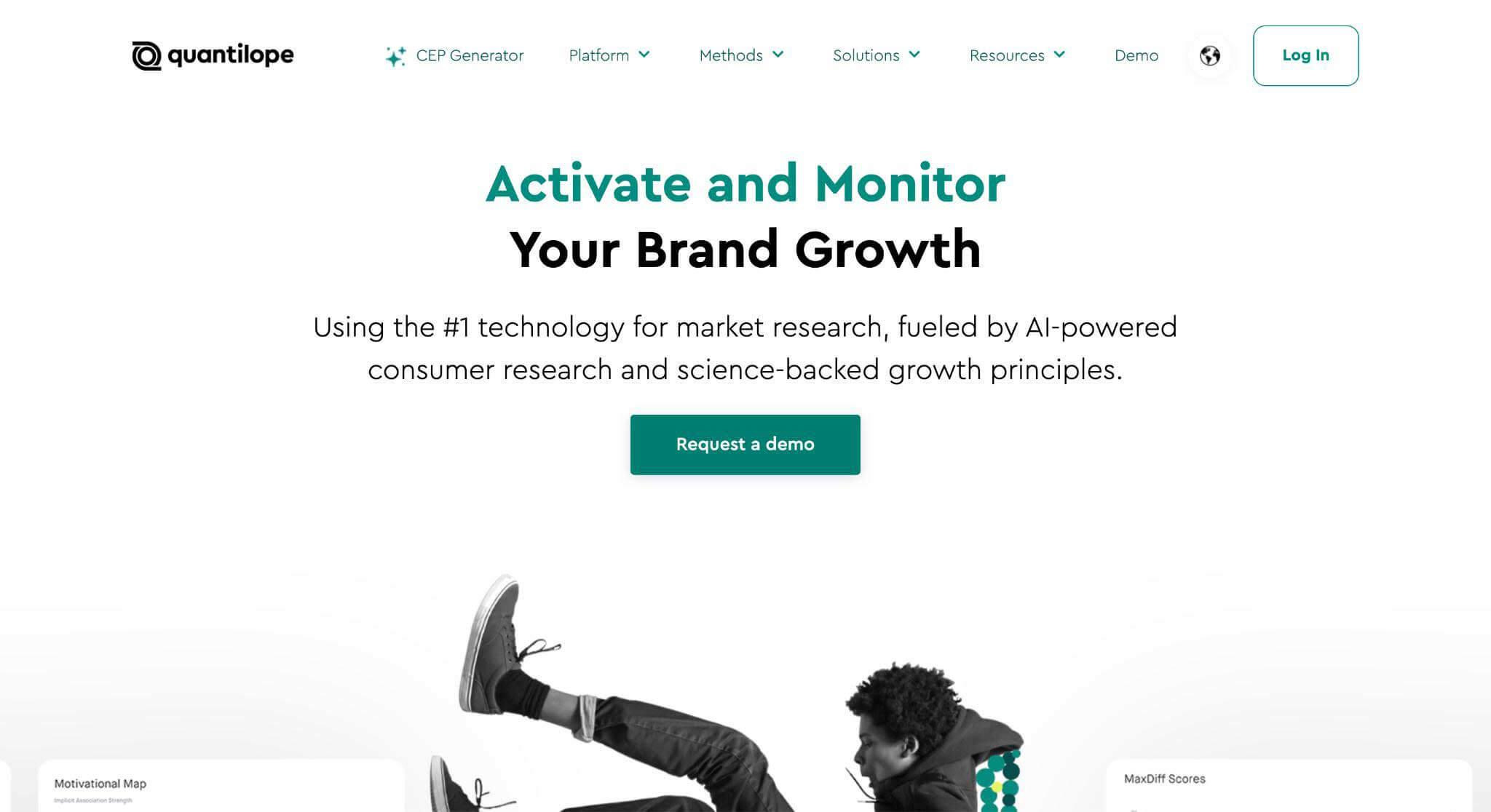
Quantilope is an insights automation platform built around 16 automated advanced research methods, including MaxDiff, TURF, Implicit Testing, and A/B tests. The AI co-pilot, quinn, generates insights in under a second after survey responses come in, which compresses the analysis timeline dramatically. Access to 300 million-plus consumers worldwide through its panel network means niche audience recruitment is far less of a headache than on smaller platforms. Nestle, Pepsi, Danone, and Deutsche Telekom are all active clients (think enterprise-level buy-in across multiple industries).
Why Does Quantilope Stand Out for Concept Testing Platforms?
Look, Quantilope tackles the cost and automation problem that comes with running advanced quantitative methods at scale by automating what used to require a senior researcher to set up manually. Being ranked the number one market research technology in Greenbook's 2025 GRIT Report for the second consecutive year is the kind of external validation that's genuinely hard to argue with.
Summary of Real User Reviews:
The 80% of clients reporting 80% more consumer-driven decisions is the stat that keeps showing up in user conversations about Quantilope. Reviews tend to praise the automation depth and the speed of the Quinn co-pilot, with less experienced research teams noting that the platform makes advanced methods accessible without a steep learning curve.
Research Methodology and Selection Process
The goal was to build a shortlist of concept testing platforms that product managers and insights teams could actually use to make launch decisions, not a generic software roundup. Here's how the evaluation came together.
Initial Data Collection
The longlist started with a broad sweep of research directories, software review aggregators, and industry publications covering the market research technology space. Platforms that surfaced repeatedly across multiple sources were flagged for deeper review. Company websites, feature documentation, and publicly available case study libraries were all pulled into the initial data set to establish baseline coverage of each platform's capabilities and client focus areas.
Shortlisting Phase
Platforms that lacked verifiable client evidence or carried thin review histories were removed early. The shortlisting phase focused on review pattern analysis, looking for consistency between what platforms claimed on their websites and what actual users reported across review sites. Options with inflated self-descriptions and weak third-party corroboration didn't advance regardless of their marketing positioning.
Verification of Claims
Each shortlisted platform's claims about turnaround times, panel size, AI capabilities, and client results were cross-checked against publicly available case studies and user reviews. Where a platform cited a specific client outcome (such as cost reductions or performance improvements), that claim was traced back to source material where possible. Platforms whose headline metrics couldn't be substantiated were either downgraded or noted with appropriate context.
Authority and Industry Contribution Layer
Recognition signals were weighted as a trust layer. Award wins from credible bodies like the MarTech Breakthrough Awards or industry reports like Greenbook's GRIT Report carried meaningful weight, particularly when combined with consistent user review patterns. Original research published by platforms and mentions in market research trade coverage were also factored in as indicators of standing within the field.
Concept Testing Platforms-Specific Evidence
The final filter was the most detailed. Each platform was checked for dedicated concept testing service pages, category-level positioning within the product research space, and client case studies that directly referenced concept validation work. Platforms with strong general research capabilities but no clear evidence of concept testing application were excluded. The five platforms that make this list all showed clear, verifiable relevance to the main question: can this platform help a team validate a product concept before launch?
How to Choose the Right Concept Testing Platforms
There's no single right answer here, and that's actually the point. The platform that works best depends on your team's research maturity, your budget, and how you plan to use the data.
A few things worth pressure-testing before you commit:
-
Industry/Domain Experience: Look for platforms with case studies in your specific category. A platform that's tested CPG concepts and a platform built for tech products will approach stimuli design and panel recruitment very differently.
-
Features and Service Options: Check whether the platform supports your preferred test design, whether that's monadic, sequential, or A/B. Not every platform runs all three well.
-
Pricing Structure: Costs vary enormously, from self-serve DIY pricing to full-service research fees that lean toward enterprise budgets. Know which model fits your team before you demo anything.
-
Results Measurement: Ask how the platform reports top-2-box scores, concept appeal ratings, and purchase intent. If the output format doesn't connect to your internal decision framework, the data won't move anything forward.
-
Industry Knowledge and Compliance: Platforms working in category-sensitive research areas (pharma, alcohol, or children's products) need to demonstrate they understand those constraints before you hand over a concept.
Bottom Line
Picking the right concept testing platform comes down to fit, not feature count. Peekage works well for brands that want in-home testing with real usage data. Zappi and Quantilope suit teams that need speed and automation at scale. Suzy fits organizations running mixed-method research in one place. Qualtrics belongs in enterprise environments with complex data needs. The space is moving fast, and platforms that combine AI analysis with genuine panel quality will define what good concept testing looks like in the future.