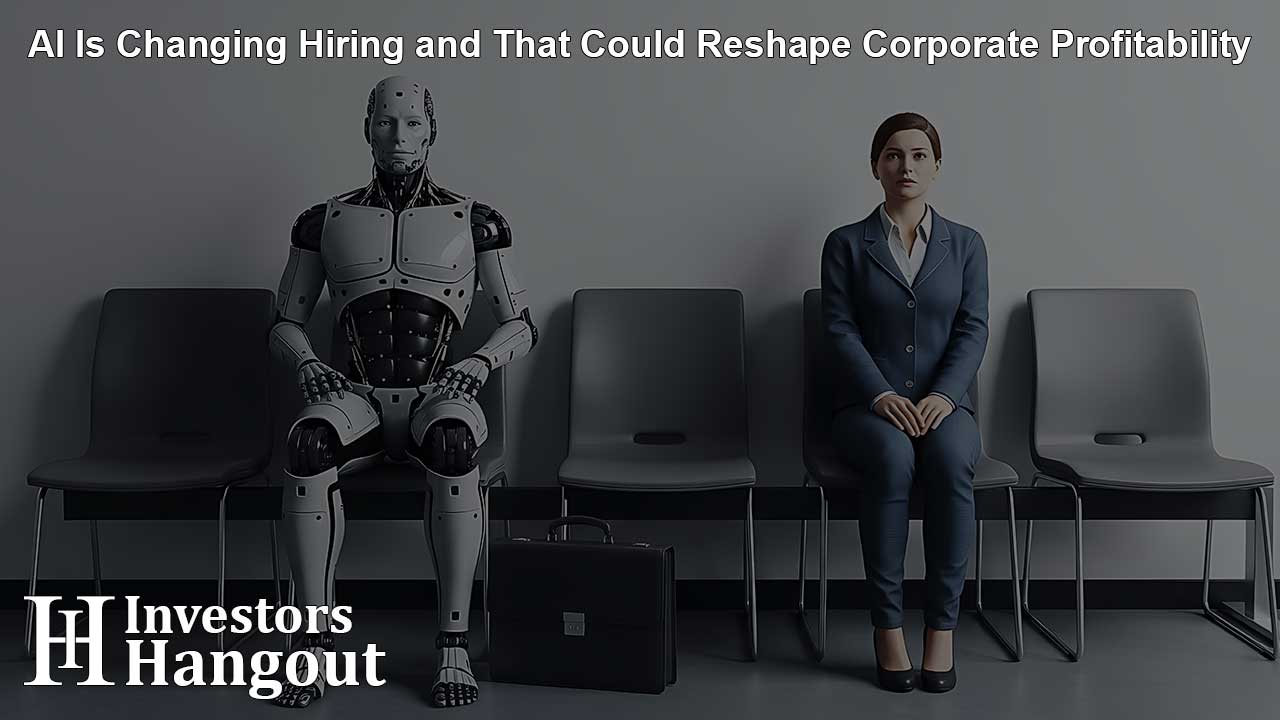
The modern corporate landscape is undergoing a massive shift, and right at the center of this transformation is how companies find, vet, and retain talent. For decades, human resources and recruiting departments operated entirely on manual processes. Honestly, we all remember how it used to look. Hiring managers sorted through stacks of paper, scheduled endless rounds of interviews, and relied heavily on gut instinct to make hiring decisions. I guess it worked for a while, but today, artificial intelligence is completely changing that dynamic. This technological shift isn't just an operational upgrade for human resources. It’s directly influencing corporate profitability and reshaping the financial outlook of businesses across industries.
When a company streamlines its hiring process, the immediate benefits usually include saved hours and reduced administrative burden. However, the deeper financial impact is far more profound. Traditional hiring is notoriously expensive. Between job board fees, recruiter hours, background checks, and the lost productivity of open roles, the cost to replace a single employee can range from a fraction of their salary to double their annual pay. Anyone who has had to backfill a critical role under pressure knows how painful that number really is. By automating the front end of the recruitment cycle, companies can radically drop their cost per hire.
Automated Screening and Efficiency
The first place businesses notice a financial difference is in the screening phase. In a conventional setup, a recruiter might spend hours looking over hundreds of applications just to find a handful of candidates who meet the basic qualifications. Software can now parse these documents in seconds. It identifies relevant skills, experience levels, and certifications without human intervention.
As companies increasingly hire across borders, that same automation now extends to verification, making international background checks faster and more consistent when confirming a global candidate's records and credentials.
This speed allows organizations to secure top talent before competitors do, minimizing the time a position stays vacant.
But what happens when an empty desk stays empty for too long?
Fewer days with an empty desk mean less lost revenue and less strain on existing team members. You know how it goes. When teams are understaffed for long periods, productivity drops, mistakes happen, and burnout sets in. By compressing the timeline from job posting to offer letter, artificial intelligence preserves the business's operational momentum.
This automation has also changed the way candidates prepare their applications. Job seekers quickly realized that traditional, overdesigned layouts can sometimes confuse automated parsing systems. As a result, there’s been a significant rise in the use of simple resume templates. These clean, straightforward designs ensure that software can accurately read data, which helps qualified workers get noticed. For corporations, this shift toward standardized formatting means screening tools function even more efficiently, further lowering the hours required to build a solid candidate pipeline.
Predicting Longevity and Reducing Turnover
While reducing the cost per hire is beneficial, the real driver of long-term corporate profitability is reducing turnover. A bad hire is one of the quietest drains on a company's bottom line. Beyond the initial recruitment expenses, a mismatched employee requires training resources, lowers team morale, and can potentially damage client relationships. When that person leaves after six months, the costly cycle restarts. It is a grueling, expensive loop.
Predictive analytics tools analyze historical data within an organization to identify the traits and experiences that correlate with long-term success and retention. By matching candidate profiles against these successful historical patterns, companies can make data-driven predictions about how long an applicant is likely to stay and how well they will perform.
When businesses improve their quality of hire, turnover rates drop. Keeping productive employees on the payroll for longer periods stabilizes operations and allows the initial investment in their training to yield a much higher return. Over a fiscal year, a noticeable reduction in turnover translates directly into millions of dollars saved, moving straight to the net profit margin.
Removing Bias and Expanding Talent Pools
Another hidden financial drain is the lack of diversity and the presence of unconscious bias in traditional interview practices. Human decision-making is naturally vulnerable to familiarity bias, which can lead hiring managers to overlook exceptional talent simply because a candidate didn't attend a specific university or follow a traditional career path.
Is your organization accidentally filtering out its next top performer based on a flawed human preference?
Machine learning applications can be trained to focus strictly on skills and objective performance metrics. By blinding certain demographic details during the initial stages, organizations can evaluate individuals purely on their ability to do the work. This broadens the talent pool significantly, opening doors to highly capable professionals who might otherwise have been filtered out.
And a wider, more diverse talent pool fosters innovation and introduces new problem-solving approaches to corporate challenges. Numerous financial studies indicate that organizations with diverse leadership and execution teams consistently outperform their less diverse peers in profitability. And that’s the point. Removing human bias from the early stages of selection is a practical strategy for building a more resilient, capable, and profitable workforce.
The Balancing Act of Implementation
Despite the clear financial advantages, integrating these technologies into a corporate structure requires careful management to protect profitability. Software tools aren't infallible, and if the historical data used to train them contains past human biases, the system can replicate and amplify those errors at scale. Organizations must continuously audit their systems to ensure fairness and accuracy. Maybe we shouldn't trust the data blindly.
So, where do we draw the line between software and human empathy?
Furthermore, completely removing the human element from recruitment can alienate high-quality candidates who value personal connection and an authentic workplace culture. We have all stared at a generic auto-rejection email at midnight, wondering if a human even looked at our application. It feels terrible. The most profitable model isn't total automation, but rather a hybrid approach. Technology should handle the heavy lifting of data analysis, scheduling, and initial screening, leaving human professionals free to focus on relationship building, cultural alignment, and final selections.
It is about finding balance.
As these tools continue to evolve, the gap between companies that utilize data-driven recruitment and those that rely on legacy methods will widen. Businesses that successfully leverage technology to optimize their workforce will enjoy lower operational costs, higher employee retention, and superior productivity. Ultimately, the integration of artificial intelligence into hiring practices is no longer just an innovative experiment for human resources. It is a core financial strategy that will define corporate profitability for years to come.