Quick-service restaurants live and die by speed, and the wrong POS system can quietly kill both. Leading POS systems built for food service handle the pressure of lunch rushes, mobile wallet payments, and third-party delivery integrations without breaking a sweat. Managing high transaction volumes during peak hours without system slowdowns, syncing POS data with inventory and accounting platforms, and keeping up with contactless payment expectations are real, daily headaches. After reviewing dozens of platforms against real operator needs, this guide breaks down five options worth serious consideration.
The vetting process for this list
Public information drove every decision here. User reviews, feature breakdowns from major software directories, case study results, and official product pages were all pulled together and weighed against actual restaurant operator needs. Only platforms with a documented track record in the hospitality space made the final cut.
→ See the full research breakdown
-
Orders.co - Best Restaurant POS System for Online Ordering and Sales Growth
-
Loyverse - Best for small to medium-sized retail and hospitality businesses
-
Smart Tab - Best for nightclubs, bars, and high-volume hospitality venues
-
Lavu - Best for restaurant operations and hospitality management
-
Toast - Best for restaurant management and point of sale
The Difference the Right Leading POS Systems Makes
Picking the wrong POS for a quick-service restaurant isn't just inconvenient; it's expensive. A system that slows down during a Saturday lunch rush costs real money in walk-aways and frustrated staff.
The right platform handles high transaction volumes without flinching, and it connects cleanly with your accounting software, ecommerce channels, and inventory tools so nothing falls through the cracks.
Specialized systems built for hospitality understand the rhythm of service in a way that general tools simply don't. That difference shows up in checkout speed, in how accurately your inventory reflects what's actually on the shelf, and in whether your system stays up when you need it most.
Operators who choose well tend to see faster average transaction times, fewer outages during peak service, and meaningfully better inventory accuracy after plugging everything in.
The 5 Best Leading POS Systems: Quick Comparison
Note: All data in this table is sourced from review platforms and the official websites of the listed companies.
|
Company Name |
Headquartered In |
|
Orders.co |
Los Angeles, CA |
|
Loyverse |
N/A |
|
Smart Tab |
San Francisco, CA |
|
Lavu |
Albuquerque, NM |
|
Toast |
Boston, MA |
1. Orders.co - Best POS for QSR
Which Markets Does Orders.co Serve?
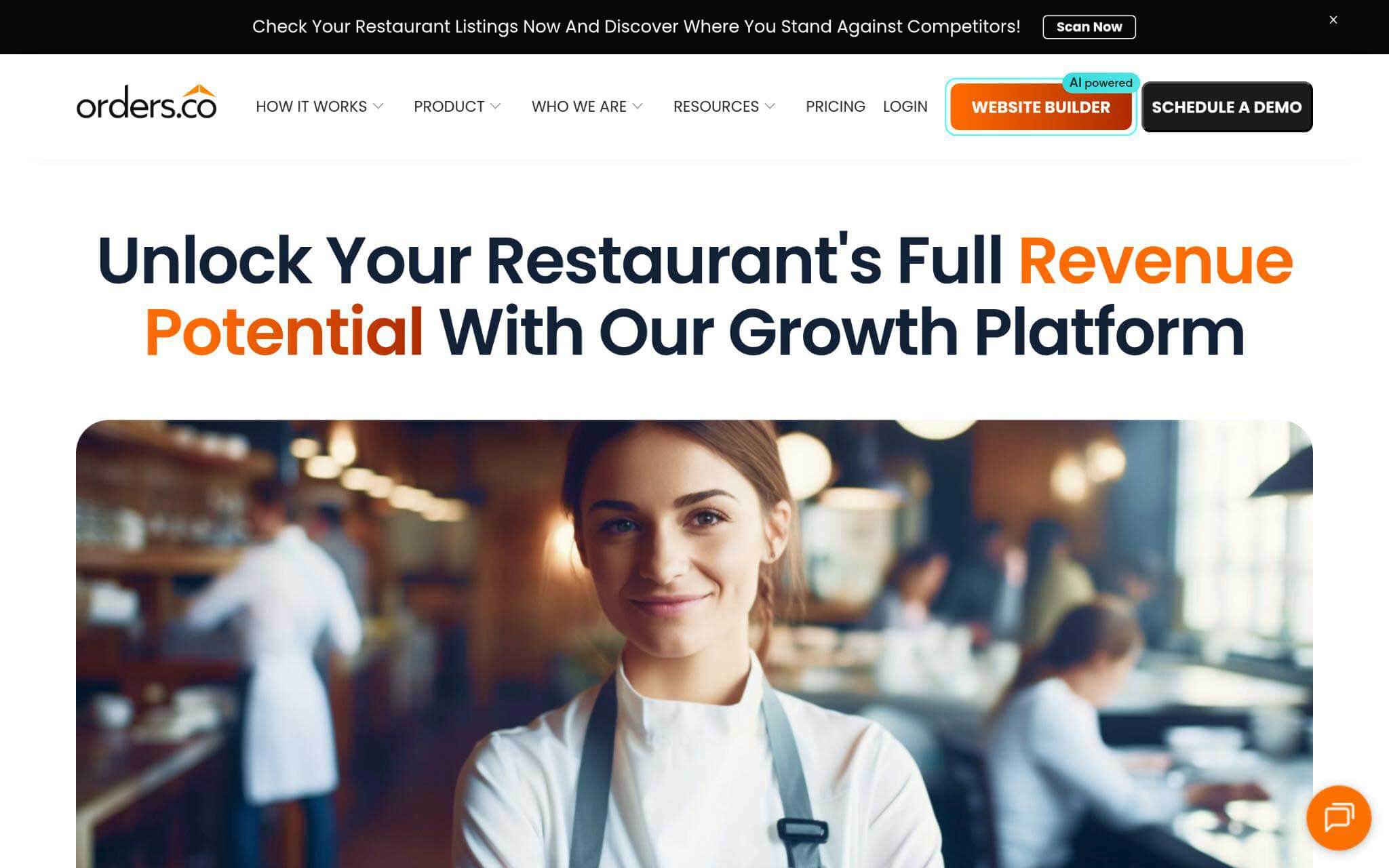
Speed is the whole business in QSR. Anything that adds seconds between an order arriving and a ticket reaching the line is worth fixing. Orders.co is a cloud-based POS that goes straight at that problem: every channel you sell through — ezCater, UberEats, DoorDash, Grubhub, your own website, phone, and counter or dine-in — feeds into one dashboard instead of a row of buzzing tablets.
Orders land in a single queue and route directly to a kitchen display, so nobody is retyping a delivery ticket while three people wait at the register. Menu edits push to every platform in real time, which matters most mid-rush when you need to 86 an item once rather than seven times. Dispatch stays flexible order by order, and QR code ordering handles dine-in guests without occupying a cashier. Reporting covers X and Z shift reports for clean drawer closes, top-seller data to build prep lists around, and provider-level performance so you can see which app actually pays once commission is accounted for. A separate catering module runs its own ordering and dispatch flow for office drops and large-format orders.
Which Markets Does Orders.co Serve?
Orders.co is built for restaurant operators rather than general retail, and the fit is strongest in high-volume, order-driven formats:
-
Quick-service and fast-casual — counter-service concepts with heavy delivery-app volume alongside in-store traffic
-
Pizza, wings, and delivery-first brands — operations where three or more marketplaces run simultaneously
-
Ghost kitchens and virtual brands — multiple menus and storefronts consolidated into one order queue
-
Multi-location groups and franchises — centralized menu control with per-location provider reporting
-
Independents scaling up — single sites that need marketplace consolidation without a dedicated tech hire
-
Catering-active operators — anyone running large-format orders on a different flow than regular service
What Sets Orders.co Apart from Other QSR POS Systems?
It was designed for restaurants, not adapted from retail. That difference shows up in throughput. Nested modifiers, combo logic, channel-specific pricing, and multi-channel consolidation work correctly from the first shift instead of requiring workarounds that cost seconds per ticket.
One platform replaces the stack. Delivery tablets, menu management software, loyalty tools, and marketing platforms collapse into a single system — fewer subscriptions, fewer integrations to maintain, one place to look when something's wrong.
The commission-free ordering website is included, not upsold. In a segment operating on thin per-ticket margins, every order moved from a marketplace to your own channel keeps its full value. Loyalty and automated marketing come bundled on the same terms, and dispute management resolves faster than the standard back-and-forth.
Backing all of it: 24/7 live phone support, every day. During a lunch spike, a ticket queue is useless — someone answering is the only version that helps.
Best for: high-volume counter-service and fast-casual operators juggling multiple delivery apps who need consolidated order flow, tight kitchen routing, and a direct ordering channel that doesn't take a cut of every sale.
2. Loyverse - Best for Small to Medium-Sized Retail and Hospitality Businesses
Which Markets Does Loyverse Serve?
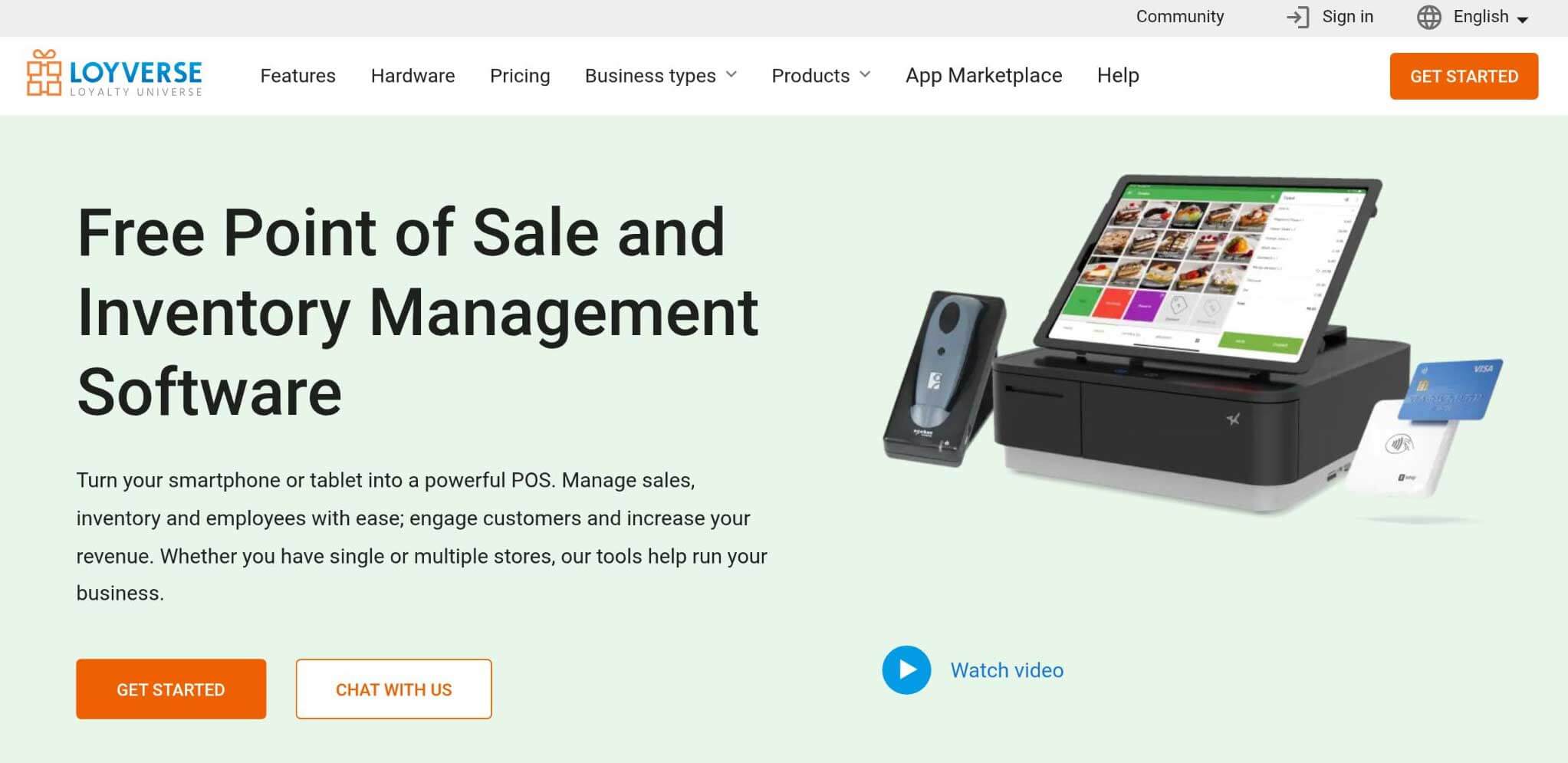
Loyverse serves restaurants, cafes, retail stores, salons, and similar small to mid-sized businesses across 170 countries. Their mobile-first approach turns smartphones and tablets into fully functional POS terminals, which keeps hardware costs low. The POS app is free, and premium Back Office features including advanced inventory tracking and employee analytics come as optional add-ons. Built-in loyalty program tools and support for over 30 payment processors give it a lot of flexibility for the price (genuinely free for the base tier, which almost no competitor matches).
Why Is Loyverse a Contender for Leading POS Systems?
Smaller hospitality operators often can't justify steep monthly fees for enterprise-grade software, and Loyverse fills that gap without stripping out features that actually matter. The offline functionality is a particularly smart call for venues where internet reliability isn't guaranteed.
From the User Reviews:
Users across Capterra, G2, and Trustpilot consistently point to ease of setup and the free pricing tier as the biggest wins. Staff setup time comes up regularly as a strength, with many operators noting their teams get comfortable on the system faster than expected. The premium features also feel worth the upgrade once a business grows past the basics.
3. Smart Tab - Best for Nightclubs, Bars, and High-Volume Hospitality Venues
Which Markets Does Smart Tab Serve?
SmartTab targets nightclubs, bars, breweries, and high-volume venues where transaction speed and tab management are non-negotiable. Their platform combines local server infrastructure with cloud capabilities, so performance stays consistent even when multiple stations are running at full speed. ID-based payment profiles, custom table maps, and biometric employee tracking are purpose-built features that general POS systems don't really think about. Month-to-month pricing with no long-term contracts makes it easier for venue operators to commit without a big financial risk upfront.
Why Is Smart Tab a Contender for Leading POS Systems?
High-volume bar and nightclub environments create POS demands that most restaurant-focused systems weren't designed to handle, including rapid tab management across dozens of open orders and offline payment processing when connectivity drops. SmartTab's founding team comes from bar and venue operations, and that background shows up in features that feel built by people who've actually been behind the stick.
From the User Reviews:
The reviews tend to focus on how well the system handles busy nights without slowing down, which matters more than almost any other feature in this venue type. Operators mention the tab and ID-based profile system as standout tools that reduce disputes and keep service moving. For a niche product, the depth of hospitality-specific thinking reflected in the reviews is genuinely impressive.
4. Lavu - Best for Restaurant Operations and Hospitality Management
Which Markets Does Lavu Serve?
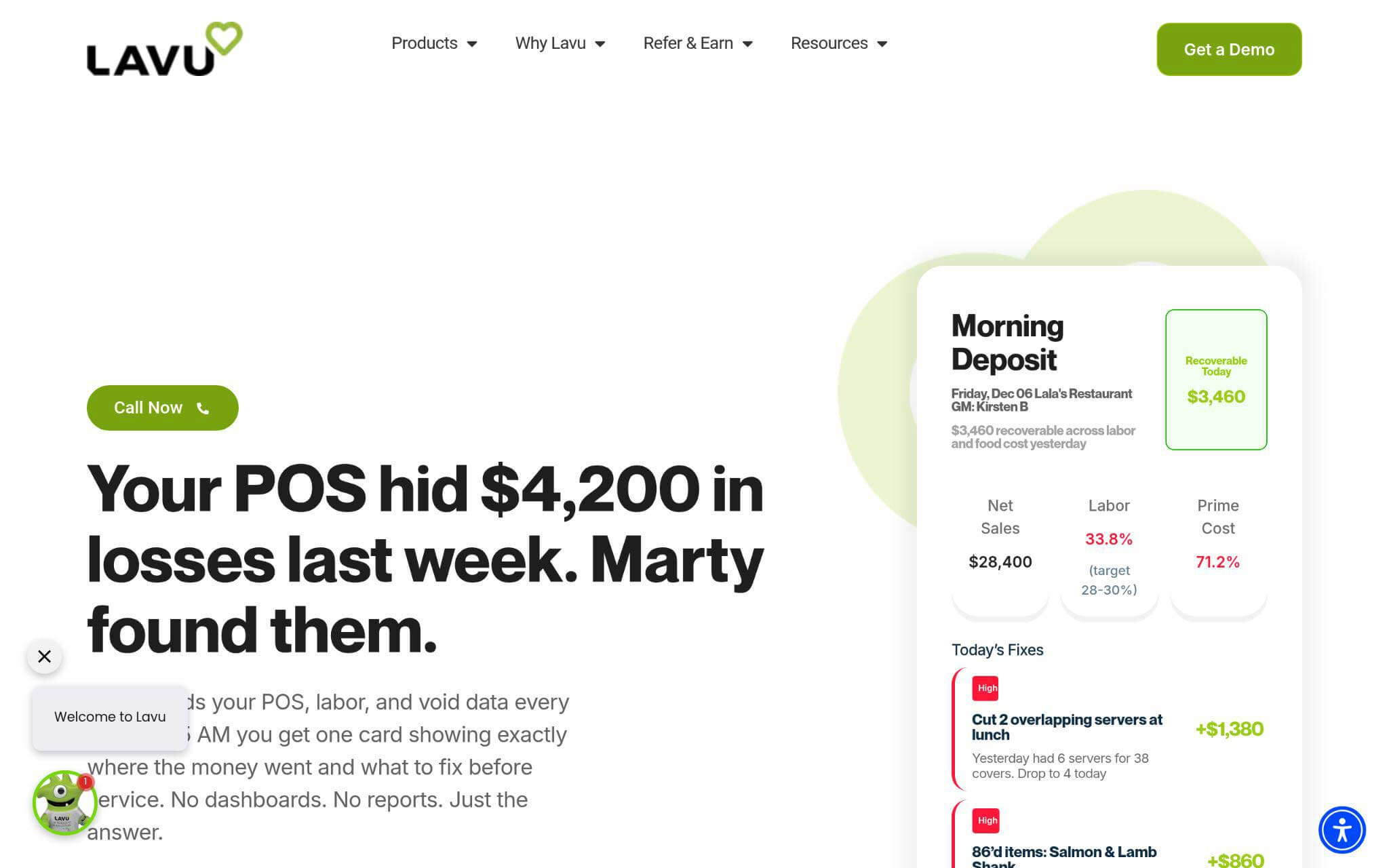
Lavu covers the full restaurant operating stack, from iPad-based POS and payment processing to labor scheduling, inventory management, and online ordering. Their AI layer, called Marty, connects all those pieces and delivers nightly financial insights so operators wake up knowing where they stand. Lavu was the first restaurant POS built for iPad, and the platform has processed over 1 billion orders since then. Pricing starts at $59 per month with free hardware (not cheap to run a full operation, but the entry point is reasonable), making it accessible for smaller restaurants alongside larger multi-location groups.
Why Is Lavu a Contender for Leading POS Systems?
Fragmented restaurant tech stacks create reporting blind spots that cost operators money they don't even know they're losing. Lavu's unified platform with AI-driven nightly reporting closes that gap directly. The depth of connection between POS, payments, labor, and inventory reporting is the kind of all-in-one thinking that reduces daily operational guesswork.
From the User Reviews:
G2's 2025 awards cycle recognized Lavu based on verified customer reviews, which suggests the satisfaction isn't just marketing copy. Users consistently mention the Marty AI insights as something that changes how they approach daily decisions. The iPad-native experience also reduces friction during staff setup, which matters a lot in high-turnover environments.
5. Toast - Best for Restaurant Management and Point of Sale
Which Markets Does Toast Serve?
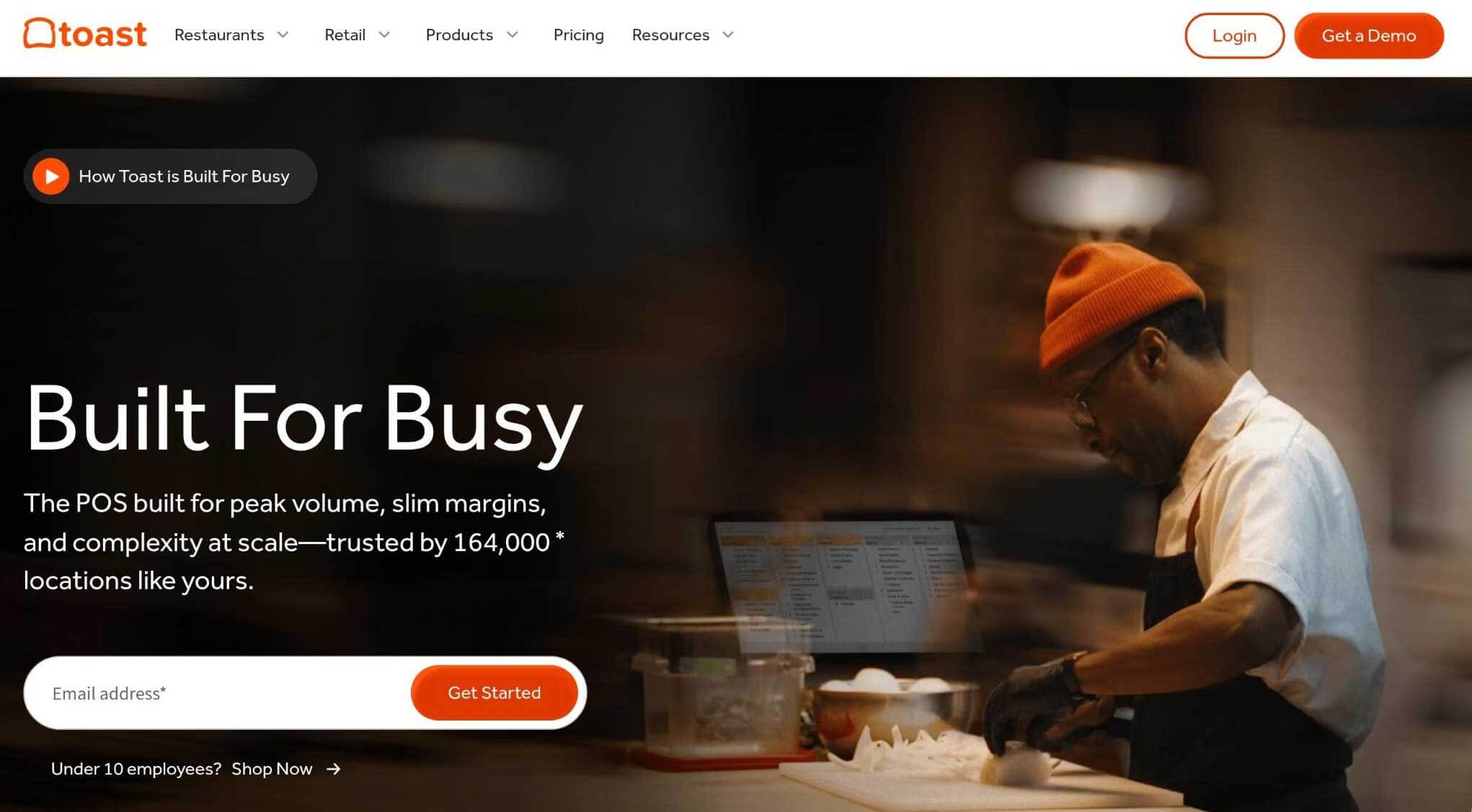
Toast serves restaurants exclusively, from single-location independents to large multi-unit operators. The platform runs on Android and covers POS, online ordering, inventory, payroll, scheduling, and sales reporting under one roof. Over 200 integrations tailored to hospitality needs give it one of the deepest third-party ecosystems available in restaurant technology. As of mid-2024, around 120,000 U.S. restaurants run on Toast (that's over 21% of the market), which puts it in a category that few software companies in any vertical reach.
Why Is Toast a Contender for Leading POS Systems?
Restaurants that need backup connectivity during internet outages rely on Toast Router's built-in cellular fallback to keep processing orders without interruption. That's the kind of infrastructure-level problem most operators don't think about until it's too late. Being exclusively restaurant-focused since 2011 means Toast has refined its feature set around real operator feedback rather than trying to serve retail, healthcare, and food service all at once.
From the User Reviews:
The scale of Toast's adoption means review patterns are well-established across thousands of verified accounts. Operators frequently cite the reliability of offline processing and the depth of reporting as the features they'd miss most if they switched. The free Starter Kit lowers the barrier enough that even skeptical operators give it a real trial before committing.
The Process Behind This Ranking
Building a list like this takes more than scanning a few software directories. The research behind these rankings followed a structured process designed to surface options that actually perform in the field, not just ones with polished marketing pages.
Foundation Data Requirements
The starting point was a broad sweep across hospitality-focused software directories, third-party review aggregators, and industry publications. Each platform was pulled into a working list based on visibility in the quick-service restaurant space. From there, feature documentation, pricing transparency, and service scope were all collected from official sources and cross-referenced with independent coverage. Platforms that couldn't be verified across at least two separate credible sources were set aside early.
Pre-Verification Phase
Once the initial list was assembled, the next step was filtering out options that couldn't demonstrate consistent real-world performance. Review patterns were analyzed for recency and volume, since a handful of old reviews tells a different story than sustained feedback over multiple years. Any platform showing irregular or suspiciously uniform review patterns was flagged and removed. This phase narrowed the field considerably, leaving only options with review histories that reflected genuine operator experience.
The Verification Phase
With a tighter shortlist in place, each company's claims were checked against what actual users reported. Marketing language around speed, reliability, and feature depth was compared to what showed up in verified reviews and third-party assessments. Where gaps appeared between what a platform claimed and what operators described, those discrepancies were factored into the final evaluation. Companies where the real-world feedback consistently matched the product positioning moved forward.
Tracking Authority Markers
Beyond reviews, external signals of credibility were tracked across each platform. Industry award recognition, mentions in hospitality trade coverage, and citations from independent research sources all contributed to the authority assessment. Companies like Toast, Loyverse, and Lavu had documented award histories and press coverage that reinforced their positioning. That kind of external validation signals staying power rather than just a good launch quarter.
Leading POS Systems Proof Points
The final filter looked at restaurant and hospitality relevance. Dedicated service pages for quick-service restaurant use cases, verified case studies from food and beverage operators, and review content from restaurant owners were all weighted here. General-purpose POS platforms without clear hospitality proof points were excluded even if their overall scores were strong. The five companies that remained all showed consistent, documented evidence of performing well in the specific context this list was built to address.
How to Pick Your Best Match
Every quick-service restaurant has a slightly different operation, so the right POS isn't one-size-fits-all. Start by mapping your actual daily workflow before evaluating any platform.
-
Industry/Domain Experience: Look for platforms built by teams who've actually worked in food service. Hospitality-specific feature depth reflects whether the developers understood the problem before writing the code.
-
Features and Service Options: Match features to your actual needs. A nightclub needs tab management and ID profiles. A fast-casual spot needs fast checkout and mobile wallet support. Don't pay for what you'll never use.
-
Pricing Structure: Factor in hardware, monthly fees, and payment processing rates together. A low monthly subscription with high processing fees can cost more over a year than a mid-tier flat plan.
-
Results Measurement: Confirm the platform offers reporting that tracks what matters: average transaction time, inventory accuracy, and system reliability. Data you can't act on isn't useful.
-
Industry Knowledge and Compliance: PCI-DSS compliance, EMV chip support, and local tax handling aren't optional. Verify that the platform covers them before committing.
Closing Thoughts
Quick-service restaurants can't afford POS friction. The right system keeps checkout fast, inventory accurate, and reporting clear even when service volume spikes. Toast and Lavu bring serious all-in-one depth. Loyverse makes the entry point genuinely accessible. SmartTab fits high-volume venue operators well. Orders.co stands apart for operators focused on online ordering and automated revenue tools. As payment methods and delivery models keep shifting, the gap between purpose-built and general-purpose POS will only widen.