Macro data used to reach retail investors through commentary. A number printed and analysts interpreted it. The market had usually moved before most people formed a view.
Event contracts changed the sequence. A binary contract on a CPI print or an FOMC decision carries a live price, and that price is a running estimate of what the market expects before the release lands.
Five platforms now list economic contracts in some form. Here is how each one structures the category, what sits on the menu and where the differences actually matter.
Key Takeaways
-
Economic event contracts are binary derivatives priced between $0.01 and $0.99, where the price reflects an implied probability
-
Coverage ranges from Fed decisions and inflation to jobs data, recession questions and non-US central banks
-
The regulatory entity listing and clearing the contract differs by platform and is worth checking
-
Liquidity is usually deepest around scheduled releases and thinner on secondary questions
-
Trading event contracts carries risk of loss and eligibility is restricted by age and location
How we looked at each platform
This is an overview rather than a ranking. Each platform is assessed on the range of economic contracts currently listed, the regulatory structure behind them and how the category fits the wider product.
Menus change around the data calendar and availability varies by state, so treat everything described here as a snapshot rather than a fixed list.
1. Fanatics Markets
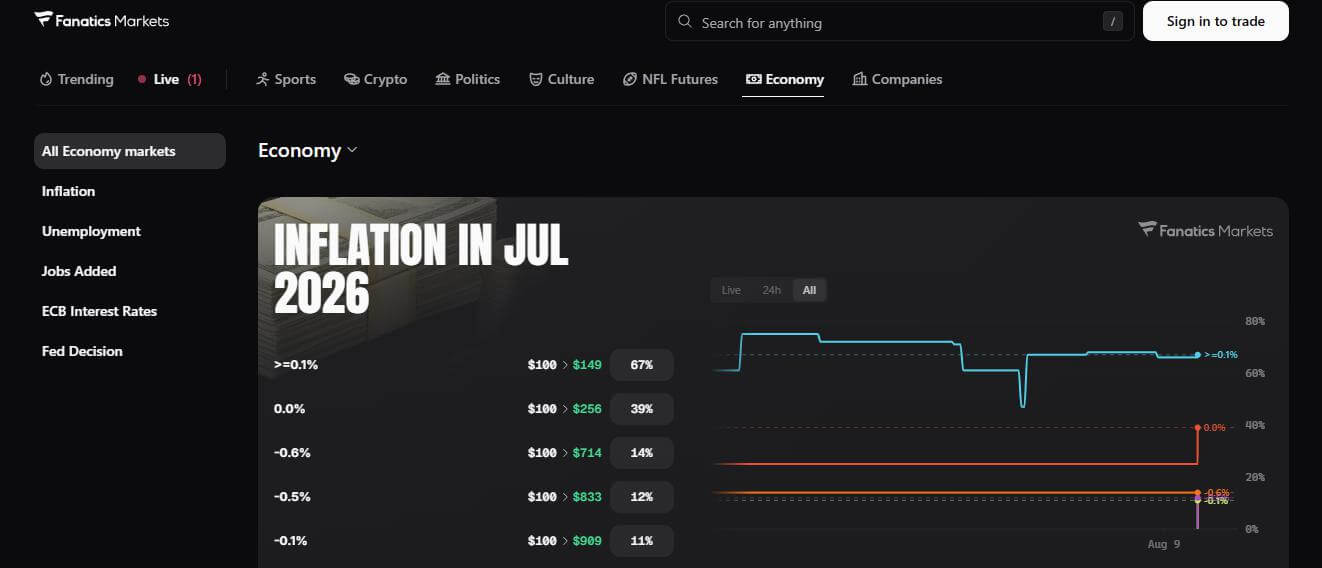
Fanatics Markets splits its economy category into five groupings: inflation, unemployment, jobs added, Fed decision and ECB interest rates. That last one is the notable inclusion, because coverage of a non-US central bank is not standard across the category.
Live contracts currently include monthly inflation, Fed decisions across consecutive meetings, ECB rate outcomes and broader questions such as whether the US enters a recession by the end of the year and whether tech layoffs exceed the prior year.
The category is organised around recurring data series rather than one-off headlines, so anyone looking to bet on economic indicators is working from a scheduled release calendar rather than reacting to news.
On structure, contracts are listed, priced and cleared by Crypto.com Derivatives North America, a CFTC-regulated exchange and clearinghouse. Customers are introduced to that exchange by Paragon Global Markets, a CFTC-registered introducing broker and NFA member.
Multi-leg orders run through a request-for-quote process, with liquidity providers responding with executable quotes. The platform also discloses an affiliated market maker that may quote on both sides.
Economy sits alongside sports, politics, crypto, companies and culture categories, so it is one route into a broader product rather than a standalone macro tool. Access is limited to US residents aged 21 and over, with availability varying by state.
2. Kalshi
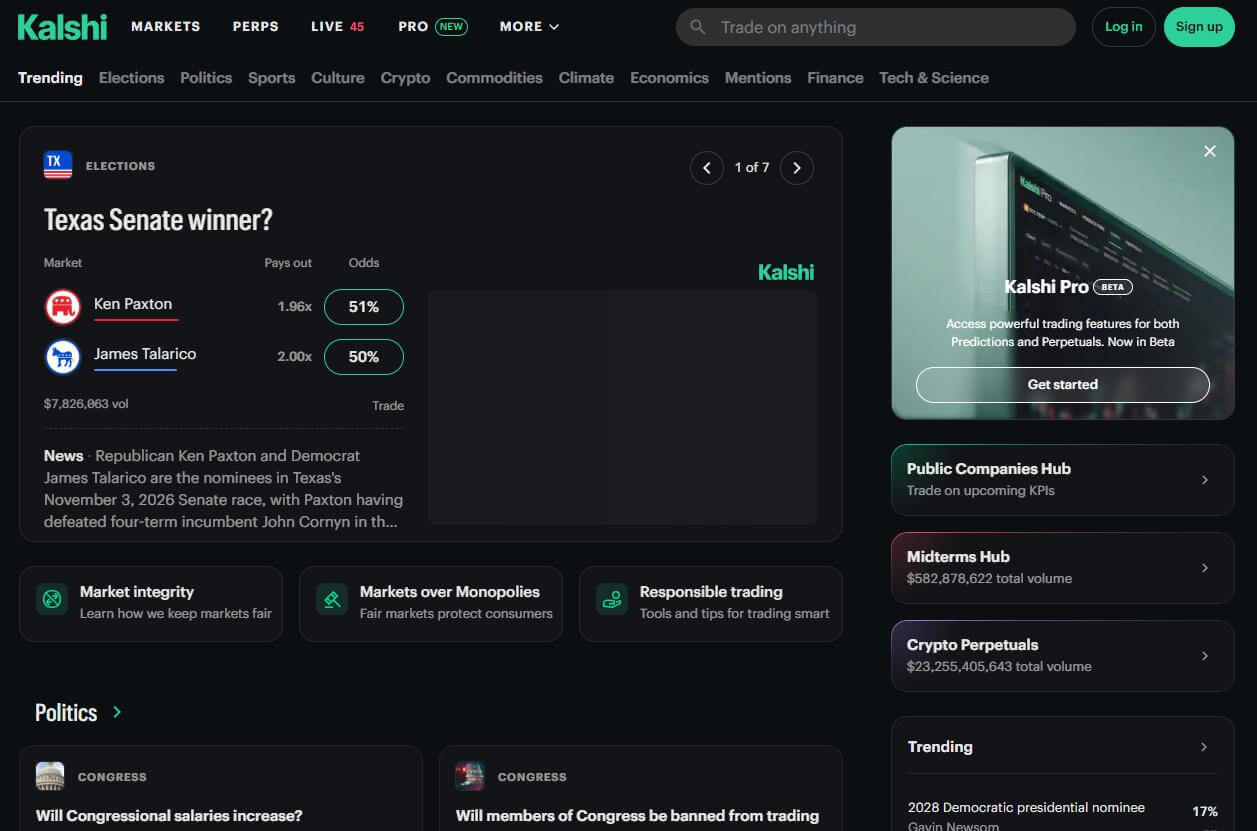
Kalshi runs separate economics and financials categories and has been listing macro contracts longer than most. It operates as a CFTC-regulated exchange, meaning it lists and clears its own contracts rather than routing through a third party.
The economics menu covers the familiar releases, and Kalshi has extended further into company-level data through a public companies hub that prices upcoming KPIs. Recent listings there have included retail comparable sales growth ahead of earnings.
That company-level layer is the clearest point of difference. It sits between pure macro and single-stock exposure, which is unusual in the category.
Kalshi has also added perpetual futures alongside its event contracts, so the product is broader than prediction markets alone.
3. Polymarket
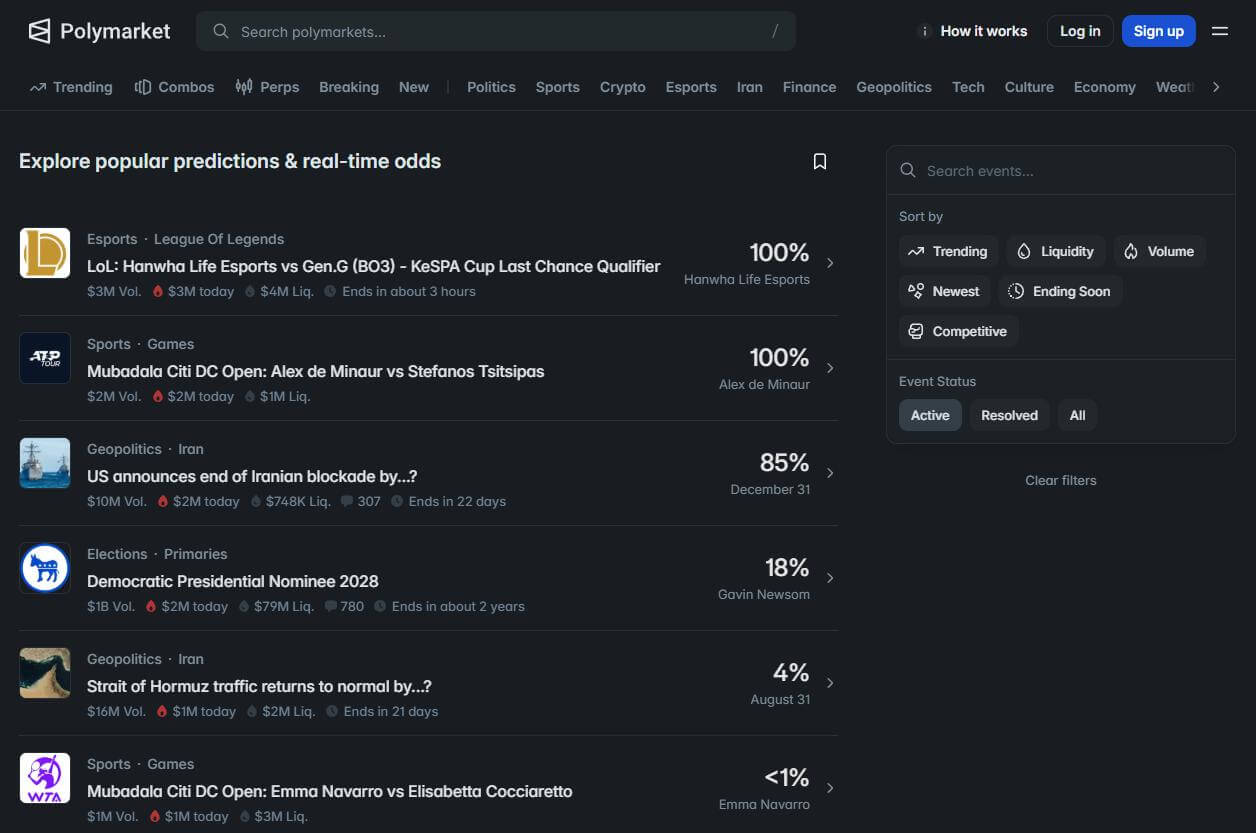
Polymarket maintains an economy category plus adjacent finance and commodities groupings. Recent macro listings have covered Fed decisions by meeting, whether a rate move occurs within the calendar year and price levels on crude oil.
The structure needs care. Polymarket US is operated by QCX LLC, a CFTC-regulated designated contract market, while the international platform is a separate entity that is not CFTC-regulated and operates independently.
Menus are not identical between the two, so a contract visible on one may not be available on the other. Anyone comparing coverage should confirm which entity they are looking at.
Volume on headline macro questions tends to be substantial, which helps when reading the price as a signal.
4. DraftKings Predictions
DraftKings Predictions lists economics alongside stock market, commodities, crypto and culture. The company is registered as a CFTC introducing broker and NFA member, and built its exchange capability by acquiring Railbird Technologies.
Independent coverage describes the menu as broad across categories, with liquidity thinner in niche areas during the rollout. Macro sits in the middle of that range rather than at either extreme.
The company has also added Crypto.com as a contract source, which points to further category expansion.
For anyone already holding a DraftKings account, the familiar login is the practical draw rather than macro depth.
5. FanDuel Predicts
FanDuel Predicts is the one built specifically around this category. Launched in December 2025 through a joint venture with CME Group, it went live with a menu weighted heavily toward economic data rather than sports.
Coverage includes interest rate decisions, GDP and CPI releases and commodities. The CME Group relationship is the structural feature here, given the exchange's history in rate and commodity derivatives.
The trade-off is breadth. It launched with a smaller number of live markets than the platforms above, so depth outside the core releases is limited.
Existing FanDuel members can sign in with their current account, and the product runs standalone from the company's other offerings.

What to check before trading an economic contract
Read the settlement terms first. Macro contracts hinge on which print resolves them, and revisions to official data can matter, so the document naming the authoritative source and the resolution date is the one to read.
Check depth alongside price. A thin contract is a weak signal and can be harder to exit than the quoted price suggests, particularly on secondary questions away from headline releases.
Size positions on the basis that a binary can settle at zero. Event contracts are one of several alternative financial tools that have moved into the mainstream recently, and the same caution applies to all of them.
Finally, confirm eligibility. State availability differs across all five platforms and the contract menus are not interchangeable.
Closing thoughts
Economic contracts have become a standard category rather than a novelty. What separates the platforms now is how far they extend past the headline releases.
Fanatics Markets and Kalshi currently run the more structured menus, Polymarket carries deep volume on headline questions, and the two newer entrants are still building out. FanDuel Predicts is the closest to a macro-first product, while the others treat economics as one category among several.
Trading event contracts involves risk and is not appropriate for everyone. Participants risk losing the cost of entering any transaction, including fees. Eligibility restrictions apply by age and location.
Frequently Asked Questions
What kinds of economic indicators have contracts listed?
Common ones include inflation prints, central bank rate decisions, employment and jobs data, GDP releases and recession questions. Some platforms extend into commodities and company-level metrics.
How does a contract price relate to probability?
A contract trading at 40 cents implies roughly a 40 percent chance of the stated outcome. The price moves as participants trade, so it updates continuously rather than being set once.
Are these contracts regulated?
Within a CFTC-regulated venue, event contracts sit under the federal derivatives framework. Which entity lists and clears a given contract varies by platform, and at least one operator runs separate regulated and unregulated entities.
Do prediction market prices beat economists' forecasts?
They are a different kind of input. A forecast is published once, while a contract price updates as new information arrives. Both are worth reading, and neither should be treated as a settled answer.