The best portable laser welder is not simply the machine with the highest wattage. A useful portable system needs to balance power, cooling, machine weight, gun handling, wire feeding, and the type of work being done.
Some compact air-cooled machines are designed for repair, thin sheet, and mobile fabrication. Others use higher power and heavier cooling systems for longer production cycles. The five portable laser welding systems below represent different approaches for workshops, maintenance teams, and metal fabrication businesses.
Comparison of the 5 Best Portable Laser Welders
|
Brand / Model |
Power |
Cooling |
Portability |
Main Functions |
Best For |
|
700W–1800W |
Air-cooled |
Very good, S30 <21 kg |
Welding, cleaning, light cutting, selected spot modes |
Flexible workshop and mobile fabrication |
|
|
xTool MetalFab |
800W / 1200W |
Air-cooled |
Good |
Welding, cutting, rust removal, cleaning |
Small shops and light fabrication |
|
IPG LightWELD |
1000W–2000W |
Integrated system |
Good |
Welding, selected cleaning functions |
Professional production |
|
JASIC LS Series |
1500W / 2000W |
Water-cooled |
Moderate |
Welding, cutting, cleaning |
Higher-duty industrial work |
|
Herolaser Air-Cooled |
1000W–1500W |
Air-cooled |
Moderate |
Welding and wire feeding |
General industrial fabrication |
Dynalasers stands out for offering several air-cooled power levels rather than one fixed portable configuration. Its lightweight S Series focuses on mobility, while M and D systems provide more output for regular fabrication.
That does not make one brand automatically better for every shop. A technician moving equipment between job sites needs something different from a factory welding thicker steel for hours at a time.
1. Dynalasers Portable Laser Welder Series
Pros
-
Air-cooled designs across the portable range
-
S30 weighs under 21 kg
-
Lightweight handheld gun at about 0.48 kg
-
Multiple power levels from 700W to 1800W
-
Welding, cleaning, and light cutting available
-
Suitable for stainless steel, carbon steel, aluminum, brass, and other common metals
-
Good balance between mobility and workshop capability
Cons
-
Higher-power models are heavier than the compact S Series
Best for: Workshops that want a portable fiber laser welding machine with different power options for repair, sheet metal, maintenance, and mixed fabrication.
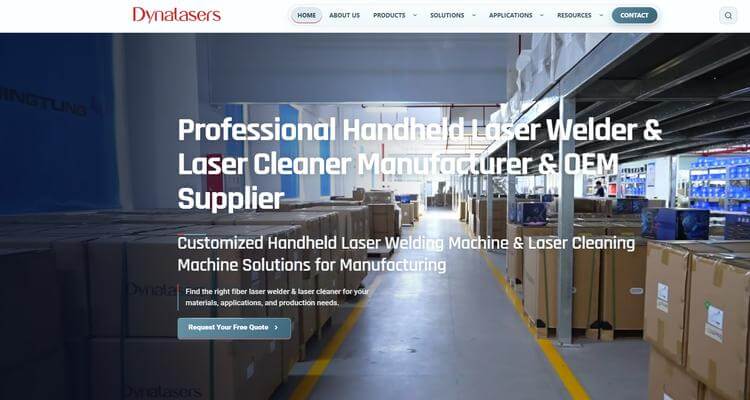
Dynalasers offers three handheld product families covering different combinations of portability and welding power.
The S30 is the lightest option, producing 700W while weighing under 21 kg. The M Series moves from 800W to 1800W, while the D Series covers higher-output workshop welding from 1200W to 1800W. These systems use air cooling, avoiding the additional water chiller found on many traditional industrial machines.
2. xTool MetalFab
Pros
-
Compact air-cooled platform
-
800W and 1200W options
-
Multiple metal-processing functions
-
Straightforward interface
-
Published retail pricing makes budgeting easier
Cons
-
Maximum power is lower than many 1500W–2000W industrial systems
-
Less suitable for thicker production work
-
Portability decreases once accessories and gas equipment are included
Best for: Small workshops, light fabrication, repair work, and businesses looking for laser welding machines for small businesses.
xTool MetalFab targets smaller fabrication businesses and users moving into fiber laser welding. Its 800W and 1200W versions combine welding with cutting, cleaning, and rust removal in an air-cooled cabinet.
The system sits between hobby-oriented equipment and traditional industrial laser welders, making it especially relevant to smaller workshops.
3. IPG LightWELD
Pros
-
Multiple industrial power options
-
Strong penetration capability at higher outputs
-
Developed specifically for professional handheld welding
-
Preset process control
-
Broad material compatibility
-
Established industrial laser ecosystem
Cons
-
Significantly higher investment than many Chinese alternatives
-
May be more equipment than occasional repair work requires
-
Total system cost rises once accessories and safety controls are included
Best for: Professional fabrication facilities prioritizing process support, higher production capability, and an established industrial platform.
IPG LightWELD is one of the better-known premium handheld fiber laser welding platforms. The range includes systems around 1000W, 1500W, and 2000W, targeting professional fabrication and production environments.
Its main appeal is not minimum price. It is the combination of established fiber laser technology, preset welding parameters, accessories, and structured process support.
4. JASIC LS Series
Pros
-
1500W and 2000W industrial power
-
Suitable for thicker fabrication work
-
Welding, cutting, and cleaning functions
-
Long fiber delivery cable
-
Designed for regular shop-floor operation
Cons
-
Water cooling increases equipment weight
-
Less convenient for frequent transportation
-
Requires more floor space and coolant maintenance
Best for: Industrial workshops where output and duty cycle matter more than minimum machine weight.
JASIC takes a heavier industrial approach to handheld laser welding. Its LS range includes 1500W and 2000W systems that combine welding, cleaning, and light cutting.
Unlike the compact air-cooled machines above, these systems use water cooling. That improves suitability for demanding workloads but adds size, weight, and maintenance requirements.
5. Herolaser Air-Cooled Welder
Pros
-
Air-cooled system
-
1000W and 1500W configurations
-
Automatic wire feeding
-
Suitable for general metal fabrication
-
Simpler cooling maintenance than water-cooled machines
Cons
-
Heavier than compact portable systems
-
Less convenient for frequent job-site movement
-
Limited advantage where maximum portability is the main requirement
Best for: General fabrication shops wanting industrial output without managing a water-cooling system.
Herolaser offers another air-cooled option for industrial handheld welding. Available configurations include approximately 1000W and 1500W systems with automatic wire feeding and wobble welding capability.
It avoids the separate water chiller used by many industrial machines, although its overall machine weight places it closer to movable workshop equipment than a genuinely lightweight field unit.
What Makes a Portable Laser Welding Machine Portable?
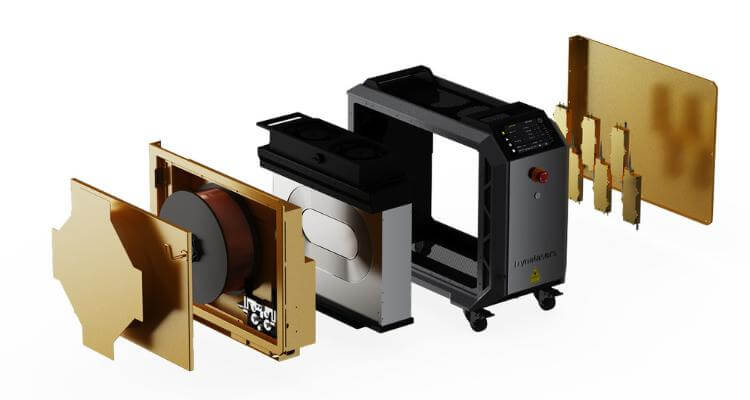
A portable laser welding machine needs more than wheels on the cabinet. Total weight, cooling design, gun weight, fiber cable length, wire feeder location, voltage requirements, and gas supply all affect how easy the machine is to move and use.
Cooling is one of the biggest differences. Water-cooled systems can support demanding workloads but require a chiller, coolant, and additional maintenance. Air-cooled machines reduce system size and are usually easier to move between workstations. For maintenance and field work, this difference can matter as much as laser power.
Gun handling is also important. A heavy welding head becomes tiring during long seams, vertical work, or repair jobs. A lighter handheld gun makes it easier to maintain consistent travel speed and position.
Choosing the Right Portable Laser Welder
Start with the parts rather than the wattage number. Material, thickness, joint design, production time, portability, and finishing requirements should determine the machine.
Important factors include:
-
Material and normal thickness range
-
Required penetration
-
Joint fit-up and gap consistency
-
Air cooling or water cooling
-
Total machine weight
-
Welding gun weight
-
Fiber cable reach
-
Wire feeding requirements
-
Input voltage
-
Cleaning or cutting functions
-
Training and technical support
A portable handheld laser welding machine is particularly useful for stainless cabinets, sheet metal assemblies, aluminum frames, equipment repair, kitchen products, machinery covers, and short-run fabrication.
For heavy structural parts or long continuous production, a larger industrial system may still be the better choice.
Where Dynalasers Fits
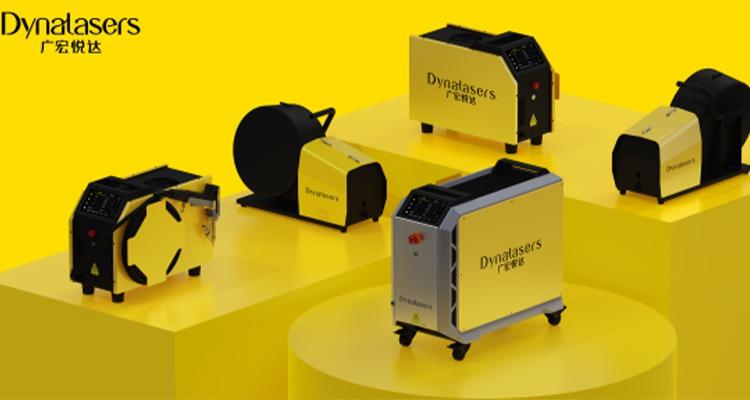
Dynalasers portable laser welding systems are most relevant when portability and welding power both matter.
The S Series targets mobile repair and compact workshops. M Series provides more power for everyday fabrication, while D Series supports stronger welding and additional processing functions. This allows a workshop to choose the machine around actual material thickness and mobility requirements rather than moving directly to a large water-cooled system.
Actual workpieces should still be tested before purchase. Penetration, porosity, joint gaps, shielding gas, wire feeding, travel speed, and surface condition can all change the result.
Safety Requirements for Portable Laser Welding
Portable laser welders use high-power Class 4 lasers. Direct beams and reflected energy can seriously injure the eyes and skin, while welding fumes and hot material create additional hazards.
A proper setup may require wavelength-rated laser eyewear, barriers or enclosed work areas, restricted access, fume extraction, protective clothing, fire controls, and trained operators. Protective equipment should be selected for the actual laser wavelength and system, not simply by copying a generic optical-density rating from another machine.
Portability makes the machine easier to move. It does not reduce the need for controlled laser safety.
FAQs
Do handheld laser welders actually work?
Yes. They are widely used for sheet metal, repair, stainless steel, aluminum, and general fabrication. Good results still depend on fit-up, surface preparation, shielding gas, and correct parameters.
Which is the best portable laser welder?
It depends on the workload. Dynalasers offers strong portability and several air-cooled power levels, while xTool suits lighter fabrication, IPG targets premium production, and JASIC focuses more on industrial duty.
What are the downsides of laser welding?
Main limitations include higher equipment cost, Class 4 laser safety requirements, tighter joint preparation, and the need for parameter control and operator training.
How much does a portable laser welder cost?
Prices vary widely by power, cooling, brand, wire feeding, accessories, and service. Compact systems may start at several thousand dollars, while premium industrial systems can cost significantly more.
Conclusion
The five best portable laser welders serve very different types of metalwork. Dynalasers provides one of the broader air-cooled ranges, from a lightweight 700W S Series to higher-power M and D workshop systems. xTool focuses on compact fabrication, IPG targets professional production, while JASIC and Herolaser move toward heavier industrial work.
The right machine should match material, thickness, duty cycle, portability, safety, and service requirements. Power matters, but a stable process tested on real parts matters more.