
The Hidden Value of Kitchen Infrastructure in Restaurant Valuations
When trying to value a restaurant, ambiance or menu rarely comes into play. Much of the value rests on the unseen fixed overheads, like the equipment and infrastructure that allow a business to deliver an uninterrupted and orderly service day after day. A strong kitchen infrastructure limits the possibility of downtime, evens out the possibility of food deliveries or quality, and gives an idea of whether or not a business can actually scale without compromising on consistency. In this sharply competitive environment, buyers check underlying equipment as closely as valuation multiples. Below are indirect but decisive ways that kitchen infrastructure adds value to current restaurant valuations, creating the most subtle perceptions in the business.
Equipment Reliability and Reduced Downtime
If the kitchen infrastructure is not working, it not only impacts performance but also deflates profitability. A valid commercial kitchen needs maintenance-free operable appliances, refrigeration units, well-vented ventilation systems, and cooking stations, all of which support regular operations.
Because appraisers estimate value partly from predictable revenue, a kitchen that rarely fails gives confidence in future earnings stability. Reliable equipment also reduces emergency repair spending, thereby improving EBITDA margins and strengthening valuation multiples.
Operational Efficiency as a Multiplier for Earnings
Increasingly, restaurant appraisers consider how kitchen infrastructure affects day-to-day efficiency. High-capacity fryers and cooklines, upgraded prep stations, and intelligent workflow layouts allow teams to produce more food with fewer errors per hour. This improves key metrics like table turns and labor cost ratios.
When a kitchen is set up for seamless production, even the stress of peak hour is easier to handle. With operational efficiency, a prospective buyer finds it easy to make a decision due to the operational leverage. The more organized the kitchen, the more rapid the pace of an investment recovery by its new owner.
If such a facility has good throughput, any hindrance to reconfiguration does not exist, and thus poses little to no risk, therefore ever increasing the enterprise value. To many investors, an efficient kitchen is a testament that an operator understands their margins and how to systemize.
The Weight of Commercial Ovens and Core Assets in Appraisals
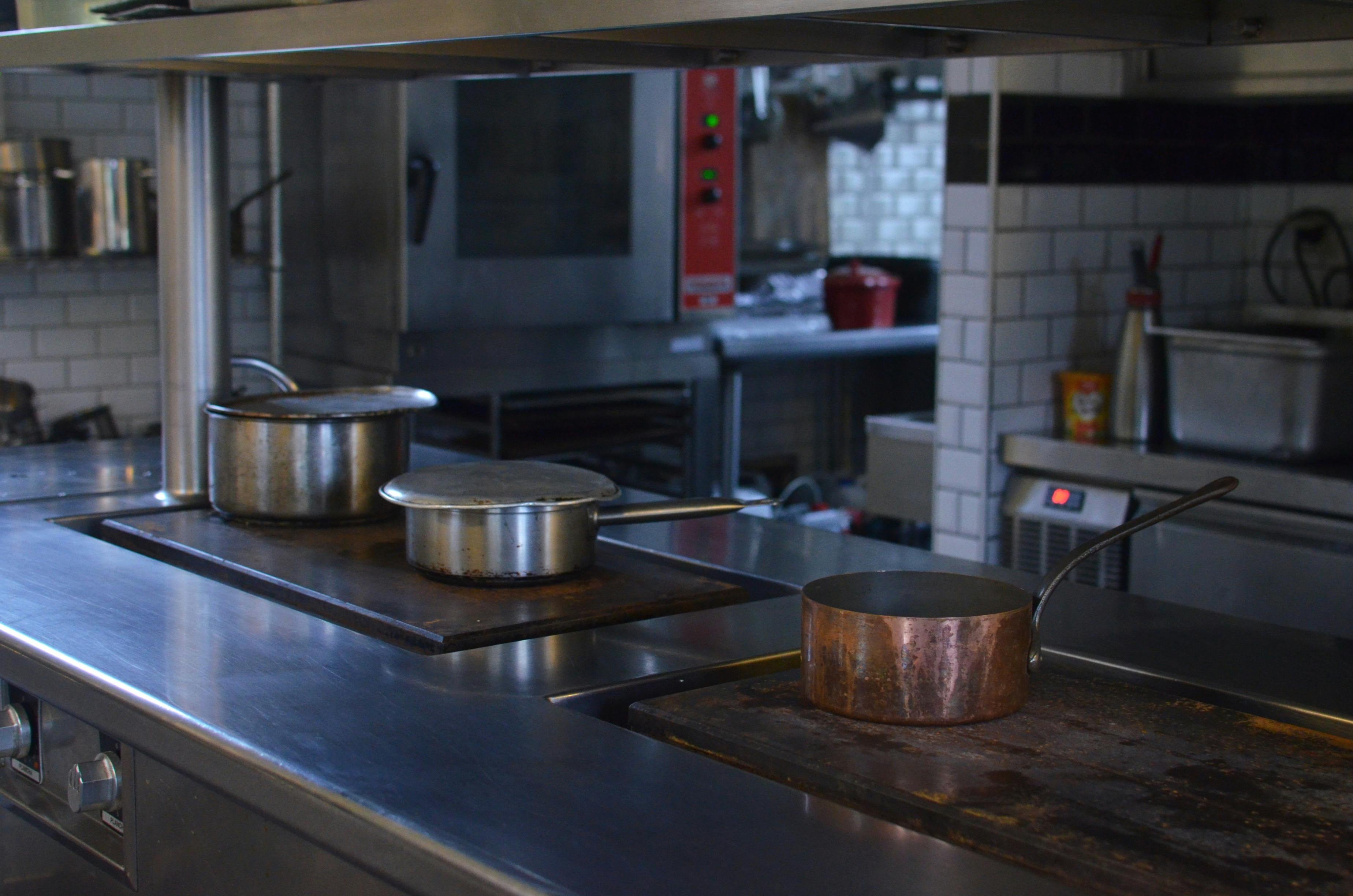
In the appraisal process, an oven, a range, and production-essential tools are often given more influence than many owners can think. High-performance appliances like Vulcan ovens send signals to the buyers that this business holds quality, safety, and longevity in high regard. These assets, by their mechanical soundness, appear reliable, thus reducing capital expenditure with their commercial application. This eases the reselling negotiations.
Good core equipment gives flexibility to one's menu offerings. For example, an oven that is good for multi-use, one that renders temperature control with heavy-duty functionalities, translates the restaurant into a bigger-budget winning proposition with low upgrade costs. This increases resale values and earns investors' confidence.
Energy Efficiency as a Predictor of Future Profitability
Energy consumption is one of the largest controllable costs in commercial kitchens. Modern ventilation hoods, induction units, high-efficiency dishwashers, and Energy Star–rated refrigeration systems can cut utility expenses by thousands of dollars annually, particularly in high-volume operations.
When investors see upgraded energy-efficient infrastructure, they interpret it as future savings baked into the business model. Lower operating costs mean higher net profits, and higher net profits translate directly into stronger valuation multiples. This often becomes a competitive differentiator when multiple buyers are evaluating similar restaurants.
Compliance, Safety Systems, Reduced Liability
The fire-suppression systems, grease-management structure, ADA-compliant work zones, and temperature-monitoring technology double as regulatory requirements and value-adding mechanisms. Facilities with compliant systems mean less exposure and fewer costly retrofits in the future, hence creating a much safer environment for operation.
Safety infrastructure in restaurants could reduce insurance premiums, which would also feed into operating cost predictions. Business appraisers and investors quickly discount businesses that do not have an effective safety system. Such businesses bring in unnecessary uncertainty that causes low valuations.
Scalability and Future Expansion Potential
Good kitchen infrastructure planning allows for a minimum interruption of the present operation in case of an upgrade. Adequate electrical service is available for all necessary lines, modular prep stations, and refrigeration systems with expandability so that the restaurant can increase volume or introduce a new menu concept without a significant infusion of capital. This flexibility becomes particularly attractive to potential investors wishing to franchise.
To valuators, this scalability is an unrealized upside, a strong argument to support the increased price. A kitchen that will not bottleneck the expansion, the development of franchise, or catering for an ever-higher price is something investors want. A scalable kitchen means a launchpad, and thus can augment a long-term investment thesis.
Good Documentation, Maintenance Records, and Asset Traceability
Careful log of maintenance history, documentation of equipment purchase, information on warranties, and service history all serve as evidence of how meticulously the business is taken care of. Well-documented restaurants lower any perceived risk owners might have of what they are inheriting and estimating capital expenditures.
This traceability also leads to longevity for the assets. When appraisers can clearly assess the age and condition of their equipment, the resulting valuations would be on the higher side. A kitchen with good documentation stands for professionalism, and tells that management is disciplined.
Endnote
It may not be among the most costly aspects of restaurant ownership, but the kitchen infrastructure is one of the strongest determinants of long-term value. Buyers and appraisers are consistent in rewarding restaurants that invest in efficient, reliable, and scalable back-of-house systems. This emphasizes the importance for an owner wishing to maximize resale potential or attract serious investors to learn the kitchen infrastructure's hidden value. Strategy-wise, optimizing these systems becomes a competitive advantage that pays off many years later, post-equipment installation.
About The Author

Contact Olivia Taylor privately here. Or send an email with ATTN: Olivia Taylor as the subject to contact@investorshangout.com.
About Investors Hangout
Investors Hangout is a leading online stock forum for financial discussion and learning, offering a wide range of free tools and resources. It draws in traders of all levels, who exchange market knowledge, investigate trading tactics, and keep an eye on industry developments in real time. Featuring financial articles, stock message boards, quotes, charts, company profiles, and live news updates. Through cooperative learning and a wealth of informational resources, it helps users from novices creating their first portfolios to experts honing their techniques. Join Investors Hangout today: https://investorshangout.com/