
Do Outdoor Improvements in Older Homes Automatically Boost Property Value
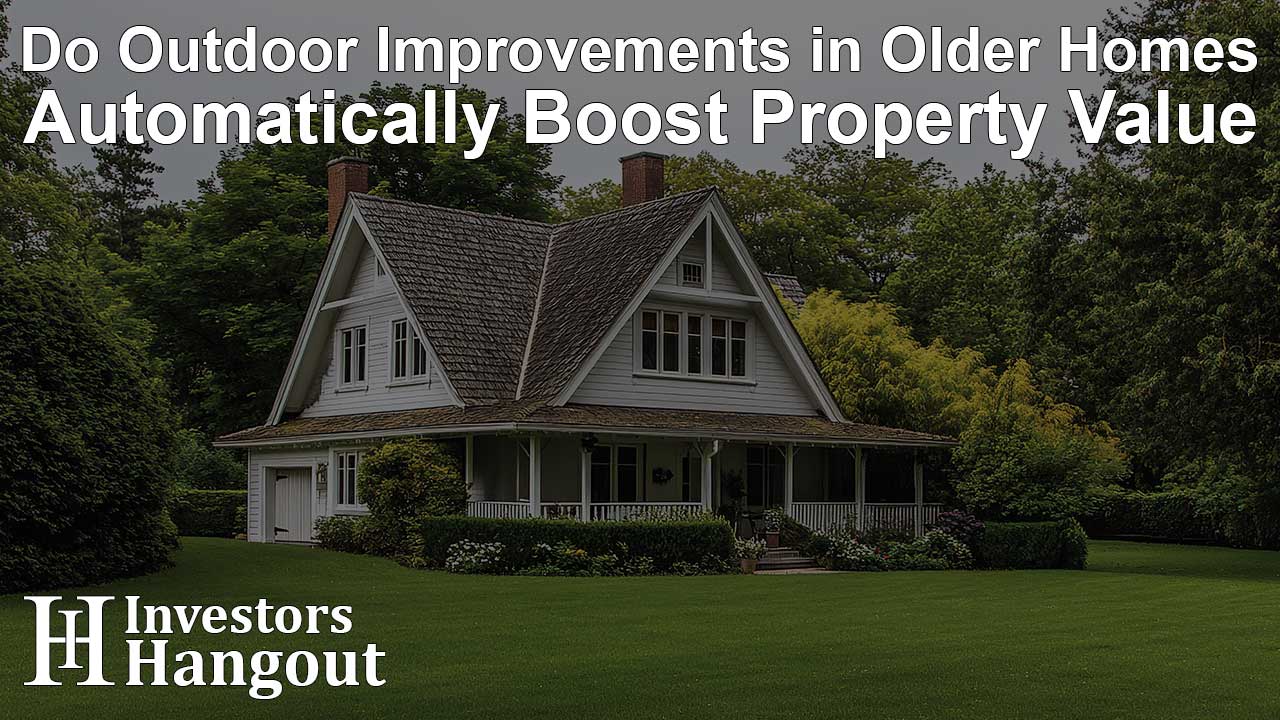
When it comes to real estate investors, solid craftsmanship and wide porches are always a green flag. It's basically nostalgia paired with profit – a home run! Not something you run into every day.
Unfortunately, it's (most often) after a thorough inspection that those red flags start showing up. And all that excitement and planning, it all goes out the window.
You thought it'd be a simple improvement, but in reality, you opened up a Pandora's box. Rotten joists, wiring that's been out of code for so long it's ridiculous, permits that have nothing to do with what you see in the yard…
And yet, you jump in. Why? Because you think that new lumber and a few weekends are all it takes to raise the value of your new property overnight.
That being said, outdoor renovations can pay off big time.
But that only happens if you know what you're dealing with and what you shouldn't overlook.
The Financial Blind Spots
From an investor's standpoint, you're looking at an old home, and you know that old homes have all kinds of 'hidden' issues that might not be apparent straight-up (they might also be well hidden/camouflaged by the seller). So a 'simple' deck disaster could turn into a complete disaster, and the risk might not be worth it.
Here's a quick comparison so that you understand why that's important: Let's say you live in York County in Pennsylvania. In that case, you're looking at roughly $17-$36 per square foot to replace or build a deck. That depends on materials, labor, and other costs and state-specific factors. A custom deck builder York County locals use would be able to best inform you of all the details and 'hidden' costs.
That's manageable when you compare it to living in Nassau County (New York), where the average price is between $25 and $60 per square foot, which is double that of PA. New York City specifically, that price goes up north of $80.
Palm Beach County (Florida) is more affordable, where you'll pay around $20 $50 per square foot; still not cheap by any means.
It's differences like these that will determine how 'easy' it is for a planned budget to spiral out of control.
And on top of that, you also need to account for inflation in lumber and composite decking that keeps the prices of materials going up. Factor in repairs for rotted joists and corroded fasteners, and you've already doubled your spending before demolition is done. If you're retrofitting a new structure onto an older system, that will eat away at profit margins because it takes a lot of time to do.
Before you lock in a budget, make sure to talk to a professional.
If you skip that, what looks like an easy increase in value will turn into the biggest financial blind spot ever.
Structural and Compliance Risks Investors Usually Overlook
Money means squat if the build itself isn't safe or legal.
As an investor, you might focus only on the numbers, but this way, it's easy to miss the important parts. For instance, can the structure handle the planned upgrade, and does it actually meet all building regulations?
That risk only gets bigger when you have an older property on your hands.
Old Building Methods
Older homes usually have a lot of weak spots that you don't see until the work starts.
Add to that years (even decades) of rain, snow, ice, termites, scorching sun, and you'll quickly come to realize how fragile the structure could actually be.
Once the demolition starts, the damage usually means you'll need more than just repairs. If you're lucky, you might get off with reinforcements, but it's possible that you'll need a full rebuild.
This is where you'll see the costs start rising like crazy, and insurance companies won't cover much unless everything meets modern codes.
Permits and Local Rules
You think bad weather can stop a project? Paperwork can do it a lot faster than any weather.
A lot of old properties have decks or patios that were added without proper permits, or the records are so old that they no longer match the current regulations. If you miss even one detail, you'll have to pay for new permits and more labor.
Every delay will cut into the profit, and if you need to wait for approvals, that will stretch timelines by weeks.
Underground and Ground-Level Problems
What you see is important, but so is what's under the surface.
Older properties often don't have updated maps that show where the utility lines run, and that's a big problem. If you hit even a single one, that will be a very expensive mistake.
There's also the issue of the ground shifting or draining poorly after decades of use. And when water starts to pool around a deck or patio, it can cause erosion and mold. It can even make the foundation crack and lower the home's value.
Usually, you won't spot any of this until after the construction has already started, and by then, you'll need excavation and structural work to fix it all.
Compliance and Insurance
You might save a few bucks if you skip safety and accessibility standards, but more often than not, that's a bad bet.
If a deck isn't built to code, insurance can outright refuse to cover damage and injuries later on. Even a small detail, such as a missing bolt, can void coverage.
This leaves you, the investor, as the responsible party when it comes to repairs and liability.
Conclusion
As a real estate investor, you already know what to expect from a property once you walk through the door. You know where you have value and where you'll have to cut your losses.
You know whether the best approach is to sell it as-is or whether it's worth it to invest in the property, modernize it a bit, perhaps add a few outdoor features (e.g., a deck, porch), and sell it for a hefty profit this way.
But it's really only after you've thoroughly inspected the property that you know if you have any unexpected surprises which may foil your plans – especially in older houses.
You're a real investor, not a weekend DIY renovator, so think like an investor.
A good outdoor feature (and the entire outdoors: front and back yard) is a financial asset above anything else. And for that asset to bring profit, you need to plan well. Only this way can you minimize your chances of taking a loss.
About The Author

Contact Riley Hayes privately here. Or send an email with ATTN: Riley Hayes as the subject to contact@investorshangout.com.
About Investors Hangout
Investors Hangout is a leading online stock forum for financial discussion and learning, offering a wide range of free tools and resources. It draws in traders of all levels, who exchange market knowledge, investigate trading tactics, and keep an eye on industry developments in real time. Featuring financial articles, stock message boards, quotes, charts, company profiles, and live news updates. Through cooperative learning and a wealth of informational resources, it helps users from novices creating their first portfolios to experts honing their techniques. Join Investors Hangout today: https://investorshangout.com/